
Blue Ridge Land Conservancy in Talks to Buy Most of Evans Spring — But Needs City Action
The Blue Ridge Land Conservancy is partnering with a national group to potentially find a solution to appease all involved.

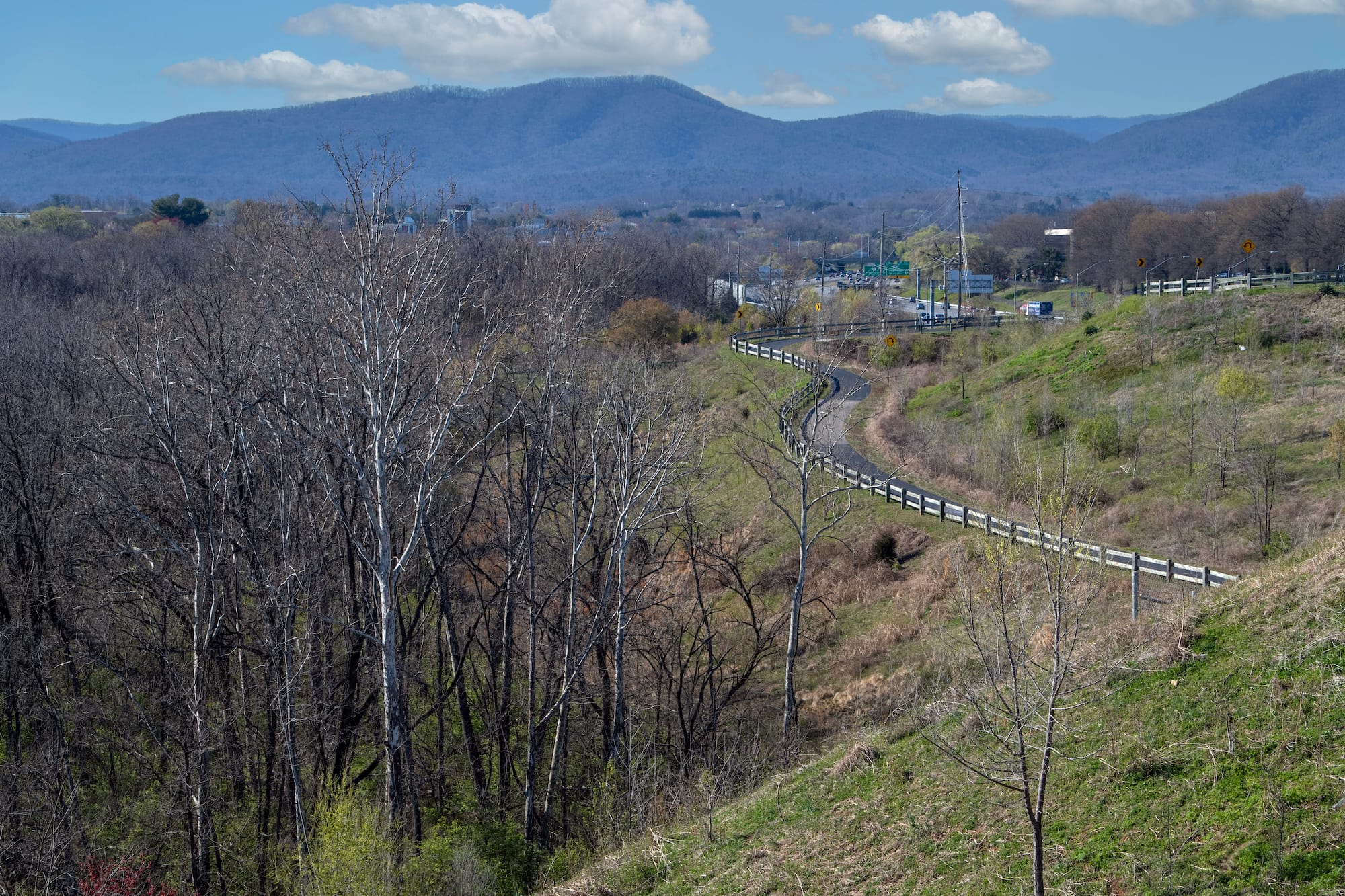
A conversation group is in talks to possibly buy most of Evans Spring and protect it from intensive development.
The Blue Ridge Land Conservancy is in discussion with several of the property’s private owners about an agreement, said David Perry, the organization’s director.
“Sometimes they call us and sometimes we call them,” he said, adding that a deal is “getting closer as time goes by.”
Perry declined to specify the landowners involved, but he said it’s a few that own most of the property across Interstate 581 from Valley View Mall. It is the last undeveloped tract of its kind in the city.
Four property owners control Evans Spring: Ed Laios, a Washington investor who owns parcels through Heritage Acres LLC; Anderson Wade Douthat IV through firms affiliated with Allegheny Construction Co.; the trust of Katherine Huff, whose family used to operate a dairy farm along the highway; and Joe Walker Ramsey, whose family grew vegetables on 19 acres off Hershberger Road.
The Roanoke-based Blue Ridge group is partnering with the national Conservation Fund, Perry said. The Conservation Fund has deep enough pockets to front money that would be part of the likely millions of dollars needed to buy the land, Perry said.
The Conservation Fund’s mission is two-fold: environmental protection and economic vitality. Perry said such a purchase of the Evans Spring property could position a nonprofit community land trust to own it. A portion of land could include leases for affordable housing, he said.
The land conservancy is also working alongside Friends of Evans Spring, a community group formed to advocate for environmental and racial justice issues tied to the property.
Its founder, Stephen Niamke, said if “Blue Ridge Land Conservancy has the capability and negotiating skills to protect the land, we’re in favor of that,” particularly if it’s a good solution for the landowners and the community.
A first step to a deal requires that the city’s guiding land use documents reflect that possibility. That would also allow for the Blue Ridge organization to get grant funding for a possible purchase, Perry said.
And those potential changes may be the most important to be made through a new review that’s nearing its end.
City Councilman Phazhon Nash – who opposes intense commercial development of the Northwest city property – asked for the review of the Evans Spring plan late last year. That came after the council narrowly adopted that plan — meant to encourage larger-scale development of the woodland – in February 2024.
The current review process included meetings to get public feedback as the city Planning Commission prepares to make a recommendation, as soon as next month, on any changes to the Evans Spring plan. The public comments ranged from no development to some development to large development, the commission was told at a work session earlier this month. The City Council would need to approve a revised plan.
Nash said he will ensure language is included to provide for a conservation purchase, which could be the answer to what he envisions.
Nash believes any changes for the Evans Spring site should benefit the surrounding Northwest neighborhoods, including preservation as well as smaller scale development similar to the city’s Grandin area, where a business owner can “sell what they bake.”
“That’s a beautiful thing,” he said.
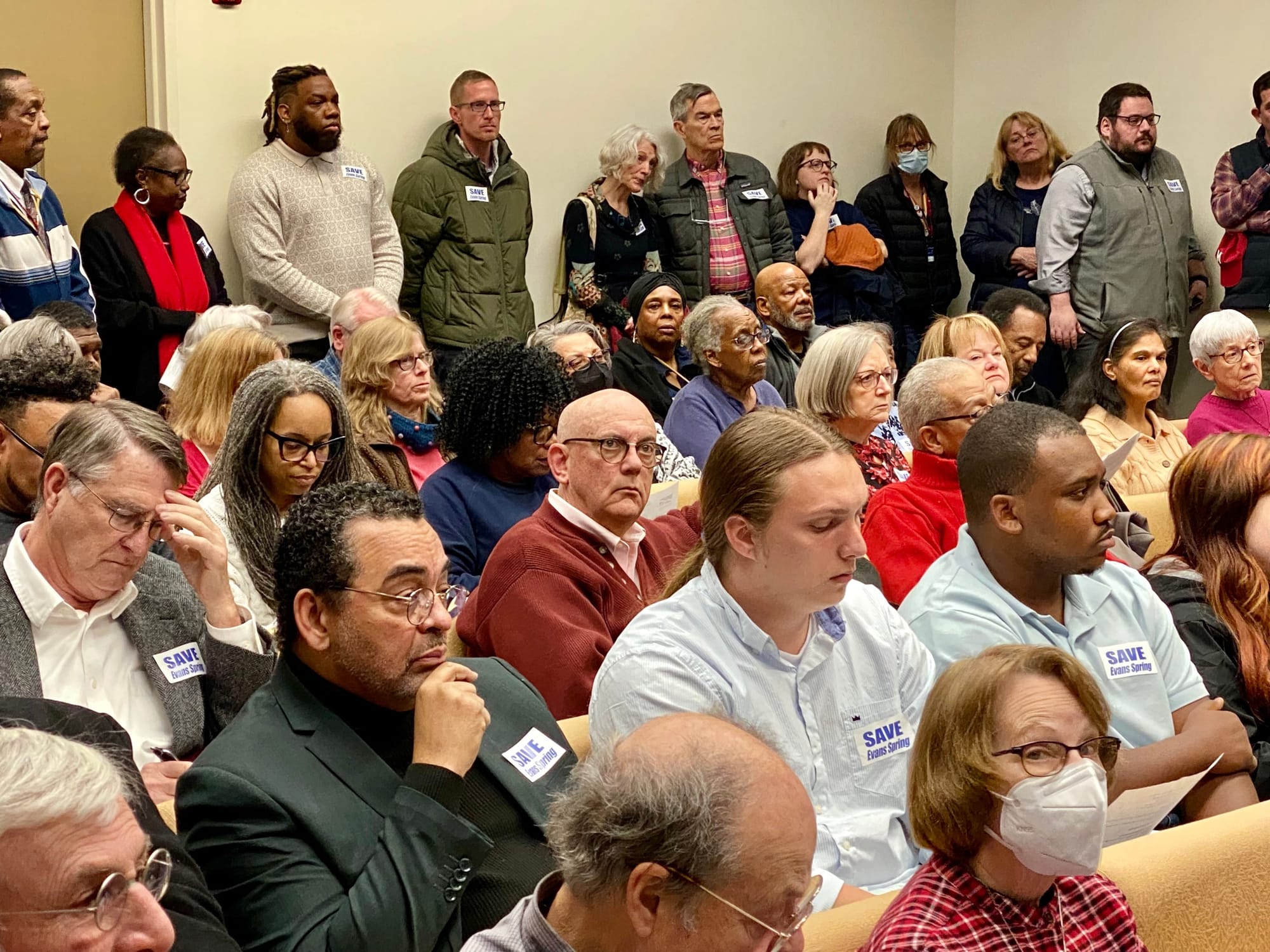
Controversy over Evans Spring has stewed for decades. Neighboring residents opposed to major development invoke concerns related to traffic, the environment and racial justice. Evans Spring borders three predominantly Black neighborhoods, and some see the city’s push for development as a modern-day version of urban renewal.
Proponents of development say Roanoke needs more housing to allay an affordability crisis and new amenities to boost the local economy. Consultants have said a major development could create more than 2,000 construction jobs and more than 1,300 service industry jobs.
The council’s 2024 approval came after the private property owners, the city, and Roanoke’s Economic Development Authority paid a combined $223,117 for a consultant to prepare the development plan. The city stepped into the situation to try to create a path to a decision after years of debate on the tract’s future.
Back in 2020, a North Carolina company dropped plans for 300 apartment units, a warehouse club, restaurant and golf-related recreational facility after even city planning commissioners found the proposal excessive. Speculation at the time was Costco and Topgolf would be part of the complex. That proposal died under the weight of opposition.
Some council members and other officials have warned the property owners could proceed with by-right development, which may be completely different from a conservation focus.
But under the current zoning, required street infrastructure would probably be cost-prohibitive to developers, city planners have said. And a new interchange would be needed off 581 for more intensive development, which would cost an estimated $75 million to $100 million.