
History Takes a Hit: Wrecking Ball Swings as Advocates Try to Stave Off More Demolition
"Preservation shouldn't depend on who shows up at the last minute," said a local advocate.

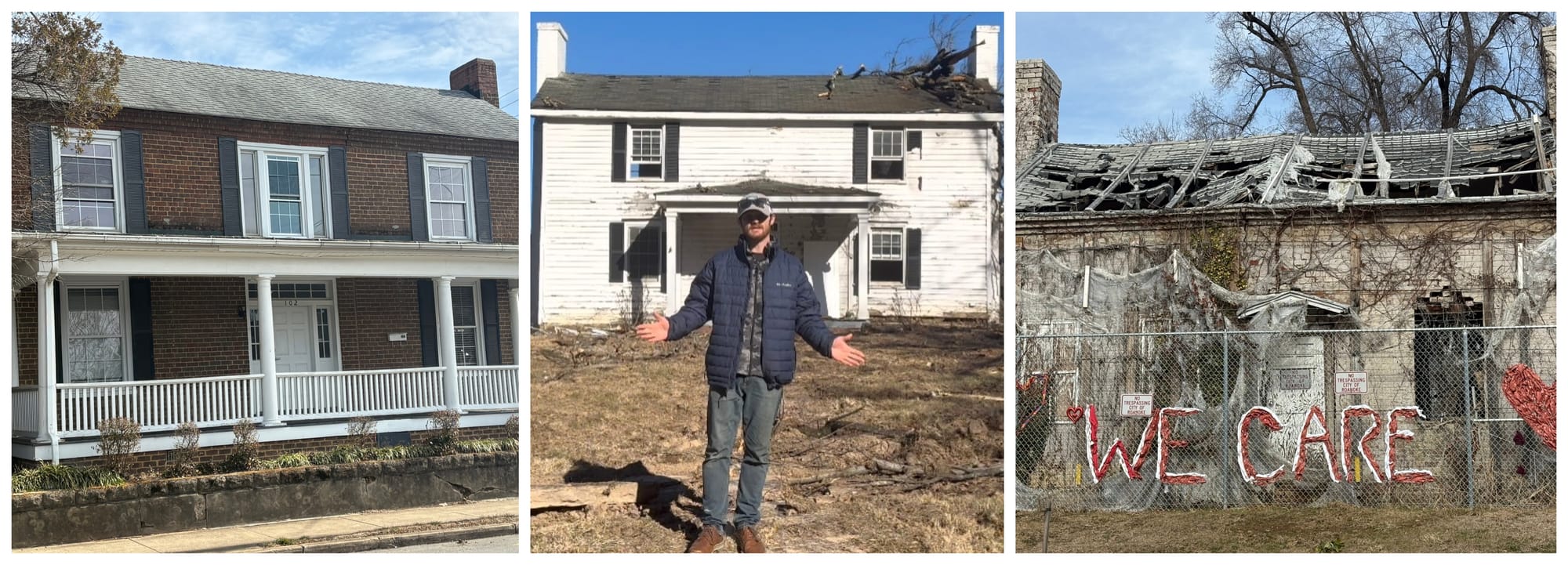
Historical preservationists are scrambling as numerous properties in the Roanoke Valley face demolition or have already been razed.
North Cross School tore down a farmhouse in January on its property that dated to the early 1800s.
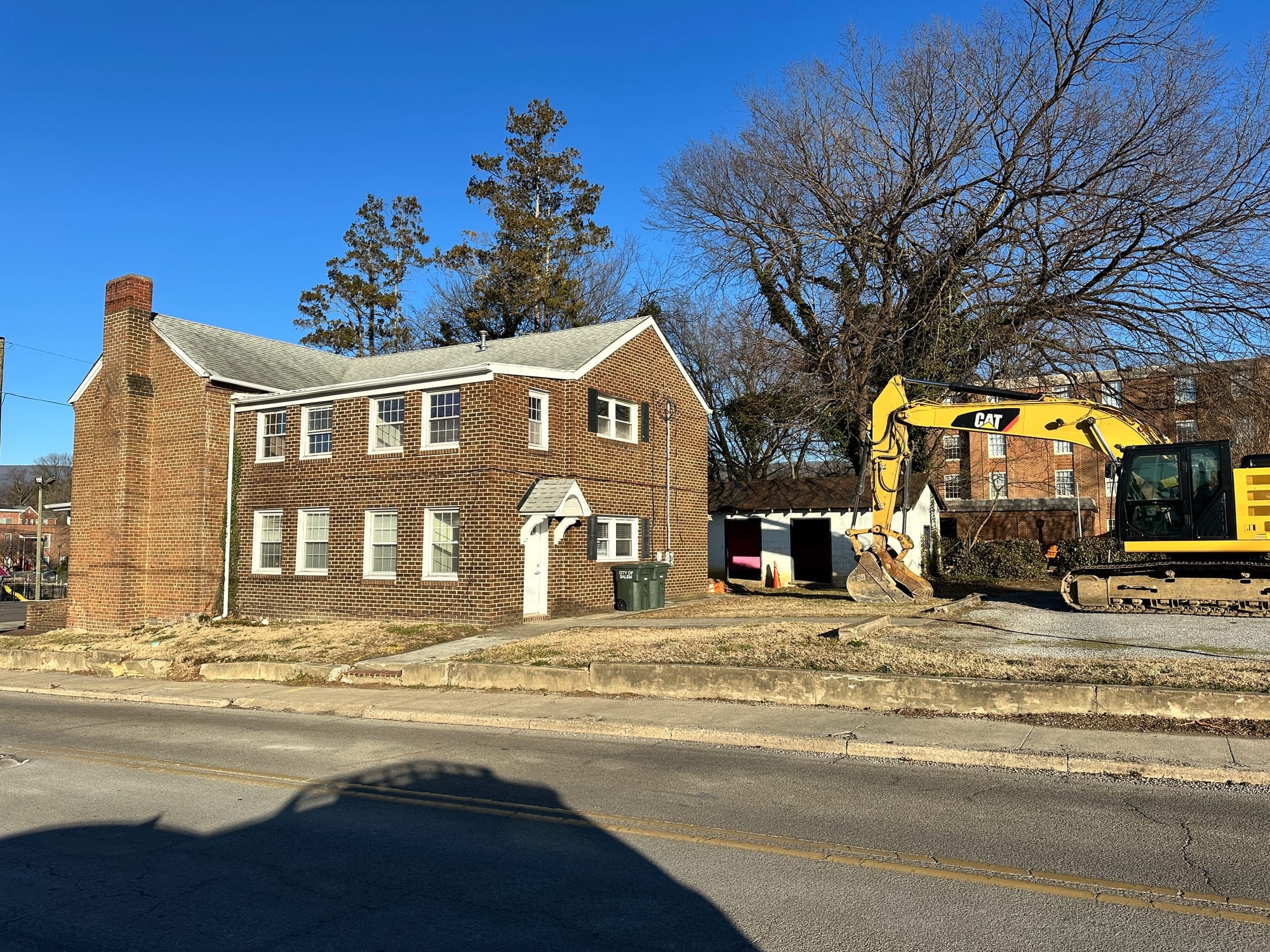
A pre-Civil War house on North Market Street in Salem — owned by Roanoke College — is slated for demolition with bulldozers on site. A late appeal has bought the home at least another few weeks.
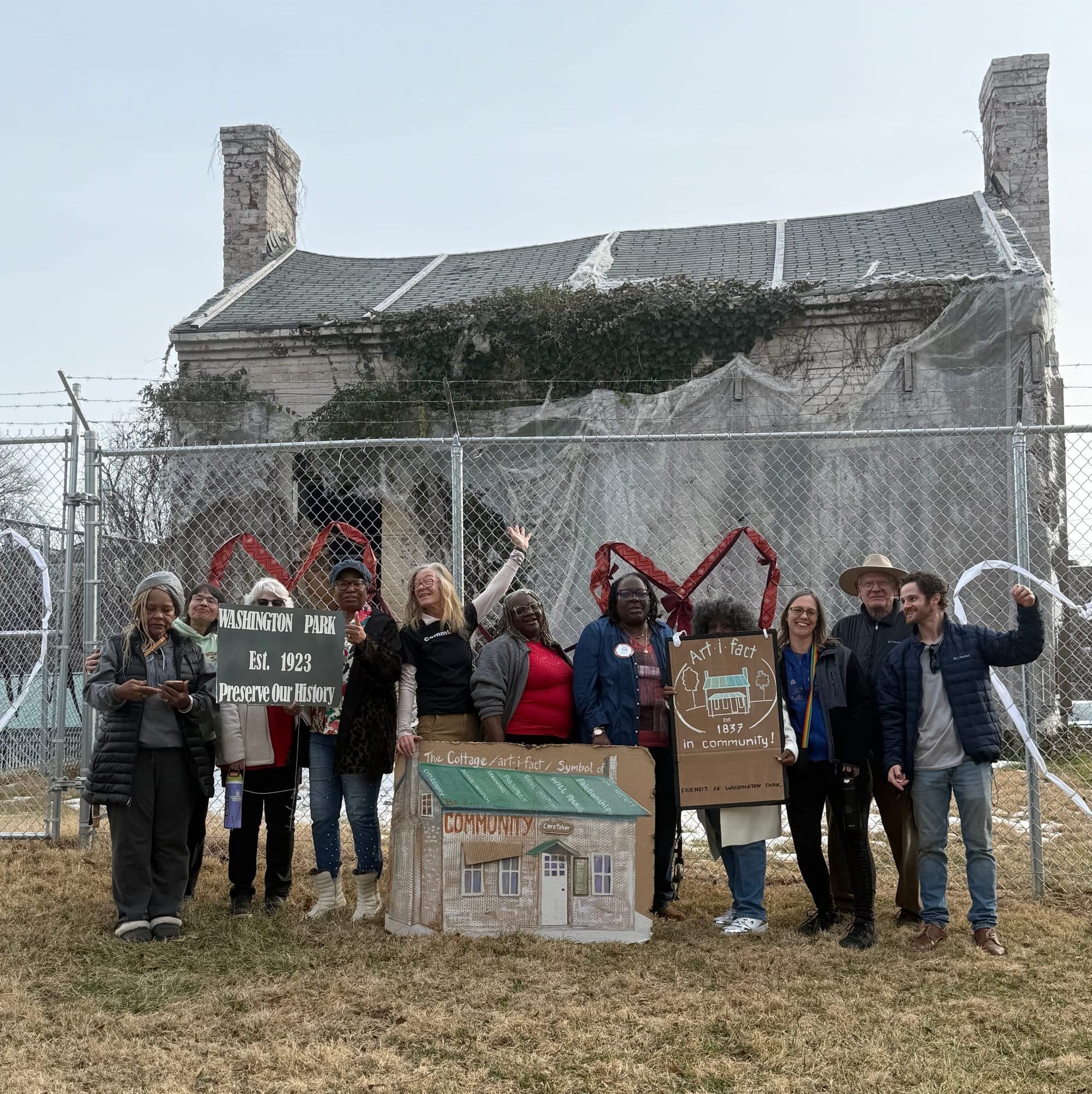
And likely to be decided soon is the fate of the much-debated 200-year-old Washington Park caretaker’s cottage tied to Black history and owned by the city of Roanoke, with demolition still a distinct possibility. The caretaker’s cottage decision will come as the longer-term sustainability of another historic Roanoke-owned property, the Fishburn Mansion, also took a recent blow.
What’s up with the current trend? Some of it is simply due to a lack of money during leaner times.
Roanoke College, for instance, says the costs of restoration and upkeep of the Market Street house are too substantial. Roanoke officials, citing revenue needs, have already said the city will have a hard time coming up with taxpayer money to save the Washington Park cottage. Meanwhile, the city is cutting $1.5 million for the Fishburn property from its upcoming projects list. And that amount represents only a fraction of total restoration work needed, based on the home’s needed maintenance and repairs recently presented to council.
Alison Blanton is a long-time public face of historic preservation in the valley. She is a trustee of the Roanoke Valley Preservation Foundation and an architectural historian.
Asked about the situation, she wrote in an email: “I may need to write a letter to the editor or something to bring this growing trend to the public's attention! We need to do a better job of making people aware of the significance of these properties!”
In a separate interview, Blanton said elected officials, in her experience, are more into “swing sets and soccer fields” than they are historic preservation.
Schools, colleges, churches and other institutions almost always do what is expedient for them without much concern for what they are destroying, wrote Mike Pulice, a Roanoke Valley-based architectural historian with the state Department of Historic Resources.
Neither state or federal governments have any control over what a property owner does to its own property – even if it’s on the National Register of Historic Places, and the house on the North Cross campus didn’t even have that designation, he continued.
Blanton said she’s also worried that Roanoke zoning changes enacted in 2024 – which open properties up to expanded housing choices – could put other historical structures in jeopardy. That’s because developers could make more money by tearing down what’s on a particular parcel and building as many units as possible.
An example is Huntingdon, a Federal period gentry farmhouse built in 1819 that’s located off Roanoke's Williamson Road. It was once the center of a 500-acre plantation. The home, owned by a private limited liability company, has fallen into some disrepair as it sits empty. It’s been on the state and national historic registries for 34 years.
Preservationists such as Blanton said saving Huntingdon must be a priority.
The Roanoke zoning changes “raised the stakes so much higher,” she said.
The North Cross house
Officials at North Cross, the private Catholic school in Roanoke County, did not respond to multiple messages left with them by The Roanoke Rambler in recent weeks to inquire about the decision to raze the structure on its campus – or if any of it was saved.
Blanton said the preservation foundation did document the house last summer after learning of its possible demolition.
Roanoke County spokeswoman Amy Whittaker confirmed North Cross obtained a demolition permit. The county has no submitted plans from North Cross concerning any further development of the site, she wrote in an email.
Justin Miller, a preservation advocate who works in construction, made an attempt to save the house, which was in disrepair.
Miller, who grew up nearby, said he watched the house deteriorate at a more rapid rate over the past few years. He said he learned the property’s history from the Maycock family that had lived there for several decades prior to the school buying the property in 2008. In 2007, a state Department of Historic Resources report on the house recommended it for potential national registry status.
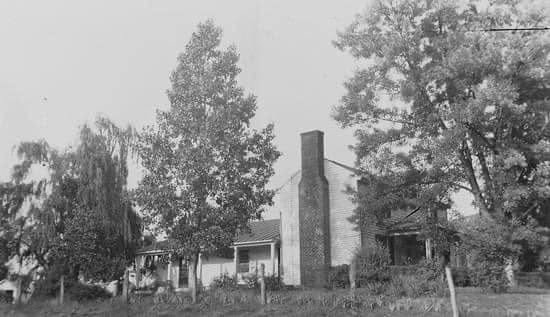
Miller said he learned how instrumental the property was in the beginning stages of Cave Spring, as a spot for farmers coming from Bent Mountain to stop and sleep or get water, on their way to the Roanoke City Market by horse and buggy.
From there, Miller said North Cross allowed him onto the property. He said there were items that he believed needed to be saved, including a fireplace crane likely original to the house. He said he was given permission to get the crane after making his case for its preservation. But Miller said when he went into the house on the morning of the demolition, the crane was gone.
He said he did not get an answer from anyone about what happened.
Miller said his experience led him to start working on an initiative to shift preservation from “reactive outrage to proactive accountability,” which will include a rating system to evaluate how communities treat their history.
“Preservation shouldn’t depend on who shows up at the last minute. It should be intentional, structured, and visible,” he wrote to The Rambler.
The Salem house
The next property that could be torn down is the Roanoke College-owned house in Salem.
The college, in a statement, said that the decision wasn’t “taken lightly” and that the plan is to turn the site into green space for the community.
After buying it in 2023 “so many structural problems were discovered that restoration would be cost-prohibitive, particularly for a modestly endowed liberal arts college like Roanoke. More than ever, as a contracting market constrains our resources, the college must be laser-focused on dedicating our limited resources to critical needs, including the renovation of our central campus historic buildings,” according to the statement.
The college bought the home for $463,000 from Gregory Properties LLC, according to Salem online property records. The home and land are assessed for tax purposes at $261,900.
Blanton, on behalf of the preservation foundation, wrote the college last week asking for time to allow for “the full consideration of the significance of this historic resource.”
It is a rare surviving example of the mid-19th century work of J.C. Deyerle, a member of the well-known Deyerle family, master builders, and owners of a brick manufacturing plant in Salem, she wrote.
J.C. Deyerle built many of the earliest and most prominent buildings of Roanoke College, Salem, and Roanoke County. Built with either enslaved or recently freed labor, the Market Street house is also part of the material culture that Roanoke College has recognized through its Studying Slavery project, Blanton wrote.
Whitney Leeson, a history professor at the school whose job includes its preservation efforts, questioned in an email to The Rambler why the school would move with haste on the matter.
Of the house, she wrote: “To be sure, there are too few left across the state, but it is certainly rare in our neck of the woods.”
After Blanton contacted the college, Pulice — the state architectural historian — did get to visit and document the house last Friday, Blanton said. The college has offered to donate the house if an agreement can be reached for it to be moved — and it confirmed Tuesday that, as of Feb. 16, it is taking a 15-day pause to consider any such proposals.
The college did file for a demolition permit and that application was approved — but no one had paid the required fees as of Tuesday, said city of Salem spokesman Mike Stevens.
The Roanoke properties
Blanton is part of a nonprofit group that is working with a goal to do major restoration on the Fishburn Mansion on 13th Street Southwest.
Formerly known as the Mountain View Recreation Center, the mansion is a 42-room Georgian-revival mansion that was built in 1907 by prominent businessman Junius B. Fishburn. It is now a Virginia Historic Landmark, and Fishburn left it to the city in 1955 with the caveat that it be used for public recreation.
Blanton said the loss or yearslong delay of the city’s $1.5 million is not ideal when every penny that can be found to restore the structure is needed.
“We’re not giving up,” she said.
Nor is a community group that’s been trying to save the Washington Park cottage.
The smaller structure, which sits next to the city’s new park pool, is in major disrepair, although experts hired by the group – Friends of Washington Park – have said it can be saved. The Friends group found some momentum when it joined with the Christiansburg Institute last year – both advocating the cottage’s preservation based on a rich history that dates back with a park beloved to the city’s Black community and named for Booker T. Washington.
However, there was much riding on securing grant money to save it. Christiansburg Institute did receive $5,000 in October from the National Trust for Historic Preservation to help pay for an assessment of the cottage’s condition and to help guide a future plan. But it will cost much more to restore it, and the state chose not to allocate any funding for the project last year through its Black, Indigenous, and People of Color Historic Preservation Fund. Christiansburg Institute, which filed that application with the city’s endorsement, asked for $800,000.
Now city council — which vehemently debated the need to save the cottage last year — is faced with the same discussion. And so far, that's been going on behind closed doors.
Vice Mayor Terry McGuire, an advocate for adapting the cottage for a new use, said Tuesday the council needs to discuss the matter publicly.
“I’m frustrated,” he said.
Cathy Carter, president of the Friends group, said the issue will not go quietly.
“I’m angry – because they’ve been stalling,” she said of city officials. “It’s unjust.”