
Roanoke's AI-Driven Parking Offers Easy Access, City Says — But Not All Agree
The city contracted with the largest private parking firm in the country to provide the latest AI-driven technology.

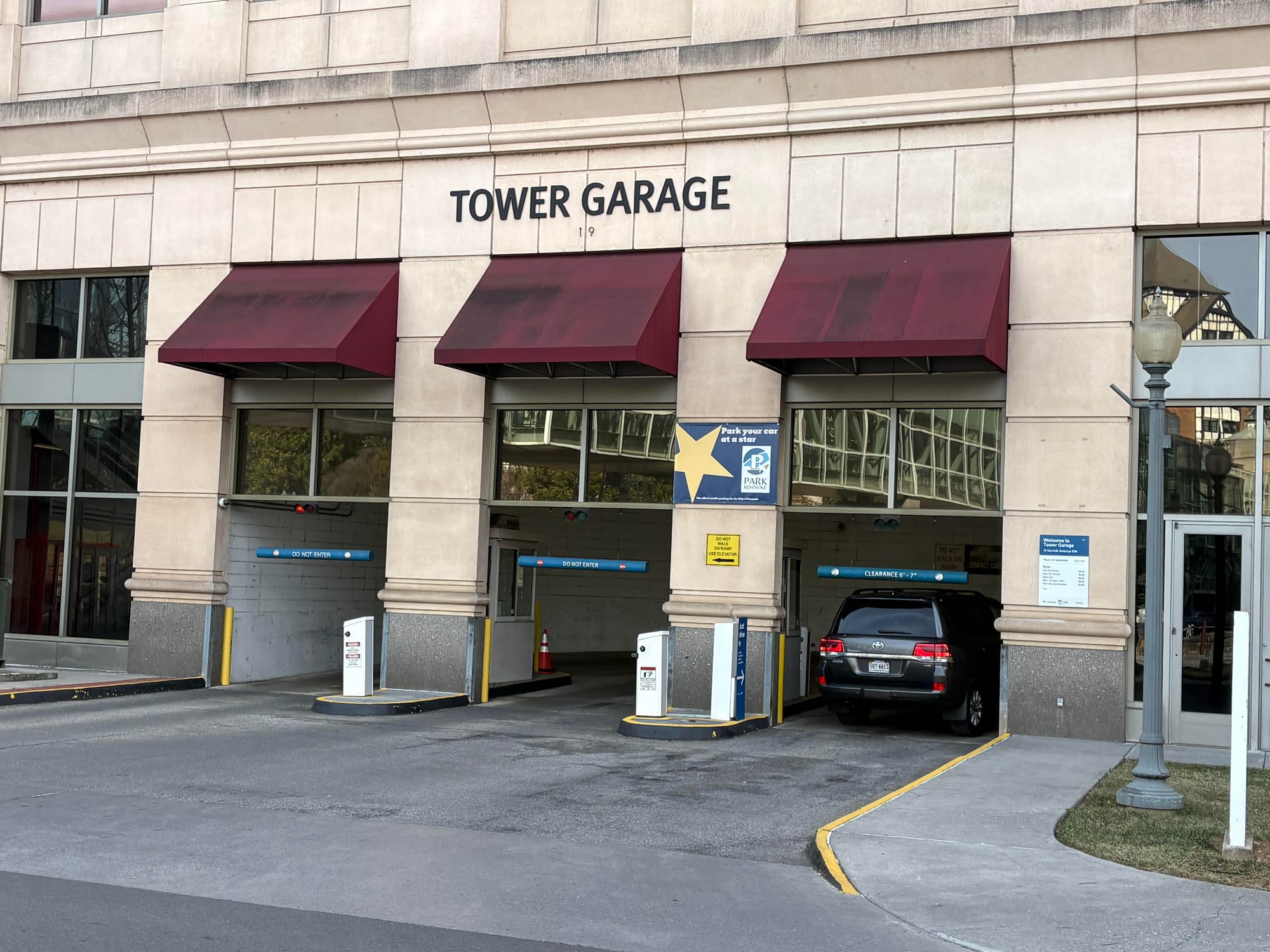
New gateless, AI-driven technology from the largest private parking firm in the country is providing a smoother experience for drivers at Roanoke’s seven publicly owned garages, the city recently announced.
But lawyers and consumers are raising concerns — from class-action litigation to privacy issues.
The city is paying California-based Metropolis an annual $1.4 million based on the city’s contract with the company, which The Roanoke Rambler received through an open records request. The two-year contract will run through mid-2027 with an option for a third year. Metropolis has 4,500 locations in the U.S. and does billions of dollars in revenue.
The city’s parking fund is self-supporting, and through its current operations, requires no city subsidy, said Brian Mann, Park Roanoke’s director. That’s unlike other such city funds including the civic center, which the city subsidizes by millions of dollars annually.
The gateless parking technology is an example of a decision that will improve the parking fund’s bottom line, Mann said. A budget that’s part of the Metropolis contract shows Park Roanoke will pay about $50,000 less annually for its garage operations with the gateless system.
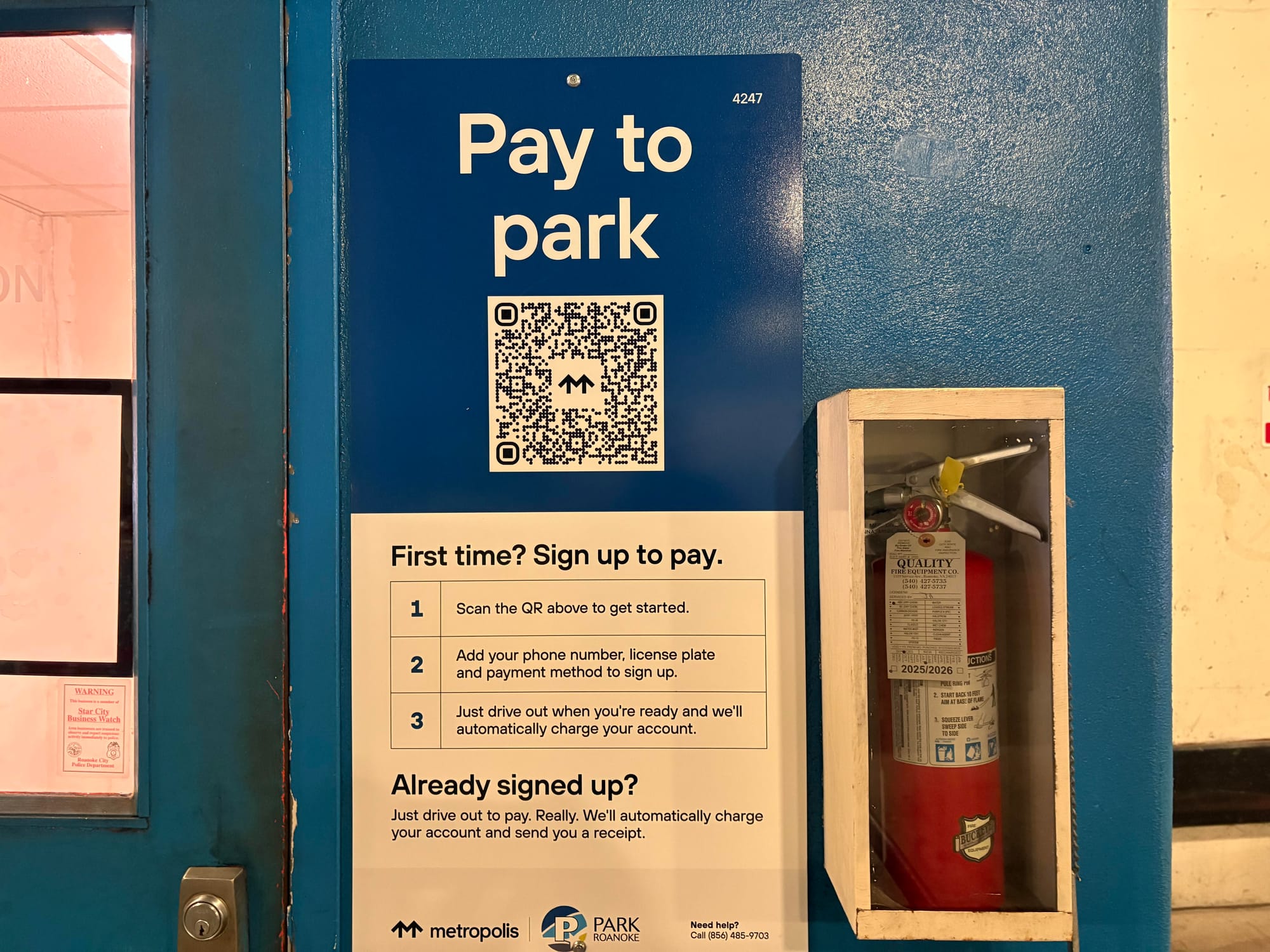
The technology is becoming more prevalent nationwide with many users already familiar with how it works: A camera takes a picture of a vehicle’s license plate, and the driver can pay online using their phone – eliminating getting a paper ticket and using a credit or debit card to pay while waiting on gates to go up and down.
On a recent afternoon, Vicki McMahon had just parked at the Center in the Square garage on Campbell Avenue. She said she parks there often. When the gateless technology first became available, she said it overcharged her for the time she was parked. But she did receive a refund, she said.
If kinks are worked with the technology, “I like it,” she added.
"The transition to a gateless system represents more than just a convenience; it is a fundamental upgrade to our community's experience and operational efficiency,” said Mann in a recent city news release. “By removing physical barriers, we are embracing a future of seamless, modern access that enhances resident flow, eliminates the frustration of gate malfunctions, and significantly reduces maintenance costs and delays.”
But not all agree.
Roanoke resident Jeremy Thomas, speaking to city council at a Jan. 5 meeting, said “never have I seen more limited and costly” parking options, adding that the city is putting an unnecessary burden on citizens by outsourcing parking to a private company that gathers license plate and credit card information.
“If the city has to outsource parking to a tech company based out of California, can we really trust you to manage a budget of $400 million? I would argue no,” he said.
With its nationwide footprint and the use of the latest technology, Metropolis is being sued in several states.
A lawsuit in Texas alleges Metropolis uses "deceptive and unfair" practices to recoup parking fees of arbitrary amounts
“You have to pay to pay,” said Daniella Main, an attorney with a Dallas law firm that’s involved with the litigation.
Some consumers reported that they overstayed their parking time by 15 minutes – but were later charged much more by Metropolis than what the initial payment was supposed to be, she said.
The company is trying to become a “money-making machine,” she said.
Metropolis released a statement about the lawsuits to The Rambler:
“It is not at all surprising that we're the target of lawsuits as the largest parking operator in North America. Metropolis has filed motions to dismiss for all of these lawsuits. These plaintiffs' firms are shamelessly targeting us and all other operators in the industry with repurposed and broad class actions. We view these claims to be without merit and will continue to vigorously defend against them.”
According to the Roanoke contract, the city is paying Metropolis a $3,500 a month “platform fee” for the gateless transition, and there is also an $8,170 a month “payment processing fee.”
Mann, the Roanoke parking director, said Metropolis is not involved in the enforcement of unpaid fees and fines. The city contracts with another private vendor — Passport — to do that for $12,750 a year, he wrote in an email to questions from The Rambler.
The citations and late fee amounts are spelled out in city code — not set by a private vendor, he wrote.
During a presentation at a city council meeting earlier this month about the Metropolis arrangement, Mann pointed out that the city’s parking charges to customers remain fixed, with an $8 maximum one-day charge.
There is a much higher percentage of private parking lots downtown and the pricing with those can go up and down based on demand, he said.
Mann listed numerous advantages the city is already receiving from the Metropolis agreement, including a $5,000 annual donation the company makes toward community initiatives. According to information presented at the council meeting, there are already over 11,000 people who have registered on the Metropolis parking app and over 1,400 people have offered their opinion of the new system, with an 89 percent approval rating.
Council members hope the new system will remove the stigma the city has long faced over parking availability and cost and bring more people downtown.
“I personally miss the community-building exercises from people being backed up in the garages,” joked Mayor Joe Cobb about the former gated system.
Council members quizzed Mann and Metropolis employees at the recent council meeting about how data with the new technology can be used. Council members were told Metropolis does not sell or offer the data beyond its own use. And users at Roanoke garages can “opt out” of providing information and still pay with cash using kiosks to be provided by the city, Mann said. The kiosks are in process of being installed in the garages, he said.
Metropolis can acquire “biometric” data such as facial recognition, but the gateless parking technology used in Roanoke only scans license plates and does not take a picture of drivers or others in a vehicle, according to the presentation.
Councilman Nick Hagen asked why the company doesn’t offer an “opt in” option versus an “opt out.”
In general, because a license plate photo will be taken no matter what, users are essentially opting in when they enter a garage, according to the presentation.
And license plate information is public in Virginia, Mann said.
Councilman Peter Volosin asked what would prevent Metropolis to start using technology — such as facial recognition — at some point if it chooses.
“Once that face is in that picture, that data is now yours,” Volosin said.
Such technology is not part of the company’s scope of work with the city, said a Metropolis manager, Scott Kitts.
“That does not make me feel any better,” Volosin said.
Meanwhile, the results and recommendations of a comprehensive city parking study are expected soon, and, while not sharing any details, Mann said he is confident that will result in more improvements to the system.