
"I Commend Them to Your Care": 92 Years After a President's Promise, the Salem VA Is Still Keeping It
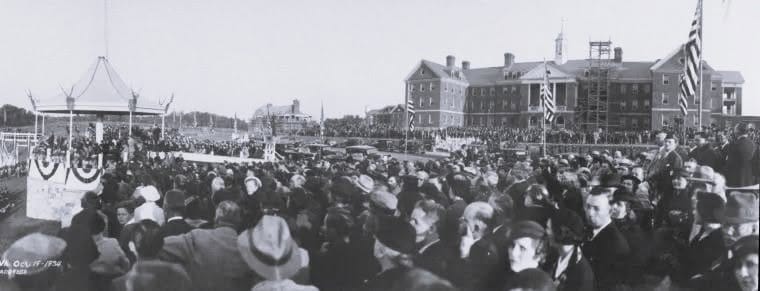
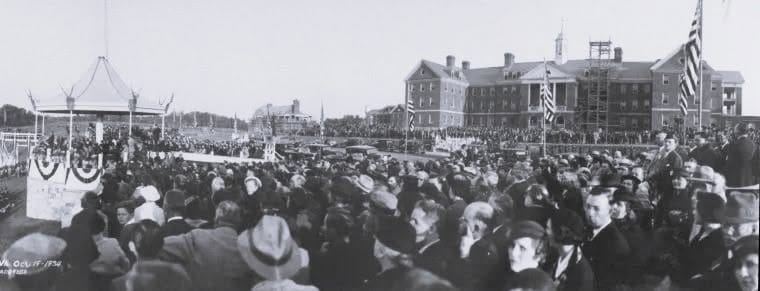
On the afternoon of Oct. 19, 1934, Franklin D. Roosevelt arrived in Roanoke by train. At 4 p.m., he stood before a crowd of 40,000 on the campus of a brand-new hospital.
On the afternoon of Oct. 19, 1934, Franklin D. Roosevelt arrived in Roanoke by train. At 4 p.m., he stood before a crowd of 40,000 on the campus of a brand-new hospital: 16 buildings in the hills just outside Salem, built for the men who had fought in the First World War and come home to a country still finding out what that war had cost them.
Roanoke, VA
Author: Roanoke Rambler Staff
Published: 9:20 PM EST November 10, 2026
Edited: 9:20 PM EST November 10, 2026
Listen Here: Roanokesradio.com
The radio carried his voice across the nation. He called the Roanoke Veterans Administration Hospital a "great monument," a place where "Veterans shall be accorded the best treatment which medical and surgical science can supply." He described it as a "symbolic and bold denial" to anyone who claimed the nation forgets its defenders. Then he looked out at the crowd, which included many local veterans, and gave the community a charge.
"I commend them to your care," he said.
Ninety-two years later, that charge hasn't expired. It has simply passed to new hands.
Some of those hands belong to a retired dental hygienist who, five years ago, became a full-time caregiver for her aging father and found herself in over her head. Some belong to 86 social workers who make up one of the least visible and most essential teams on the Salem campus. And since this summer, some belong to a new executive director who rose through that same profession and now runs the entire system.
On this Veterans Day, their story is worth telling, because it shows what the promise Roosevelt made actually looks like when it reaches a family's living room.
A Promise Made on this Ground
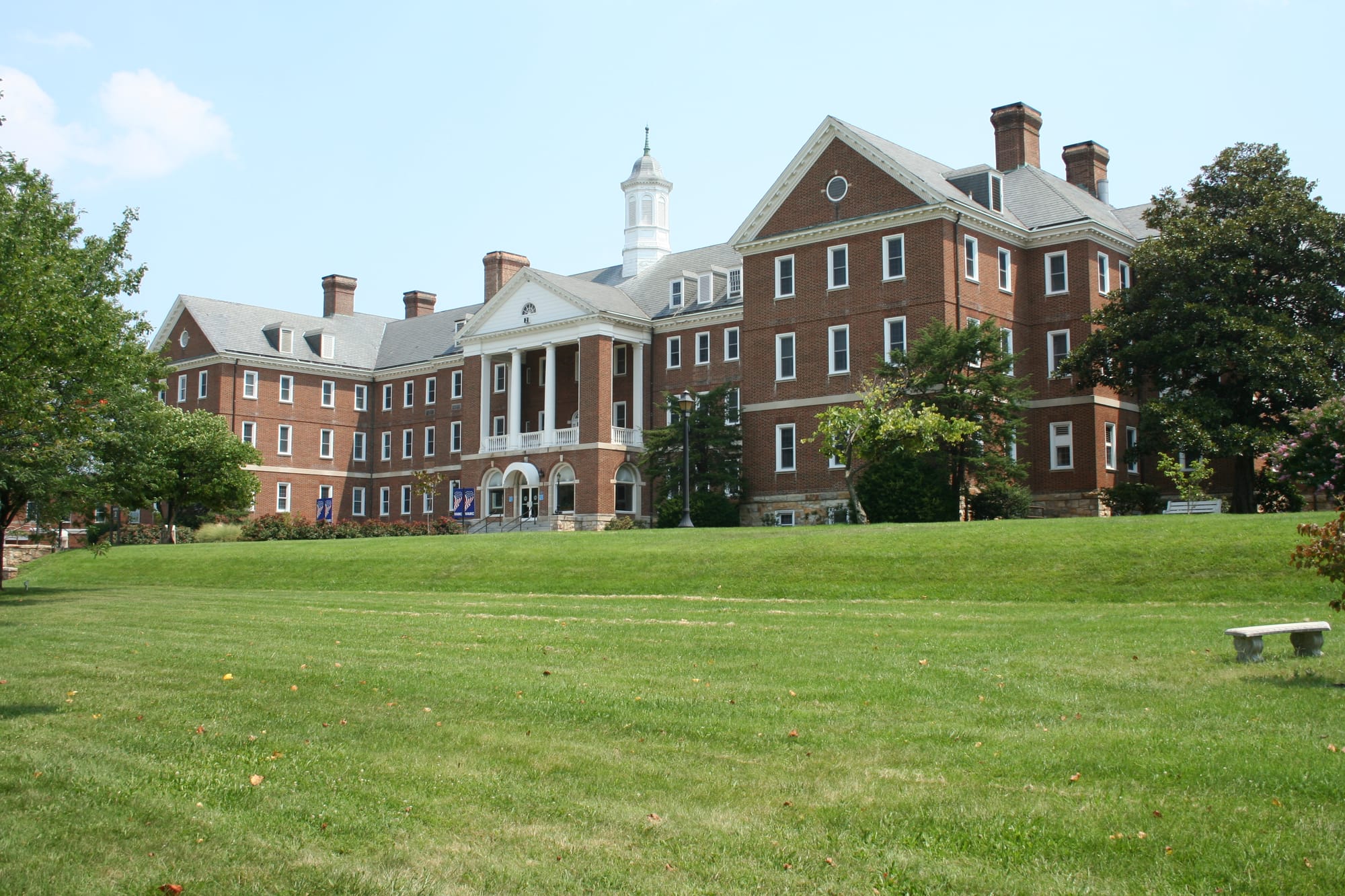
The hospital is now the Salem VA Medical Center, the hub of the Salem VA Health Care System. It is a teaching hospital whose reach extends across 26 counties through five community-based outpatient clinics, according to the VA. In fiscal year 2026, the system served 36,709 veterans and completed 354,906 appointments, according to figures provided by its public affairs office.
The Salem VA says it holds a distinction no other VA facility can claim: it is the only one dedicated by a sitting U.S. president.
Roosevelt closed his 1934 address with words that the hospital's current leadership still quotes. "Let this great monument serve as a symbolic affirmance to our belief in the underlying patriotic willingness of our Veterans to put first things first," he said.
Tammy Snyder, the system's executive director, said that line remains the hospital's compass.
"That commitment of putting first things first continues to this day," Snyder said. "Providing the most cutting edge, innovative, effective treatment — and serving as a living testament to our Veterans' patriotic devotion — has not faded 92 years later."
She credits the people on both sides of the exam table. "The legacy endures thanks to the community of Veterans we serve, and the dedicated staff who care for the nation's heroes with the same fervor with which Veterans served and sacrificed for us," she said.
Asked what Roosevelt's phrase means in practice, Snyder answered in seven words: "To us, 'putting first things first' means putting Veterans first."
Uncharted Waters
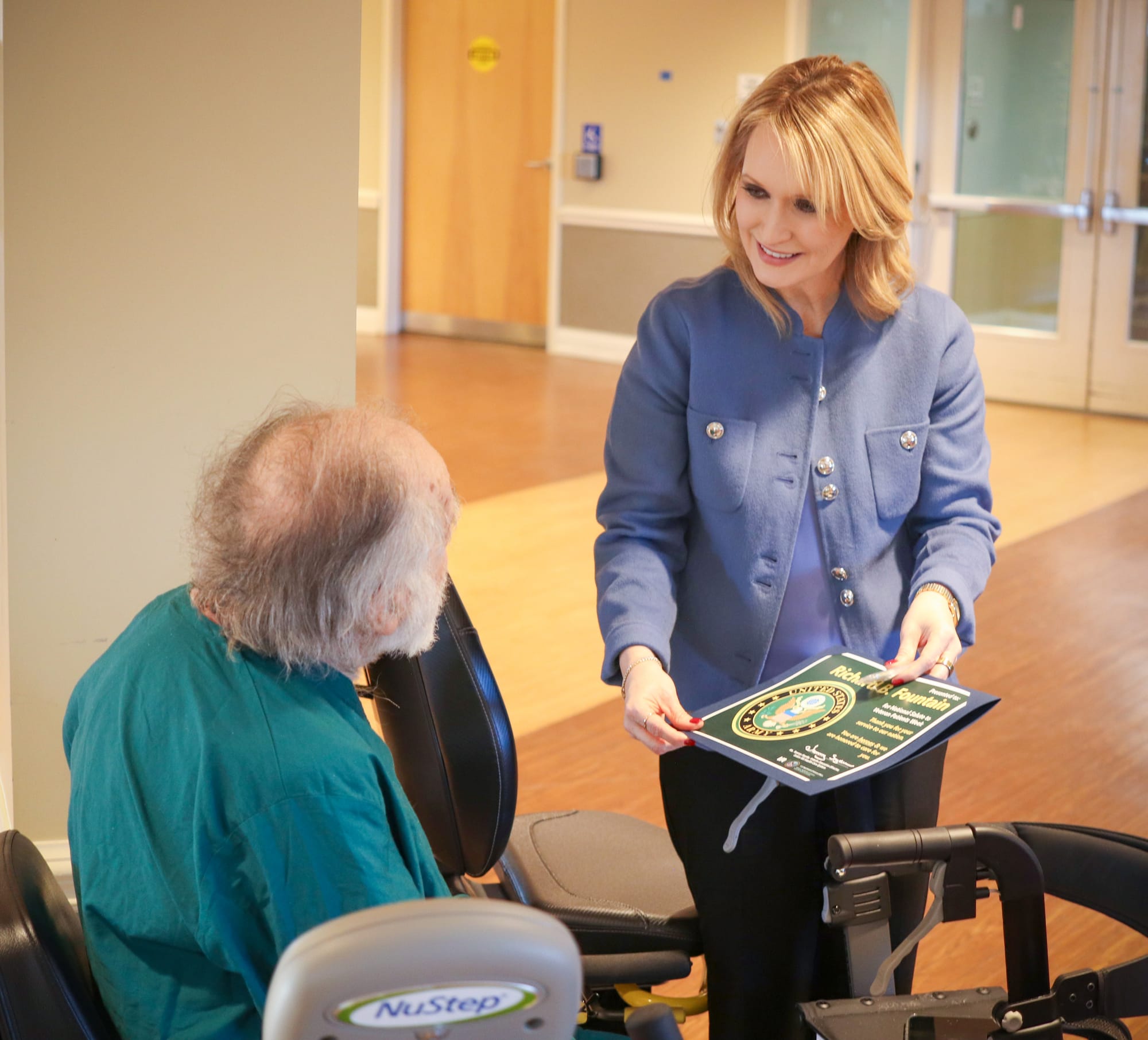
For Denis Murphy, the promise became personal in 2021, the year her 87-year-old father moved into her home.
Murphy had left her family's house in New Jersey in 1982. Over the decades that followed, she visited and called often, but those visits were brief, and they hid the slow changes that come with age. When her father arrived to live with her, she discovered how much she hadn't seen.
"My life entered uncharted waters the day my 87-year-old father moved into our home," Murphy said. "Having moved out of my family's NJ house in 1982, I was unprepared for the daily challenges of taking care of him when he moved into our VA home in 2021. We visited NJ and called often, but those windows were short, I was unaware of many things."
She assumed her professional training would carry her. It didn't, and the strain built slowly.
"After the first year, I began to doubt myself and how I was coping," she said. "By the second year, my relationships were changing, my life had completely turned around, and I realized I needed help."
That help came from the Caregiver Support Program at the Salem VA, one of the national programs run by the hospital's social workers.
"Fortunately, I found the Caregiver Support Program at the Salem VA," Murphy said. "For the past three years, this program has kept me grounded and has helped me take better care of my aging father. As a retired Registered Dental Hygienist, I was used to helping patients and thought I could manage his care without a hitch, but I was wrong."
What the program gave her, she said, wasn't only relief. It gave her skills, and it gave her father more time at home.
"The team has helped me become a better caregiver and kept my father out of long-term care for as long as possible," she said. "As a result of being part of the caregiver program at the Salem VA, I have learned life skills to cope in the event I need to give care again. Thank you to everyone on the Caregiver Support Team."
Her account is a reminder that the care Roosevelt promised doesn't always happen in a hospital bed. Sometimes it happens in a kitchen in Southwest Virginia, where a daughter who once doubted herself has learned how to keep her father home.
A Social Worker at the Helm
It is fitting that Murphy's story runs through the social work department, because the woman now running the Salem VA came up through that profession.
Snyder is a licensed clinical social worker. She was sworn in as executive director on July 13, according to the VA, after serving as interim director since Rebecca Stackhouse retired in October 2025. She took the job in the same year the VA marks a century of social work.
Asked about her priorities, Snyder described a leadership agenda built on four pillars.
"As Executive Director, my priorities remain centered on delivering exceptional care and service to our Veterans while fostering a high-performing and engaged team," she said. "Key areas of importance include Veteran access and experience, quality of care, employee experience & engagement, and infrastructure upgrades & modernization."
The first is access, and with it the standard Snyder intends to defend. The Salem VA earned a five-star rating from the Centers for Medicare and Medicaid Services, the highest possible, for the third year in a row in 2025 (Virginian Review).
"Veteran Access and Experience – ensuring Veterans have timely access to care and services they have earned and continuing our emphasis on customer experience to earn another five-star patient experience rating from the Centers for Medicare and Medicaid Services (CMS)," Snyder said. "This means treating Veterans with the dignity, respect, and compassion they deserve and ensuring every interaction reflects our unwavering commitment to those who have served our nation."
The second is clinical quality, which Snyder framed in terms of measurable results.
"Quality of Care – keeping a strong focus on the performance metrics and quality indicators that directly impact Veteran outcomes," she said. "Through continuous improvement, accountability, and evidence-based practices, we will strive to deliver the highest standard of care while ensuring consistent excellence across all clinical and operational areas."
The third concerns the people who do the work.
"Employee Experience and Engagement – Our employees are the foundation of our success," Snyder said. "We will continue to cultivate a workplace culture where staff feel valued, connected, and empowered. Emphasis will be placed on strengthening employee engagement and reinforcing our mission and purpose. Every team member should understand the critical role they play in ensuring Veterans receive the care, benefits, and services they deserve. By investing in our workforce, we strengthen our ability to serve Veterans effectively and compassionately."
The fourth is the campus itself, which has served patients for more than nine decades.
"Infrastructure Upgrades and Modernization – Creating a welcoming, modern environment is essential to enhancing both the Veteran and employee experience," she said. "We will continue to advance facility improvement projects, including lobby renovations, interior signage enhancements, and other infrastructure upgrades designed to improve navigation, accessibility, appearance, and overall functionality. These modernization efforts will help ensure our facility reflects the quality of care and service we aspire to provide every day."
She tied the four together in a single sentence. "Together, these priorities reinforce our commitment to excellence and our mission of honoring Veterans through exceptional care, outstanding service, and a workplace culture that supports those who serve them," Snyder said.
A Century of Social work, from 36 to 20,000
The profession Snyder came from has a history nearly as long as the Salem hospital's.
Michele Keck, chief of social work service for the Salem VA Health Care System, traced it back to its beginnings.
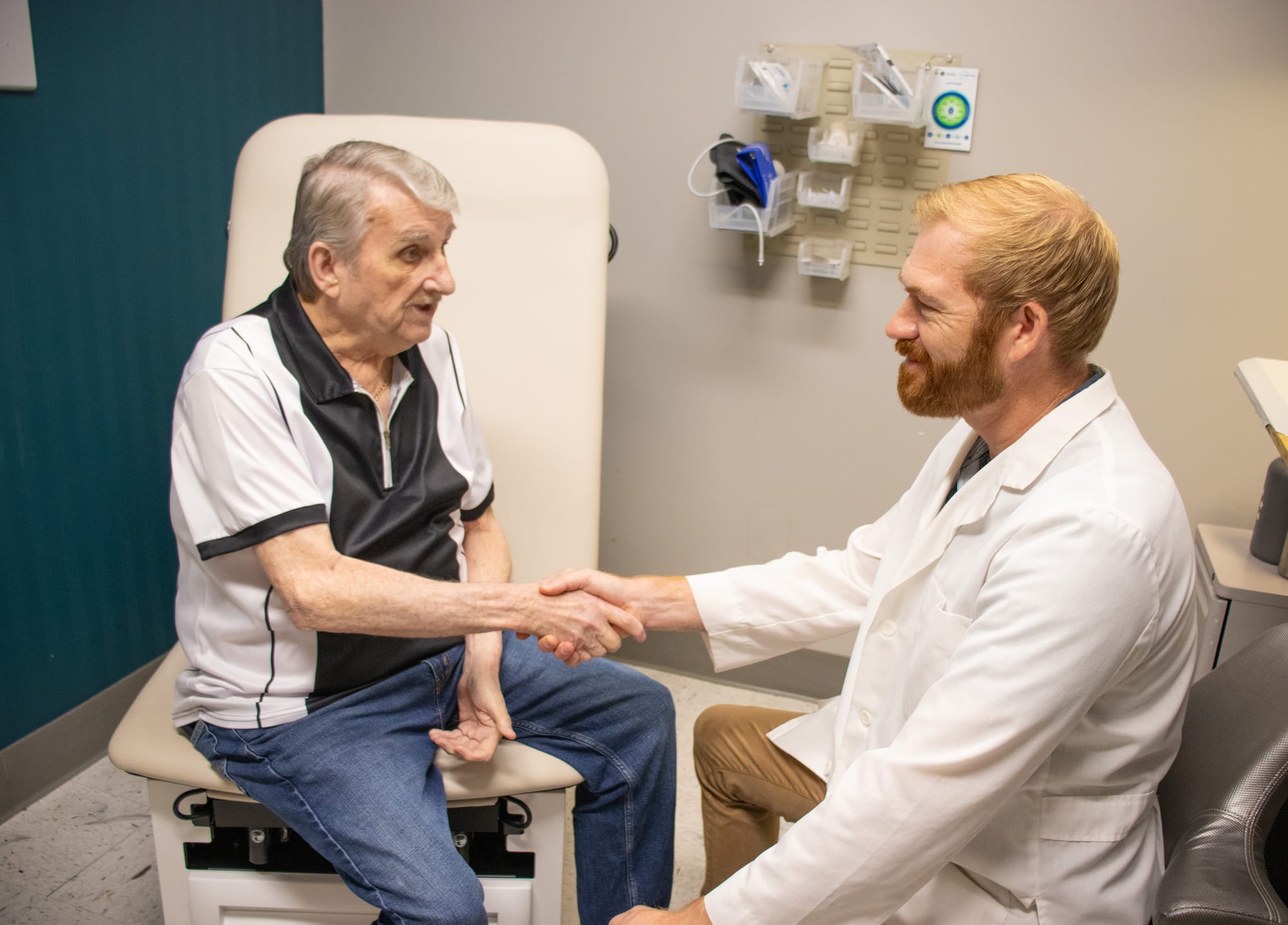
"Social Workers have been part of the VA since 1926 starting with 36 social workers in the whole VA to now having more than 20,000 social workers spread throughout all VA's in the country," Keck said. "The Department of Veterans Affairs has the most Licensed Clinical Social Workers in the nation – compared to any other nation-wide health care system."
In Salem, that national workforce has a local face. "A total of 86 Social Workers work at the Salem VA Health Care System," she said. "They are embedded in all areas of the Health Care System from leading national programs created to support the unique needs of Veterans to providing Veterans direct care assisting them as they navigate through the VA and the community to meet their psychosocial needs."
That work reaches well beyond the Salem campus. "Included in the Salem VA Social Work team are 10 social workers who serve Veterans across the Health Care System's five Community-Based Outpatient Clinics (in Danville, Lynchburg, Staunton, Tazewell, and Wytheville)," Keck said.
Asked what veterans may not know is available to them, Keck offered a list that doubles as a practical guide.
The first point of contact may already be on a veteran's care team. "Veterans who are assigned to a primary care provider at the VA have a primary care social worker who works with their team," Keck said. "These social workers are an excellent starting point to help Veterans and caregivers determine what services and supports are available to address their needs."
Some social workers specialize in the hardest diagnoses. "The Salem VA Health Care System has several social workers that work exclusively with specialized medical conditions such as Spinal Cord Injury, Memory Disorders, Visual Impairment, Dialysis, and Palliative Care," she said.
Others leave the building entirely. "Social Workers at the VA practice in many settings from outpatient mental health services to providing inpatient discharge planning and treatment and even go out into the community to provide care to Veterans such as through our Homeless Program or Home-Based Primary care," Keck said.
And some run programs that operate nationwide. "Social Workers also run National VA Programs such as Intimate Partner Violence Assistance Program, Military 2 VA Program, Contract Nursing Home Program, and our Caregiver Support Program," she said.
That last program is the one that found Denis Murphy when she needed it.
By the Numbers
In fiscal year 2026, the Salem VA served 36,709 unique veterans and completed 354,906 appointments. As of Nov. 9, the average wait for a new patient appointment was 18.8 days in primary care and 14.8 days in mental health. The mental health figure is a combined average across all mental health services.
Those are averages. A veteran seeking a particular specialty, or a first appointment at a particular clinic, may wait longer or shorter.
Where to Begin: the Nov. 17 Resource Fair
For veterans and families who, like Murphy, aren't sure where to start, the Salem VA is opening its doors next week.
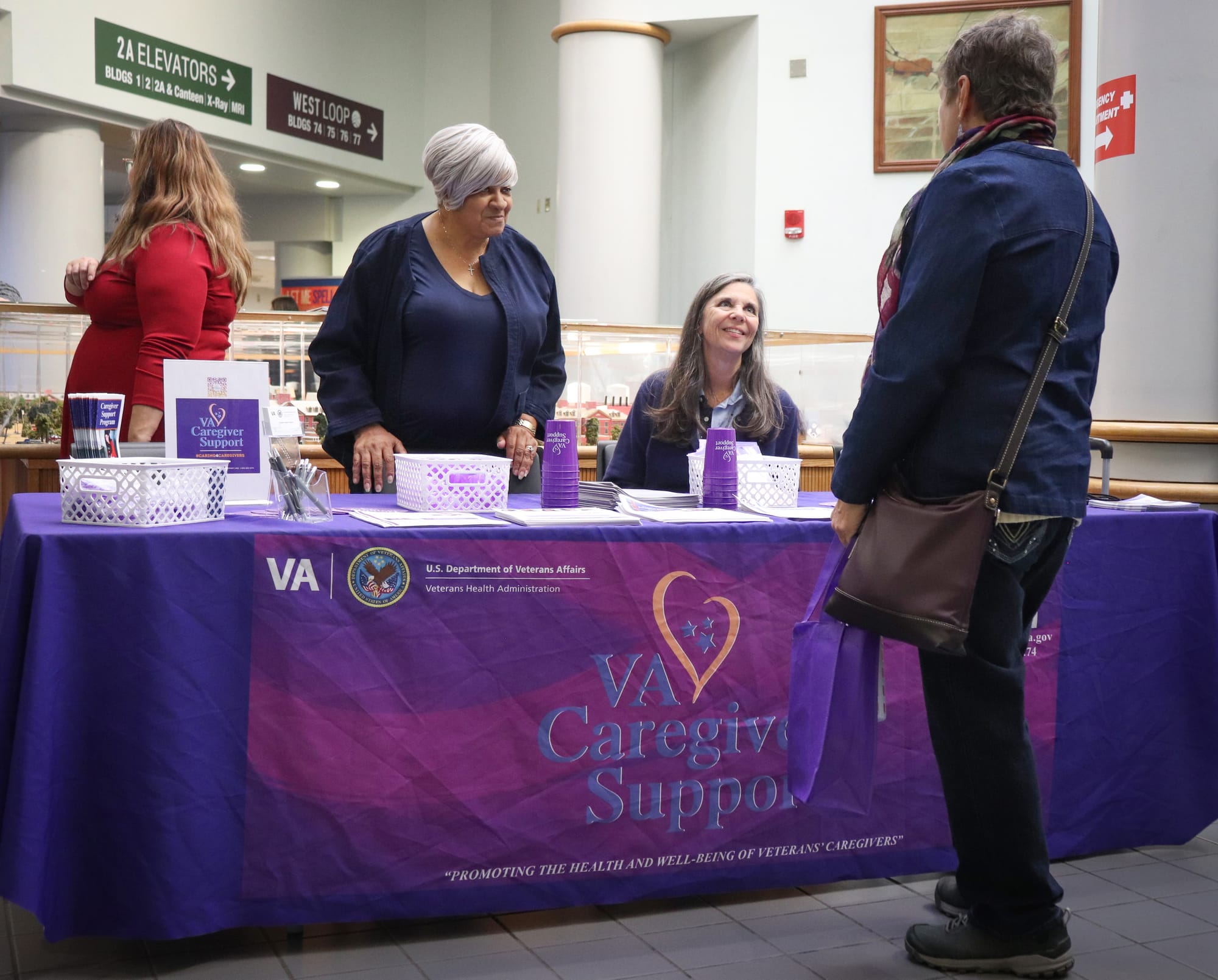
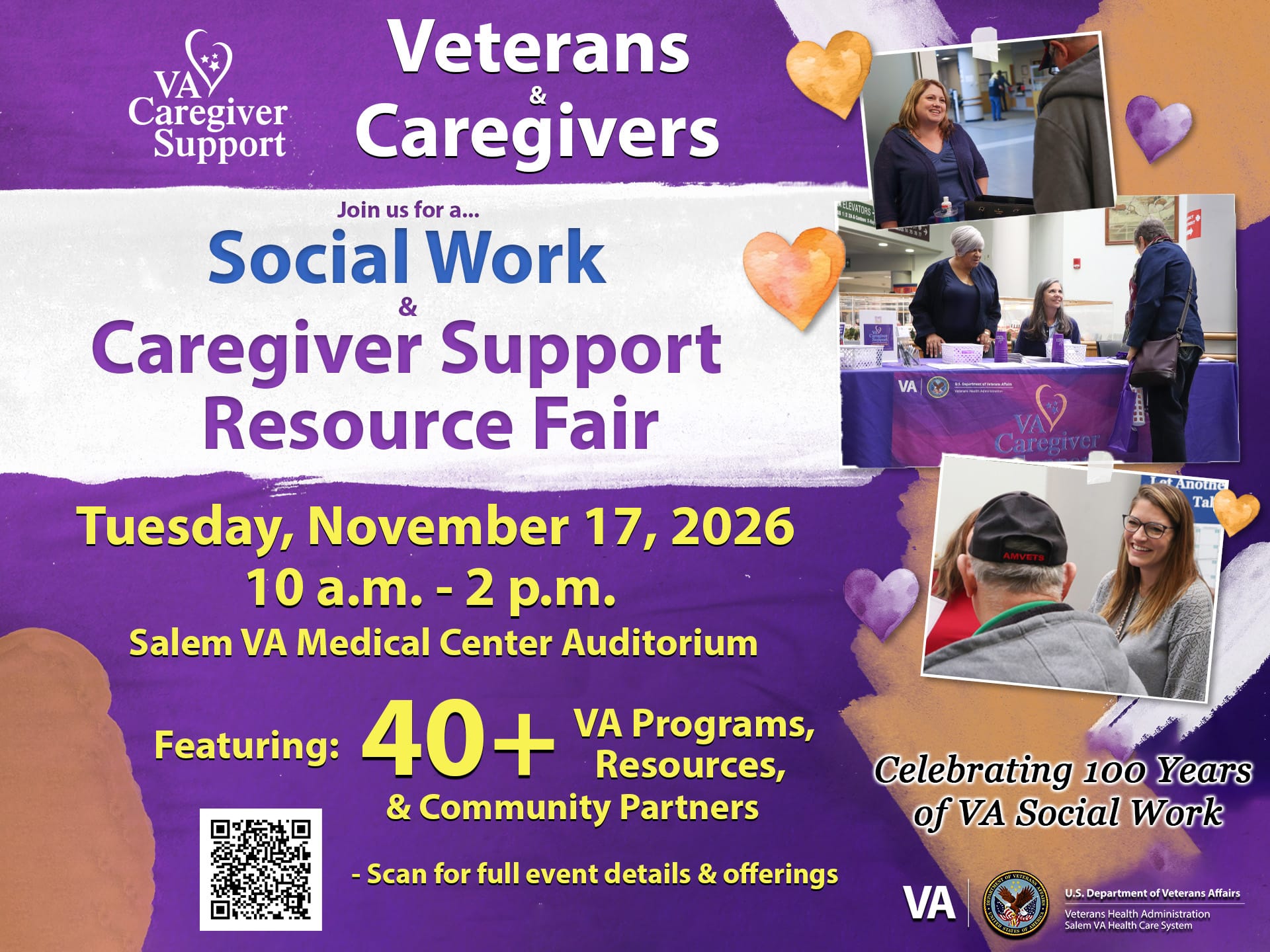
The Social Work and Caregiver Support Resource Fair takes place Tuesday, Nov. 17, from 10 a.m. to 2 p.m. in the Building 5 Auditorium, on the first floor, at the Salem VA Medical Center, 1970 Roanoke Blvd. in Salem. Admission is free.
Veterans, caregivers and family members can meet staff from about 40 programs in one room. Those include primary care and home-based primary care; the Caregiver Support Program; mental health services, including PTSD treatment, substance use care and suicide prevention; health care for homeless veterans; geriatric and extended care, including adult day health care, home health aides and hospice and palliative care; women's health; memory disorders and traumatic brain injury; spinal cord injury care; dialysis; and help with VA health benefits.
Community partners will be there too, including the Vet Center, the Virginia Department of Veterans Services, local offices on aging, the New River Valley Area Agency on Aging and the Alzheimer's Association.
The fair also marks the 100th anniversary of VA social work services. It's a celebration, but it's also a door. For the caregiver who is beginning to doubt herself, or the veteran who never learned what he has earned, it may be the first door that opens.
The Promise, Renewed
Roosevelt spoke to a crowd that remembered the Great War. The veterans who walk the Salem campus today served in Vietnam, the Persian Gulf, Iraq, Afghanistan and in peacetime around the world. Their families, like Murphy's, are often the first line of care.
What hasn't changed, the hospital's leaders say, is what was asked of this community on that October afternoon.
"It remains our greatest honor to walk alongside those who served us," Snyder said, "ensuring that the promise made on our campus nearly a century ago lives on in every compassionate hand, listening ear, and moment of healing we provide today and for generations to come."
"I commend them to your care," Roosevelt told Roanoke in 1934. Ninety-two years later, the care is still here, and so are the people who give it.
Get help now
- Salem VA Medical Center: 1970 Roanoke Blvd., Salem, VA 24153. Main line: 540-982-2463 (VA).
- Community clinics: Danville, Lynchburg, Staunton, Tazewell and Wytheville.
- Veterans Crisis Line: Dial 988, then press 1.
Editor's note: Quotes from Tammy Snyder, Michele Keck and Denis Murphy, as well as the historical account of the 1934 dedication, the patient and appointment figures and the wait-time data, were provided to the Roanoke Rambler by Evan Hinkley, public affairs officer for the Salem VA Health Care System. The Salem VA notes that 2026 is the system's 92nd year of service, dating to the hospital's dedication on Oct. 19, 1934. Photos courtesy of the Department of Veterans Affairs.