
Roanoke School District Returns $20.5 Million, Council Weighs Using Portion for Other Needs
The city council is now a about a year into using a private attorney's advice. The schools recently asked for $8.3 million for high school trailers and council agreed on $4.3 million.

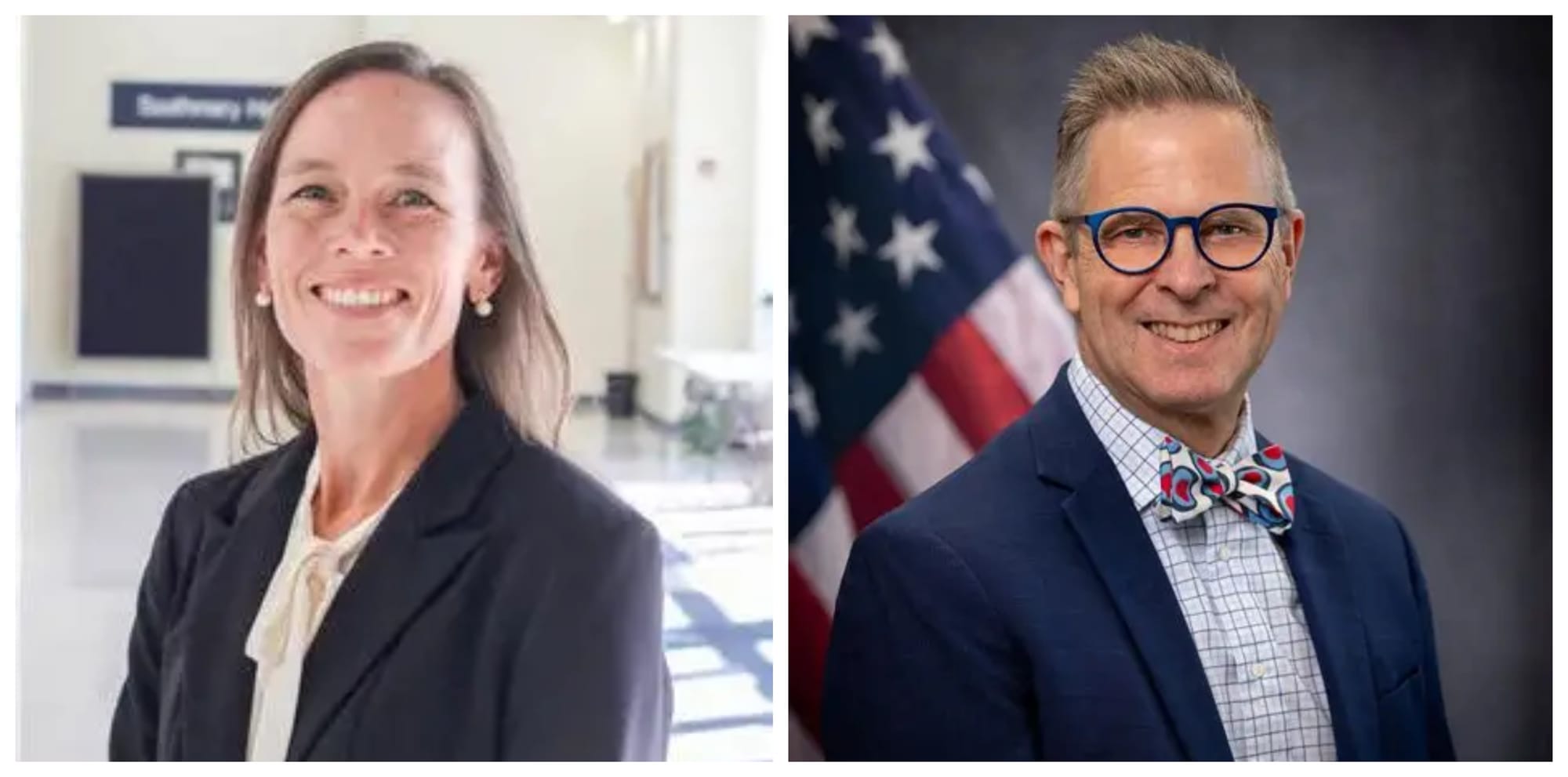
Roanoke's school division has sent $20.5 million in unspent local money from 2024-25 back to the city. And another $5.2 million will also be returned later this year based on new practices between the two bodies.
The city council is now discussing using some portion of the $20.5 million for other needs — and it is clear that there will be more council scrutiny of school system finances than there has been in the past.
Asked recently about her view of what to do with the $20.5 million, City Manager Valmarie Turner said that’s up to the council.
Mayor Joe Cobb, answering emailed questions about the situation, wrote Tuesday that no decisions have been made but council’s discussions include using the transferred school money for other needs.
That’s being driven by the city’s current fiscal stress, caused by anticipated drops in tax revenue at a time when Roanoke has tens of millions of dollars in overdue repairs, including $4 million in elevators alone.
Over the past several months, there’s been a flurry of letters and emails sent between city and school officials.
In 2011, the council approved the funding formula, agreeing the schools would get 40 percent of the city’s annual tax money. Once established, that in itself prompted a reduced level of questioning. The school division kept its surplus and built a budget process that incorporated that money. That enabled the school administration and school board to come up with a plan to complete numerous high-dollar projects — from the new $34 million Preston Park Elementary school set to open this year to its new $17 million William Robertson administrative building, located in the former Roanoke Times building downtown. Those projects were paid for without extensive long-term debt, something unusual for an urban division.
But times are changing.
Private meetings and a request for answers
First, the council revised the funding formula twice in recent years, first to base the 40 percent on the city’s projected annual revenue versus actual, then to provide that the schools could get “up to” 40 percent of that revenue. There is now a proposal, yet to be finalized, for the city to lower the percentage from 40 percent to 34 percent. A task force made up of several city and school officials began meeting several months ago to hash out the funding issues.
Meanwhile, as the task force does its work, the council is holding regular closed meetings with Michael Lockaby, a private Roanoke attorney who specializes in government funding matters. The council has made no public comments about those meetings, which are closed under an exemption of the state Freedom of Information Act “involving the legal standards for financing of the schools.” The city hired Lockaby early last year and he was part of discussions that led to an accusatory letter Turner sent to school Superintendent Verletta White in April.
Turner wrote that school officials were potentially breaking the law over their handling of a multi-million-dollar rainy day fund, allegations that the superintendent said amounted to "defamatory language” and “veiled threats.”
In the months that followed, that included a meeting over the letters, the situation calmed, but Lockaby is still giving the council advice.
As of May, the city paid him $8,027 for work through April. The amount he’s been paid since was not available by press time this week. Lockaby, according to his retention letter, is charging $295 per hour, with his paralegal getting $135 per hour.
Cobb, in his email to The Roanoke Rambler, wrote that the advice council has received from Lockaby “has been exceptional and we will utilize his services as long as needed.”
Since the council decided to ask more questions — and meet with Lockaby — school officials have been frustrated at times with the ongoing situation.
For instance, the school board asked in October that the city council consider reappropriating $8.3 million for trailers that school officials say are necessary to alleviate student overcrowding at Patrick Henry and William Fleming high schools. That total was requested to also offset lease and maintenance costs for the trailers over a two- to three-year period.
School board members, at numerous meetings, asked questions about the status of a council decision on the matter. At a meeting in November, school Chief Operations Officer Chris Perkins said it was important that a decision be made so the division can plan for the next budget year.
That led board member Joyce Watkins to say: “Is it time for us to reach out to our council buddies?”
“We need to relieve overcrowding,” Perkins responded, adding that the number of teachers who have to use carts to move from class to class due to the problem is increasing.
After that meeting, weeks went by. At a meeting in December, with no official response from the city, the school board decided to send correspondence. Chairwoman Franny Apel wrote to Mayor Joe Cobb and council members on Dec. 16, asking about the status of the trailer funding, according to a letter The Rambler received through an open records request. "To remain on schedule with planning and budgeting, we respectfully request guidance," Apel wrote.
Cobb responded via email that day, writing that the council would discuss it.
On Jan. 6, Cobb sent Apel and school Superintendent Verletta White a letter, writing that the council agreed to reappropriate $4.3 million toward first-year costs for the “learning cottages” — or about half of the school board’s request.
The council is scheduled to vote on that matter – and the revised school funding formula – at its 2 p.m. meeting next Tuesday.
During a school board meeting Tuesday night, Perkins said the city is also requiring the schools to go through a zoning process for the trailers. He said the trailers aren't likely to be ready for students until 2027.
"I just want to go on record saying how disturbing this all is," Watkins said of the situation involving the trailers and the funding changes. "I fear for our future," she added.
Talking ‘true-up’
That was not the only matter addressed in Cobb’s letter. While asking for $8.3 million for the trailers, the school board also made a request in December about how it could apply for its share of 2024-25 city revenue through the revised funding formula, which the school system refers to as “true-up” funds. The city later determined the true-up amount available to the schools would be $2.1 million – and in the Jan. 6 letter, Cobb said that amount would be part of the $4.3 million trailer appropriation, with the rest to be covered by its separate unspent capital balance.
Continuing, Cobb wrote: “There is no need to submit any additional requests for the true-up funds.”
Cobb’s letter also included numerous questions on council’s mind about the trailers, including:
Why school officials think they’re the best option?
How long would they be in place?
How will ongoing maintenance and personnel costs related to the trailers be incorporated into the school budget?
And if school officials have considered using its projected surplus from the current fiscal year for the trailers?
What the surplus will be remains to be seen. The council approved freezing the local contribution to schools for 2025-26 at the same amount as the previous year, $106.9 million.
That resulted in a $6.7 million decrease from what it could have received, based on school data.
If the council adopts the change to 34 percent of revenue, for 2026-27, the city estimates that the schools would receive an increase of $751,114 in local money, according to numbers received by the division and presented during a school board meeting Tuesday night. If the schools were to receive 40 percent, that $751,114 total would increase by $45,066.