
The Line Keeps Growing. The Food Is Running Short.

St. Francis House cut its operating days after federal food shipments fell by more than 60%. The change comes as one of Roanoke's largest emergency food providers serves more people than ever.
Roanoke, VA
Author: Roanoke Rambler Staff, Tina Charisma Lead
Published: 7:00 AM EST June 17, 2026
Edited: 7:00 AM EST June 19, 2026
St. Francis House has been open five days a week for as long as most people can remember.
Starting this summer, and for the last few months, it's open three.
The change came quietly, without announcement or fanfare. But for the hundreds of Roanoke residents who depend on the Campbell Avenue food pantry each month, it is impossible to miss.
The reduction marks one of the most significant operational changes the pantry has made in recent years.
In January, St. Francis House received more than 8,000 pounds of food through the U.S. Department of Agriculture's Emergency Food Assistance Program (TEFAP) — the federal supply line that helps stock food pantries across the region. By June, that shipment had fallen to just under 3,000 pounds, a 63 percent decline in five months.
The shelves show it.
"It's sad knowing that people will be hungry because we don't have food to help them," Commonwealth Catholic Charities officials said. "Our team is disheartened knowing they are powerless to fix this problem. They feel like they are letting the community down."
The need, meanwhile, has not followed the supply downward.
St. Francis House served 18,877 individuals during fiscal year 2025. Through the first seven months of the current fiscal year, it has already served 9,208 people. In March, the pantry assisted 967 individuals. In April, that number climbed to 1,301.
The increase is part of a longer trend. Commonwealth Catholic Charities served 5,186 households through the pantry in fiscal year 2022. By fiscal year 2024, that number had risen to 7,583 households — a 47 percent increase in two years.
The pantry continues to register new clients every week.
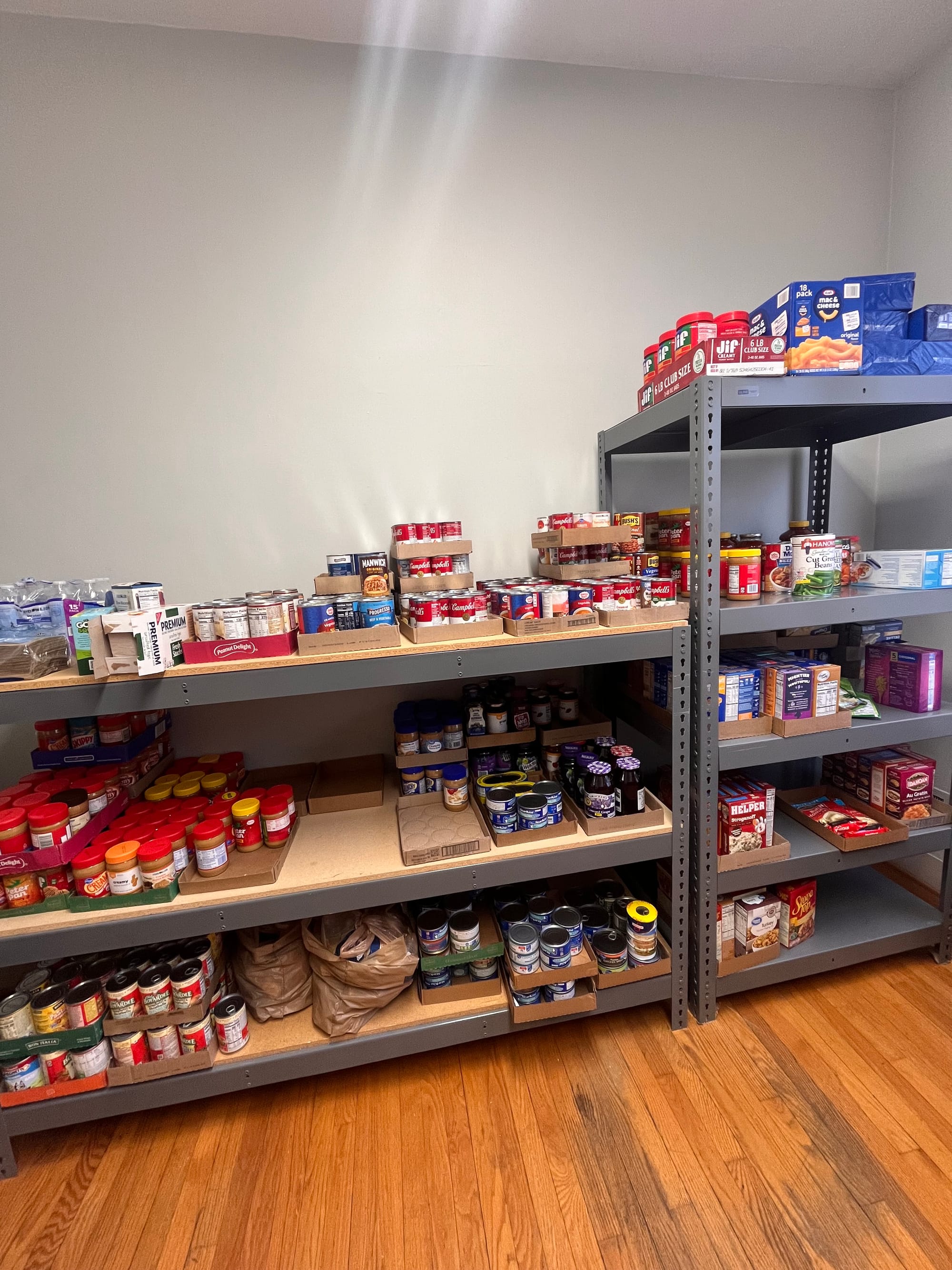
For decades, St. Francis House has operated as an emergency food resource for Roanoke residents. While it distributes USDA food, it also relies on donated supplies to serve people who do not meet federal income eligibility requirements.
"We never want to turn a hungry person away if we have food on hand to give," officials said.
The people seeking assistance come from across the community.
"Hunger doesn't look a certain way," Commonwealth Catholic Charities said. Working families, seniors living on fixed incomes, veterans, parents struggling with rising grocery costs, and people experiencing housing instability all rely on the pantry. Some visitors are transported from local shelters.
In recent weeks, some have been asked to come back another day.
Officials say they have had to ask people to return the following week on at least two occasions during the past month because food supplies were running low.
The local strain mirrors broader changes across Virginia.
According to the Virginia Department of Social Services, SNAP enrollment fell from roughly 867,000 Virginians in March 2025 to about 754,000 in March 2026, a decline of nearly 14 percent. At the same time, Feeding America estimates that more than 700,000 Virginians experience food insecurity annually.
For food providers, that creates a difficult contradiction: fewer people receiving assistance while demand for emergency food remains high.
The USDA's TEFAP program — the same program that supplied more than 8,000 pounds of food to St. Francis House in January — has absorbed roughly $500 million in reductions tied to Commodity Credit Corporation funding, part of a broader rollback of pandemic-era food assistance investments.
Southwest Virginia remains particularly vulnerable. Feeding Southwest Virginia estimates the region's food insecurity rate at 14.4 percent, with many of the state's most food-insecure localities located in the region.
For St. Francis House, the math is becoming increasingly difficult.
Officials estimate an additional 5,000 to 6,000 pounds of food would allow the pantry to resume operating five days a week this month. To sustain that schedule long term, they would need between 8,000 and 9,000 pounds of food each month — roughly the amount federal shipments provided earlier this year.
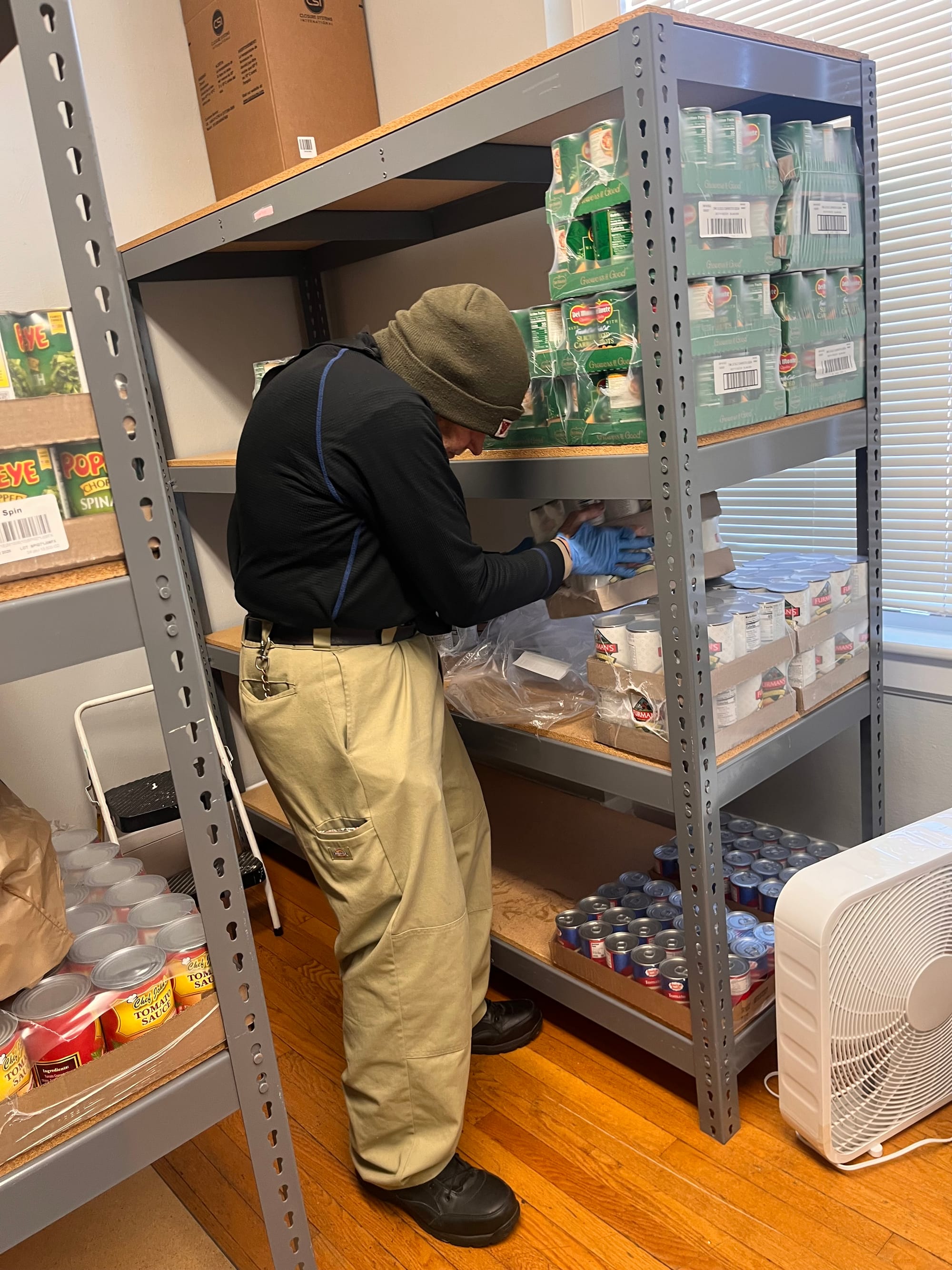
Community donations are helping bridge part of the gap. Commonwealth Catholic Charities says it is also exploring new partnerships and operational changes that could help stabilize supplies.
Still, officials acknowledge they do not yet know whether the current shortages represent a temporary disruption or a longer-term reality.
"We are hopeful a resolution will be found," the organization said.
Whether the current shortage proves temporary or becomes a lasting reality remains unclear. For now, St. Francis House is relying on donations, volunteers, and hope that federal shipments recover.
On Campbell Avenue, the consequences of the shortage are already visible.
The line has not gotten shorter.
The food supply has.
How to Help
St. Francis House is seeking donations of shelf-stable foods, including peanut butter, canned meat, and canned fruit.
Donations can be dropped off at 820 Campbell Ave. SW on Mondays, Wednesdays, and Fridays from 9 a.m. to noon, or arranged by calling ahead at 804-874-8920.
The Roanoke Rambler Staff