
Have Your Quesadilla and Eat It Too

Inside the week in Old Southwest where progressive anti-ICE virality collided with a boozy arrest record and an ill-timed fundraiser, exposing the stark local divide between performative internet outrage and real grassroots immigrant defense.
Roanoke, VA
Author: Roanoke Rambler Staff, Hart Fowler Lead
Published: 12:41 AM EST August 12, 2026
Edited: 12:47 AM EST August 12, 2026
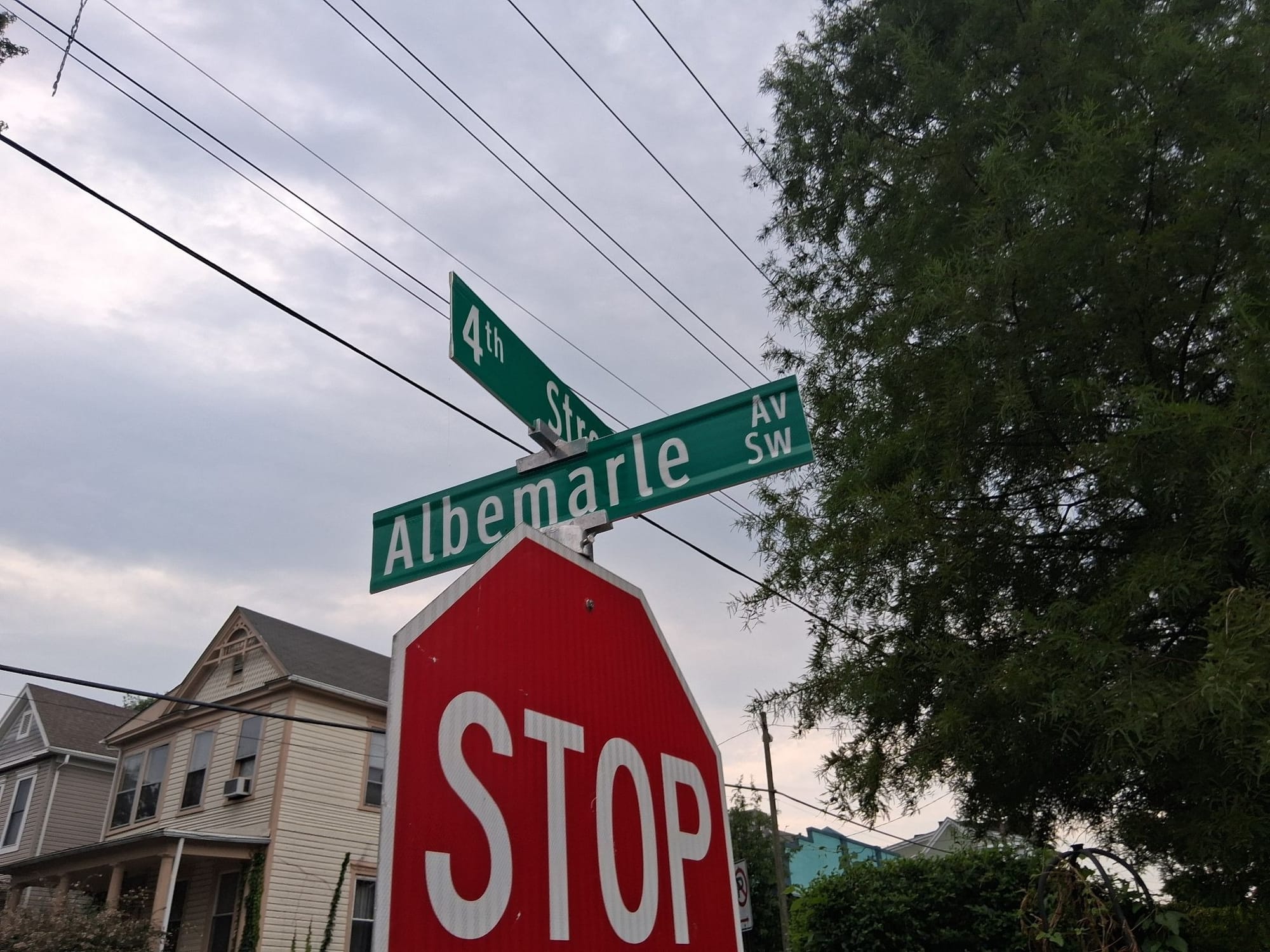
Not Baker’s Hours
Selvin "Gato" Ramos-Perez was riding with a friend whose vehicle rear-ended another car in a Cave Spring parking lot in the early morning hours of Tuesday, August 4. Both men were allegedly intoxicated and booked into the Roanoke County Jail that morning.
The jail immediately completed its standard verification checks, which automatically triggered an immigration alert to federal handlers. Immigration and Customs Enforcement promptly lodged a federal detainer, and Ramos-Perez was transferred directly into ICE custody that same afternoon.
The driver of the car was also transferred into federal custody, according to the department's statement. While that vehicle driver’s current whereabouts remain unknown, Gato’s backstory has been rapidly coming to light.
The unravelling began with a frantic, one-second phone call from the jail’s inmate phone system. Gato managed to utter only three words—"They got me"—before the line went dead due to insufficient funds, according to Amelia Ammann, Gato’s boss and the owner of Evie’s Bistro and Bakery.
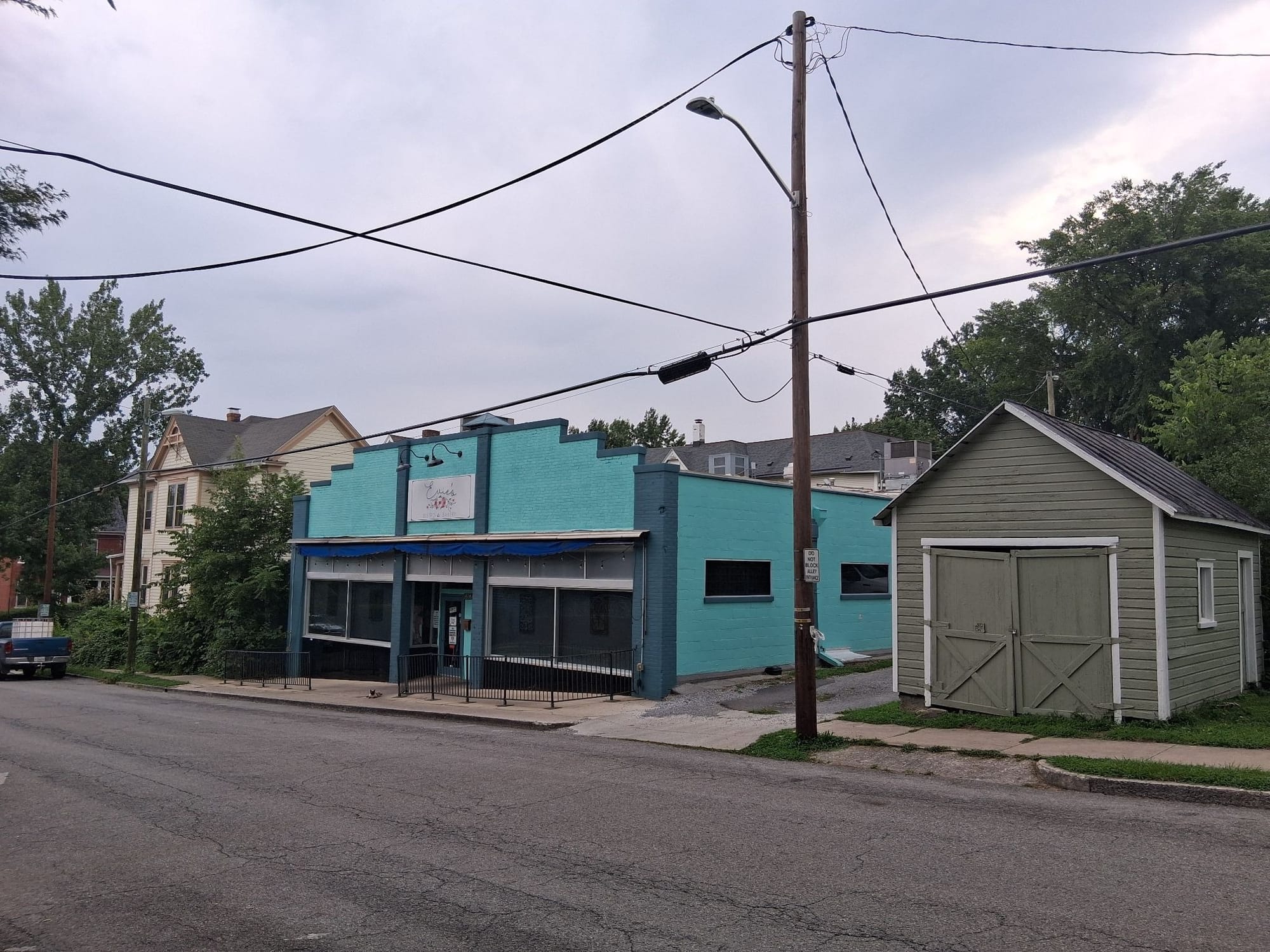
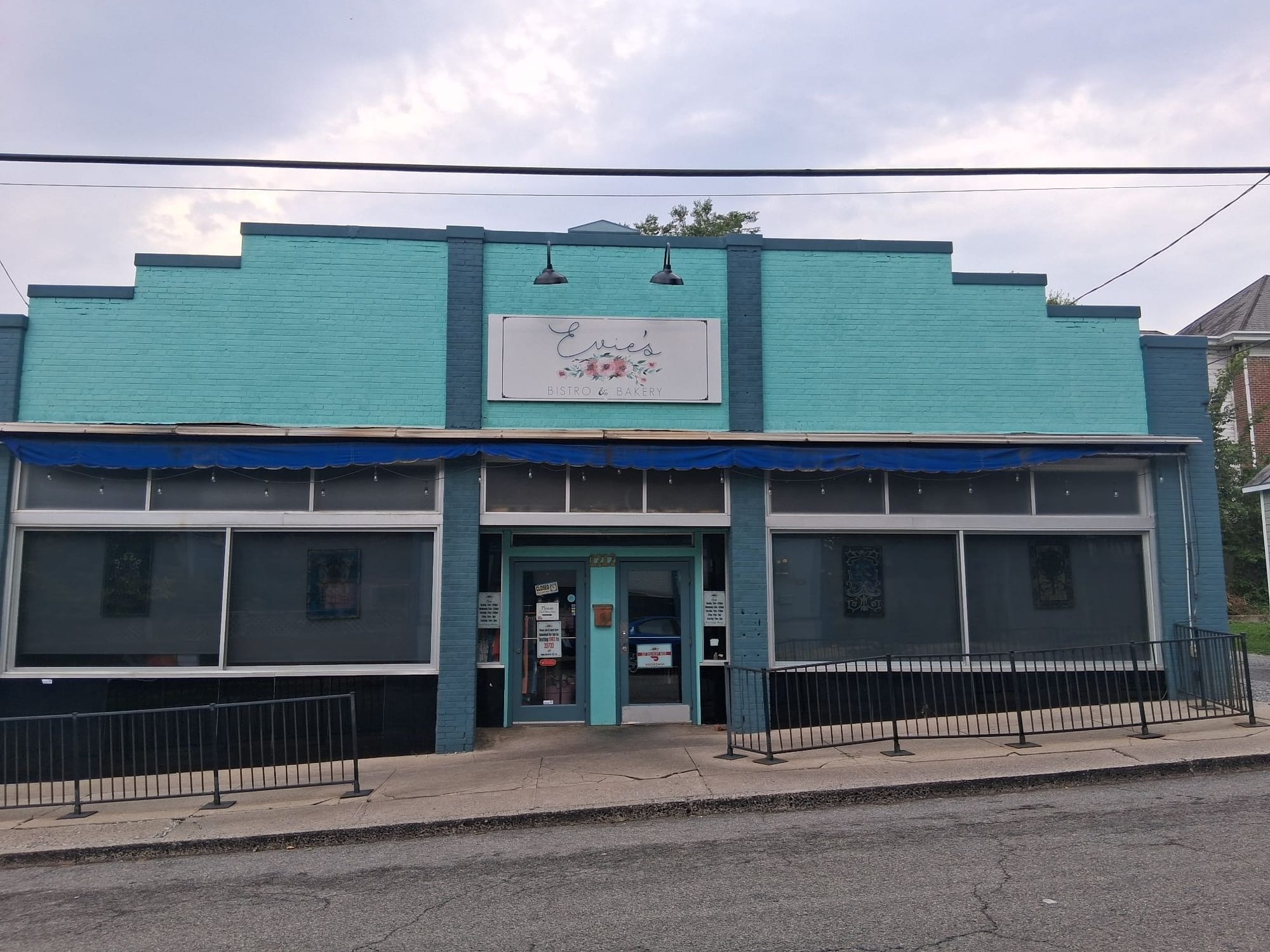
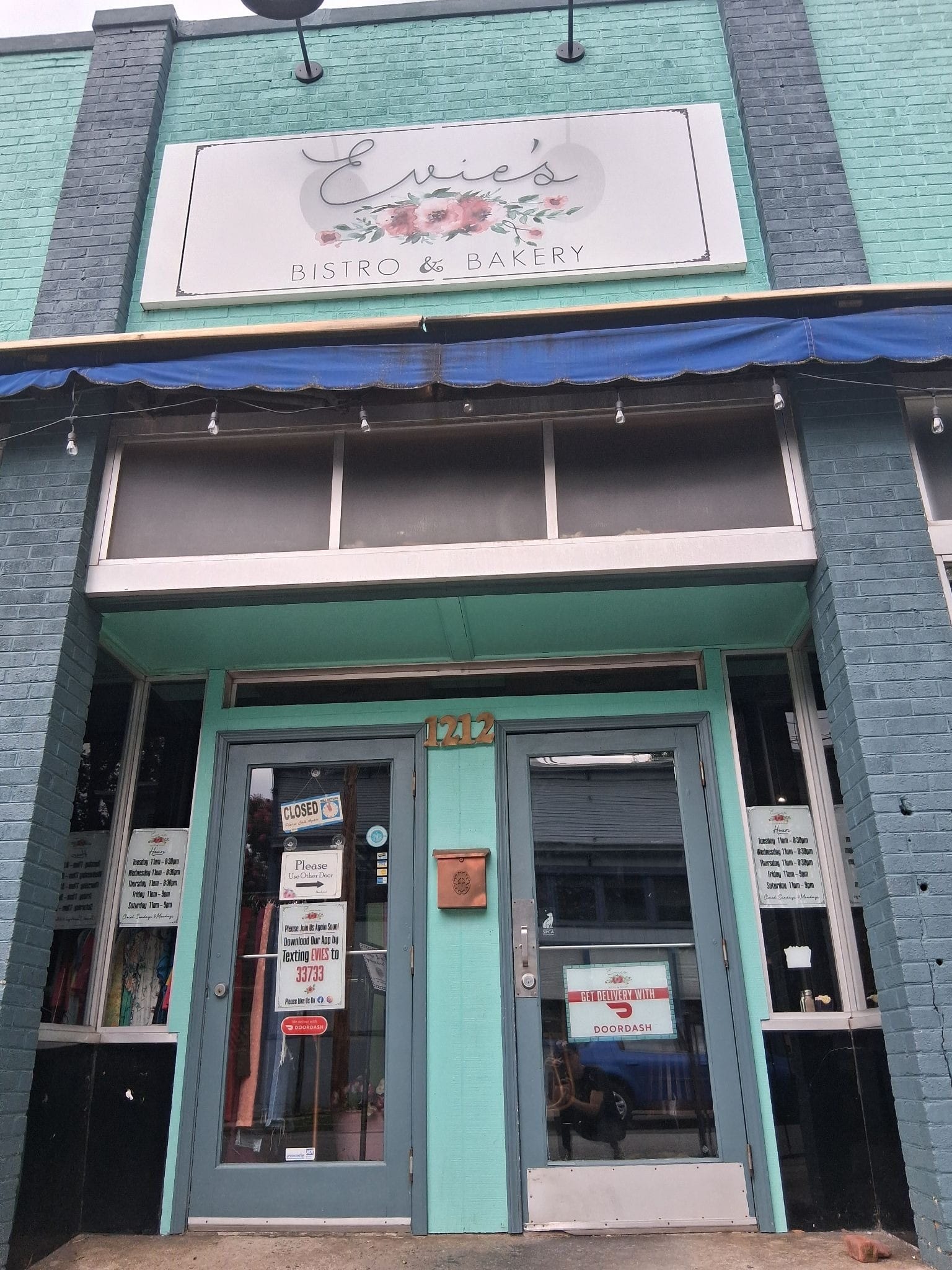
Gato was her head chef and was late to work. He had reliably run the kitchen in this beloved neighborhood restaurant, nestled in a historic Old Southwest spot, for the last four years.
Beyond its local culinary reputation, Evie’s also played host to many Democratic campaign fundraisers and gatherings, one of which was scheduled for Thursday night.
Blowing up the Spot
That public political identity was amplified and projected online, where Ammann paired the bistro’s physical role as a progressive enclave with an intense, anti-ICE digital swagger. Her social media feeds and local community postings frequently featured combative, text-heavy graphics—including a widely distributed anti-ICE flyer prominently displaying the word chinga—fusing the bakery's daily commercial outreach with explicit, hostile resistance against federal enforcement.
Ammann was featured in the videos dancing, blowing whistles, and coyly taunting immigration agents with a confident pop-star swagger in eclectic, thrifted vintage gear. The restaurant's public Instagram and Facebook reels were highly polished, complete with slick editing and curated, rhythm-heavy synth-pop tracks. The videos were well received, shared, and heavily liked—with her viral anti-ICE street-dancing reel accumulating over 43,000 views and 2,400 likes as it circulated across the region.
Wednesday, August 5
The Facebook response erupted early that morning, when Ammann posted an emotional video confirming Gato's detention. She appeared to have effectively weaponized her social media presence exactly as she had designed it: as an instantaneous beacon for progressive mobilization.
The news was immediately amplified across the regional network by Tom Landon, husband of congressional candidate Beth Macy, who published the "Bring Gato to Safety" appeal to his personal Facebook page while fully aware that his wife's high-profile campaign event was scheduled at the bistro the very next evening.
Within hours, the online footprint became a crowded ideological battlefield. Out of roughly 1,200 initial public comments and interactions captured across the primary regional feeds, a dominant 75% wave comprising nearly 900 local responses flooded the threads with care emojis and rapid digital donations. Meanwhile, a vocal 25% counter-narrative of roughly 300 users aggressively condemned the business's open defiance of federal laws.
The Unraveling Reality
But as the layers of Gato’s background became more clear—almost as if they had been hidden in plain sight all along—the fervor exposed uncomfortable structural realities underneath the American immigration crisis, as well as the penalties for repeat offenders. These tensions run far deeper than the performative virtue signaling so prevalent across modern social media feeds.
What Gato knew, and what ICE knew, was that he had an extensive federal history of multiple prior deportations, a hit-and-run arrest, and identity fraud charges. Intertwined with his federal immigration file was a persistent localized pattern of alcohol-related offenses, including a 2017 driving under the influence arrest and three separate public intoxication convictions spanning from 2016 to 2021.
ICE typically does not release this information to the public due to strict federal privacy acts protecting administrative detainees. This legal shield is the precise reason the vehicle driver’s identity remains entirely unknown.
However, because the bakery's viral campaign publicly challenged the automated arrest as a targeted federal ambush, the Department of Homeland Security took the rare step of releasing Perez’s record to correct the public narrative.
What Gato knew, and what ICE knew, was that he had an extensive federal history of multiple prior deportations, a hit-and-run arrest, and identity fraud charges. Intertwined with his federal immigration file was a persistent localized pattern of alcohol-related offenses, including a 2017 driving under the influence arrest and three separate public intoxication convictions spanning from 2016 to 2021.
ICE typically does not release this information to the public due to strict federal privacy acts protecting administrative detainees. This legal shield is the precise reason the vehicle driver’s identity remains entirely unknown.
However, because the bakery's viral campaign publicly challenged the automated arrest as a targeted federal ambush, the Department of Homeland Security took the rare step of releasing Perez’s record to correct the public narrative.
The Industry Blind Spot: Activism vs. Due Diligence
The explosive revelation of Gato’s extensive federal record exposes the profound gap between political theater and tactical operational exposure.
In the independent restaurant industry, where razor-thin margins and acute staffing shortages dominate, the kitchen back-of-house has long functioned as a "no-questions-asked" zone. Many independent operators survive by practicing a form of tactical, willful blindness regarding employment paperwork, relying on an informal labor market to keep the doors open.
Under the Immigration Reform and Control Act (IRCA), however, small business owners face strict liability. Federal law mandates that every business verify employment eligibility via Form I-9; failing to do so carries civil penalties of up to $5,724 per unauthorized worker, entirely independent of whether an owner was aware of an employee's background.
The widespread reliance on unauthorized workers is an open secret in the American hospitality sector, an industry famously characterized by the late Anthony Bourdain as entirely dependent on a workforce navigating a severe legal paradox: "The bald fact is that the entire restaurant industry in America would close down overnight, would never recover, if current immigration laws were enforced quickly and thoroughly across the board. ... Illegal labor is the backbone of the service and hospitality industry—Mexican, Salvadoran and Ecuadoran in particular. ... I know very few chefs who’ve even heard of a US-born citizen coming in the door to ask for a dishwasher, night clean-up or kitchen prep job. Until that happens—let’s at least try to be honest when discussing this issue." — Anthony Bourdain
The Paradox of the Repeat Offender
While a restaurant owner is not legally culpable for a worker's past personal crimes, such as Perez’s historical DUIs or hit-and-run charges, they are entirely responsible for the integrity of their payroll. Herein lies the ultimate structural contradiction of the 4th Street bistro. While most local kitchens balance their reliance on undocumented labor with quiet discretion to avoid regulatory scrutiny, Evie’s did the exact opposite.
Yet, would keeping quiet on immigration at the restaurant have affected Gato's trajectory? Perhaps not. The unyielding reality of living under the constant shadow of federal deportation is an exhausting, traumatic burden. For an undocumented worker navigating decades of legal instability, alcohol frequently shifts from a social pastime to a destructive coping mechanism.
And by choosing to blast their undocumented back-of-house operations onto public social media feeds rather than shielding them with traditional industry discretion, the restaurant's ownership stripped away the quiet anonymity that kept their head chef insulated from a systemic pressure cooker.
Thursday, August 6: Dropping the Cake
The timing of Gato's arrest introduced a sudden disruption into the 6th Congressional District race exactly 48 hours before the local Democratic establishment gathered at the venue for a campaign fundraiser. For Beth Macy and the regional Democratic platform, the optics of the situation created an immediate political liability.
For a campaign that loudly champions systemic immigration reform and humane worker protections, discovering that their preferred neighborhood venue was operating on a volatile history of federal fraud, multiple prior deportations, and chronic alcohol-related offenses completely undermined their messaging.
It forced a deeply compromising irony right before a general election. Inside the dining room, local progressive women gathered at a ticketed "Women Supporting Women" themed fundraiser to speak passionately about community advocacy and systemic human rights, while the spotlighted sanctuary kitchen that prepared their savory entrees stood empty—its manager sitting in a federal cell facing severe identity and border infractions.
This juxtaposition effectively hand-delivered a potent narrative to their conservative opponents. It turned a celebratory campaign event into a public demonstration of the exact progressive blind spots that critics frequently weaponize against Democratic immigration and border policies.
The Strategic Silence (The Boundary of Political Survival)
In her alarming and worried Wednesday morning video, Ammann leaned heavily into her digital platform, publicly claiming that she had successfully mobilized a powerful network of regional political elites—explicitly naming State Delegate Sam Rasoul, congressional candidate Beth Macy, and local political figures Danny Clawson and Raekwon Moore—to work on Gato’s behalf.
However, her public declarations of institutional intervention were met with a stark wall of silence. None of the listed politicians stepped forward to publicly echo her demands or validate their alleged involvement in the unfolding federal detention.
Yet, given the revelations that emerged by the end of the week, there was absolutely nothing those political figures could have done to alter the outcome anyway. When dealing with a repeat offender in administrative detention who holds an extensive multi-page federal record of multiple prior deportations and identity fraud charges, the system operates on a rigid, automated legal track. No amount of local political capital or back-channel congressional casework can stall or override a mandatory federal immigration detainer triggered by an automated jail booking check.
Instead, the regional progressive apparatus completely insulated their public campaigns from the developing crisis, transforming the situation from a standard progressive mobilization effort into a strict boundary of political survival. This sudden wall of separation left the 4th Street SW activist hub to navigate the fallout entirely on its own.
And now it is clear there is nothing that can be done except clean up the mess. For Gato’s younger brother, Angel, who shared their Roanoke home and suddenly found himself navigating a severe legal crisis entirely alone, the high-production digital defense did nothing to stop the cold arithmetic of federal custody.
The online firestorm did not halt his brother's immediate transfer out of the region; instead, it left a working-class family member to process the sudden, life-altering wreckage of a quiet life completely stripped of its anonymity.
Collateral Exposure
In response to the local police department's handling of the arrest, Ammann is actively expanding her defense strategy beyond the federal immigration courts, confirming she is considering pursuing formal legal action against the Roanoke County Police Department. Ammann indicated that the family could potentially redirect funds from the rapidly growing community GoFundMe campaign to finance this secondary civil offensive.
However, this crowd-funded legal offensive has triggered a sharp operational disconnect with one of Roanoke’s actual immigrant advocacy networks. In a public statement titled "Consent, Accountability, and Safety in Community Care," the grassroots mutual aid collective Los Ayudantes SWVA openly condemned the restaurant's strategy as dangerous, performative allyship.
They argue that broadcasting an undocumented worker's profile for social media engagement and escalating a localized traffic stop into a high-profile legal war with the police department acts as a lightning rod—recklessly inviting severe federal surveillance onto hundreds of vulnerable local families trying to survive quietly in the shadows.
The community backlash from these grassroots organizers exposes a sharp operational double standard. While working-class mutual aid networks rely on absolute anonymity to protect vulnerable residents, a prominent business owner chose high-production social media visibility to manage a legal crisis.
Meanwhile, the institutional apparatus moved along completely undisturbed. While the Roanoke City Democratic Committee posted cheerful, standard digital recaps praising the bistro’s "great food and superb desserts," they completely decoupled their campaign apparatus from the legal reality of the empty kitchen.
When the digital firestorm finally clears, the cold reality of the incident remains entirely unchanged. The political campaigns proceed toward November, and the restaurant ownership retains its viral platform. But Roanoke loses a talented chef, who remains held in a federal facility awaiting deportation back to Guatemala after 12 years in the city. He leaves an empty kitchen behind, while local immigrant families are left entirely alone to navigate the heightened scrutiny left in its wake.