
Melrose Mixer: Nine Council Candidates Spar Over Schools, Flock Tech, and Housing Reform
Roanoke, VA
Author: Roanoke Rambler Staff, Hart Fowler Lead
Published: 2:00 AM EST July 15, 2026
Edited: 1:00 PM EST July 15, 2026
FEATURING
The Incumbents
- Peter Volosin (Democratic Incumbent)
- Vivian Sanchez-Jones (Democratic Incumbent)
The Challengers
- Stephanie Moon Reynolds (Independent)
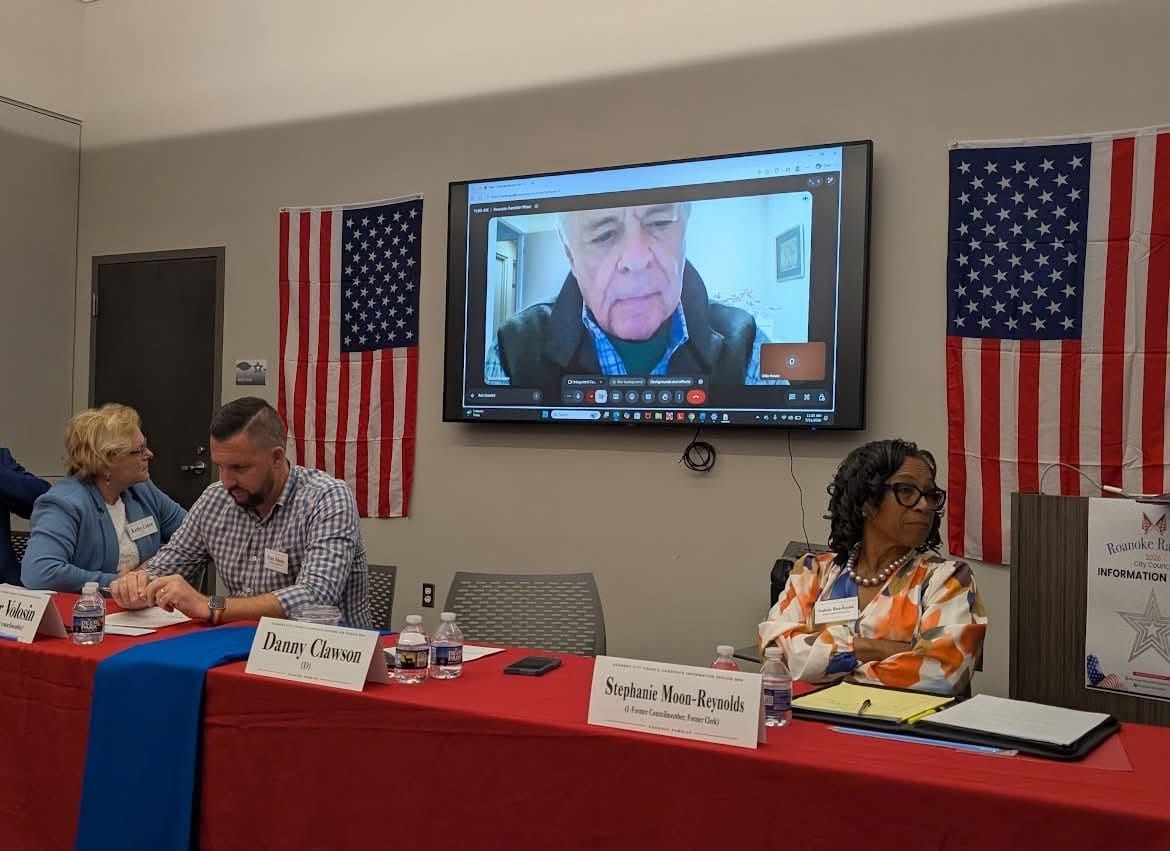
- David Bowers (Independent) (participated via teleconference)
- Raekwon Moore (Democrat)
- Danny Clawson (Democrat)
- Harvey Brookins (Democrat)
- Kathy Cohen (Independent)
- Amanda Marko (Republican) (Absent from live Q&A panel; participated via a pre-written opening statement read aloud by the moderator)
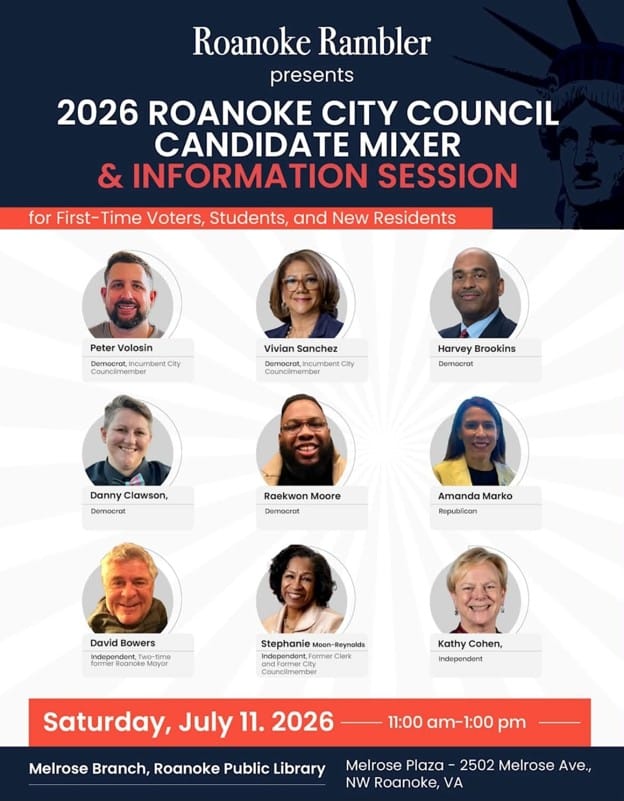
All nine candidates vying for seats on the Roanoke City Council crowded onto the stage at Melrose Library last weekend, giving voters a direct look at a highly polarized field. The Roanoke Rambler Community Mixer, held inside the newly opened Melrose Plaza, quickly ditched standard campaign platitudes when audience members took the microphone. Instead of general promises, neighbors pressed the mix of political newcomers, incumbents, and former city officials on the specific neighborhood friction points tightening local races.
The dialogue coalesced with audience questions focused on three defining neighborhood issues: a recent, contentious overhaul of Roanoke’s traditional public school funding formula; the city's rollout—and subsequent public pushback against—the installation of Flock license plate readers and Raven gunshot detection surveillance tech; and City Council's ongoing, highly polarized legislative battles over residential zoning reforms
The School Funding Overhaul
The education debate centers on City Council's highly contentious decision during the adoption of the Fiscal Year 2027 budget to completely abandon Roanoke’s traditional 40 percent school funding formula. For 17 years, that mathematical directive automatically directed 40 percent of local tax revenues straight to Roanoke City Public Schools (RCPS).
By scrapping the formula and capping the city’s local contribution at a fixed $95.1 million, Council left the School Board facing a sudden $14.4 million funding gap. To absorb the deficit, the district was forced to eliminate 60 staff positions, causing projected elementary class sizes in working-class quadrants to balloon from an average of 20 students per class up to 30, while severely straining student access to mental health counselors.
Part I: The Immediate Funding Crisis
Audience Question:
"And the fact that our school system is faltering. We might be able to bring those people into Roanoke, but they're going to be living in the county. What are your ideas?"
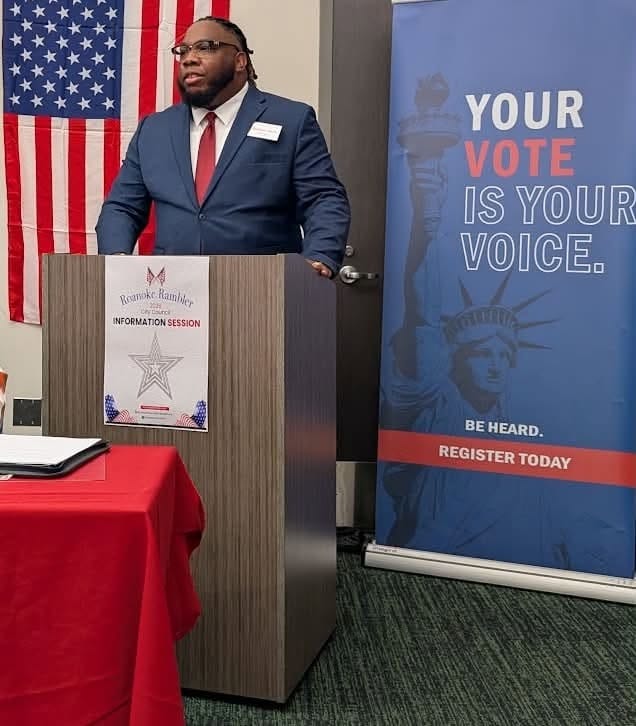
"Education is the top issue in my platform. I went to our public city schools. I believe in bringing back education. I think that we should be taking a portion of our meals tax as it expires. I think we should keep that amount on there and be allocating those funds to our public city schools so that while we are fixing the city's finances, we're immediately increasing funding to our public schools.
I think most of us wouldn't mind that specific tax staying where it is if it means that our kids are getting more teachers in the classroom, that they're able to keep their activity buses, that we're able to have adequate schools.
And I've been directly impacted by my educators. At my campaign launch, I was lucky enough to have my former teacher and former school board member, Miss Diane Casola, be there and speak on my behalf, and I'm still connected with many of my former teachers because they had such an impact on me and so education is important. I share that with you and thank you for asking that question."
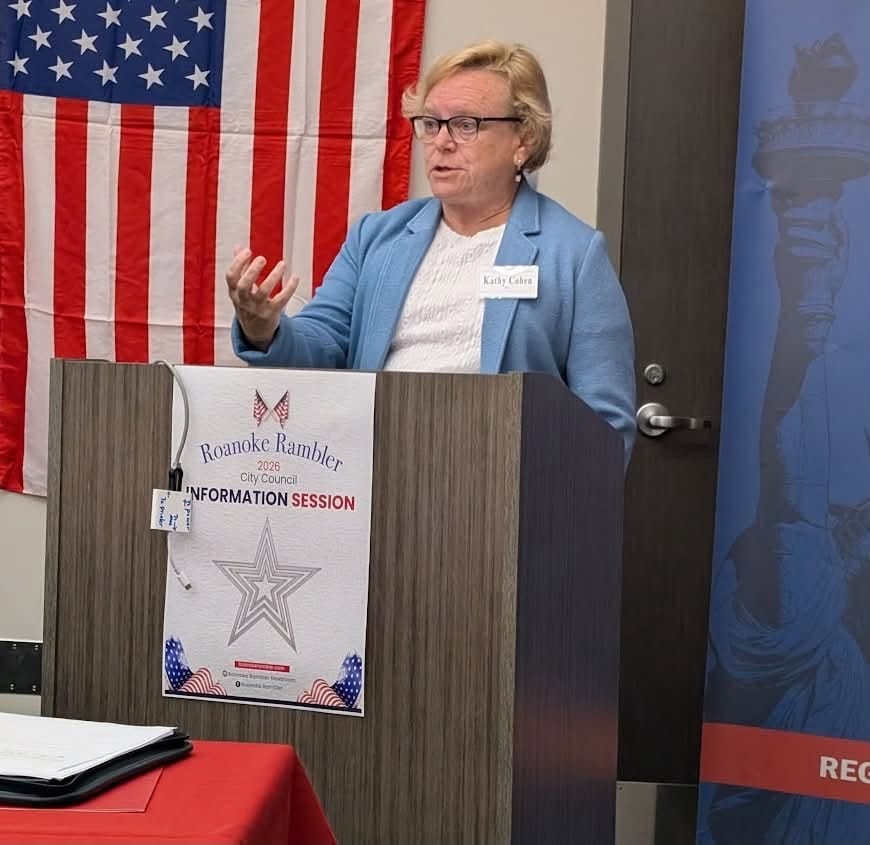
"Thank you for that question. That is truly one of the platforms that pushed me over to want to run. Not only is it a problem for bringing people here, it's also a problem for safety. Because if our children do not get the education and the support they need, more of them are going to be out on the streets and going to be victims or perpetrators of crime. And that is not what we need in this city.
So my thing is I love what Raekwon said. I agree with that as well. And I also looked at the city budget and there are different places where $33.6 million is set aside for amenities. I don't know what amenities are. My guess is they are park improvements, not maintenance. That should go to our children."
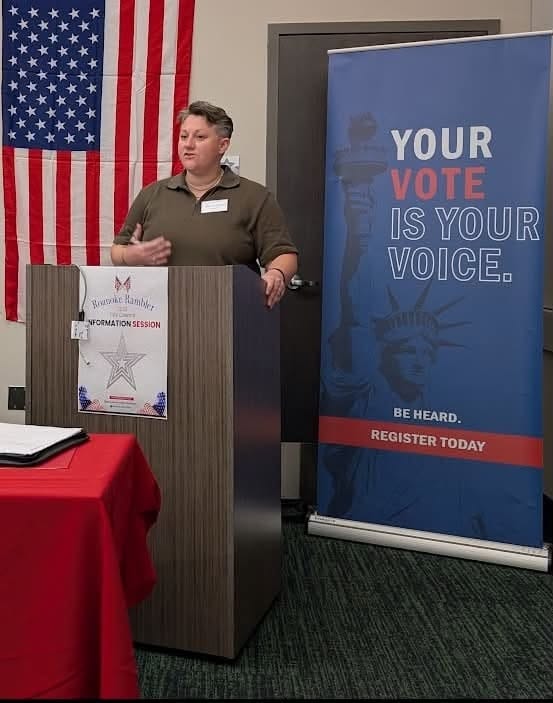
“I have been a lifelong education advocate and when I moved here in 2020, I quickly became involved in candidates that are really focused on that. I supported a write-in school board candidate for Roanoke County Schools when a school board was trying to implement MAGA policies that was being run by a Moms for Liberty chapter founder. I was able to do a write-in campaign in '23 and then ran a 2025 campaign that unseated Moms for Liberty that was working against critical race theory and making a whole mess of the school board.
So, I'm deeply committed to good school policies that support and protect students. I will also say that we need to put a full tax on recreational cannabis when it comes here. Put that back into education and we need collective bargaining for our teachers to make sure that when we are in tough times, we have the experts in the room saying where we need to prioritize our resources. I'm also for 40% returning to a 40% standard structure."
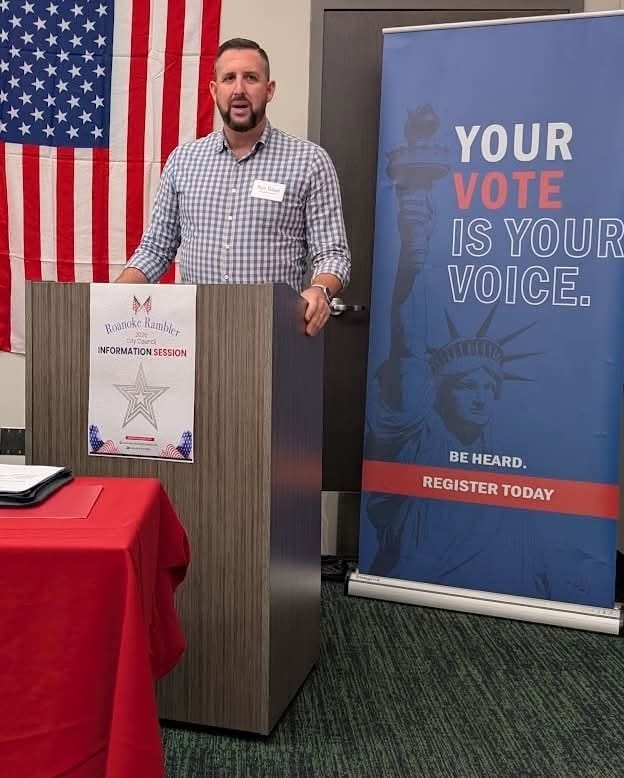
"All right, I'm going to give a quick answer as to why we had to do what we did with the school's funding formula this year. When we went in there and got rid of Bob Cowell, we learned that there were a lot of things that we were lied to about and our financial state was not anywhere near what we thought it was. And so what we had to do is take a step back and look at what is sustainable for both the schools and the city, to move forward.
I would love to increase what we give to the schools as we get our feet below us and we're able to start building our finances back. I agree that children are very important to us. Also, we need to make sure that we're doing adult workforce development as well, like what's going on at the Excel Center here. I would like for us to do the 1% sales tax for for school construction to make sure that we have the money to build a third high school because I'd like to see Roanoke grow, which means we're going to need one. And I will say I don't know where that $33 million of amenities are coming from because I look at the same budget and I don't see those. I would love to see an actual example of what Rabbi Cohen is talking about."
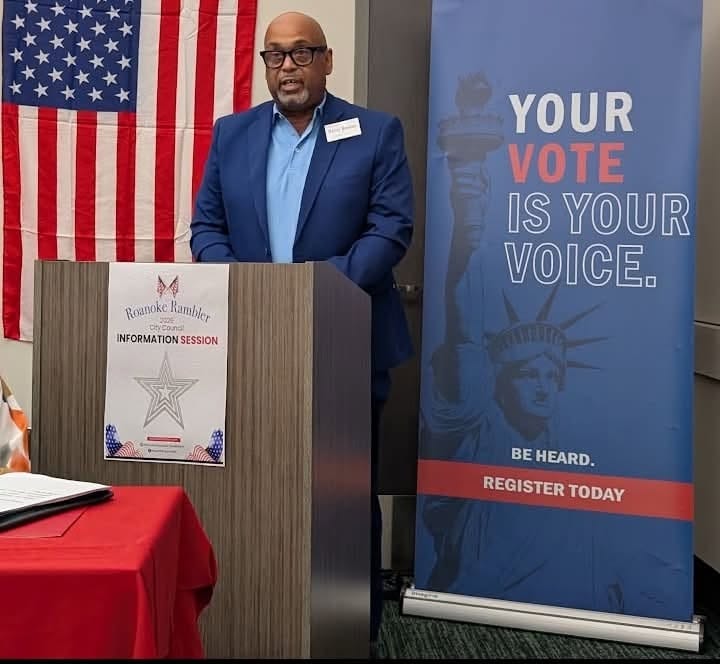
"You know, one of the things I've been really disappointed about with during this whole process is the lack of collaboration. You know, we've got an example with our city school leaders that have been fiscally responsible. They've had this budget and they've not only expanded their footprint, they moved their headquarters, they put back the Daytech and and the training school and they've done this and saved money.
So why aren't we collaborating with the school system, putting this finance team and the school finance team to get best practices, combine it and fix our school budget in a collaborative way instead of telling the schools what they need? Let's work together for overall solutions that help both the taxpayers and our students."
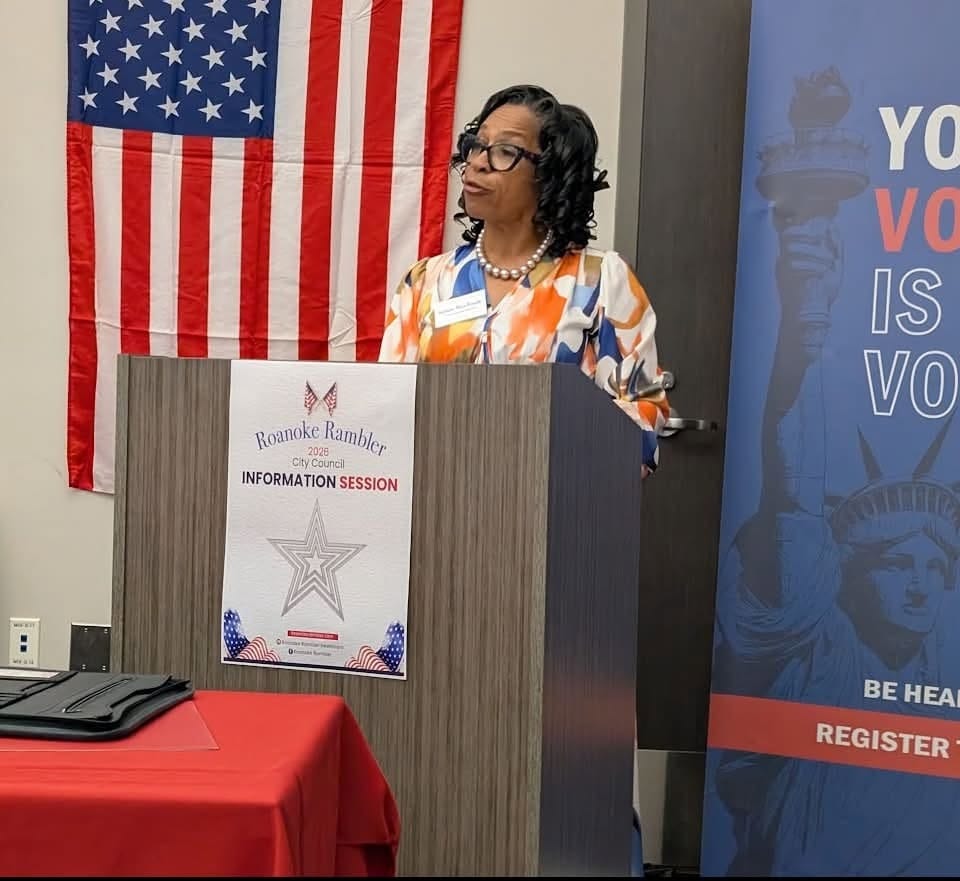
"I agree with everything that they have said so I won't repeat it except I have substituted in the schools so I know firsthand what is going on and the classrooms are overcrowded and the kids I have to say need discipline most of the time and not education. They need the education but I have found the teachers are spending more time disciplining the kids because they cannot teach them.
And we talk about higher salaries. Higher salaries will not change that. We need to work with the parents and also bring in some more volunteers and retired teachers, those who know things that could be done better. I think that 3% that was reduced, we could have had more conversations three years ago that we did not have and then we implemented what is now. I think we still need to come to the table and have further discussion on how to fund the school system."
As a couple of the other candidates have said, I am in favor of returning to the 40% formula. That formula was crafted 10, 12, 15 years ago by former vice mayor Dave Trinkle, Judge Carson, who now serves on the circuit court, Sherman Lea, our former mayor, and others on the council at the time. And it did two things.
First of all, it sent a message to our community that the number one issue for our funding. The number one issue for our funding was our children and the education for our children and making sure that Roanoke City Schools are accredited, that our graduation rates are high, and we're doing what we can to assist those who are of need. The second thing that it did, it brought the council and the school board together in a collaboration. That's something someone else just mentioned. We used to fight cats and dogs over the budget issues over the last several years, 10, 15 years, that has gone away because the council and the school board have a formula and we've abided by that formula until this year. That's when it was cancelled by the city council."
Part II: The 40% Formula Debate
Audience Question (Follow-Up):
"Just a quick question to all the candidates available. We are listening to the 40% level. Who on this council thought we had fantastic schools when we had a 40% level? Because if we do not have fantastic schools at a 40% level, funding at a 40% level can't be the solution to getting great schools. So what would be your reasonable response to that? Magically we take it back to 40%. Tell me are we going to have great schools? Because we did not have great schools. The problem that the Bowers mentioned, the question that the discipline things that Miss Reynolds talked about was still there. Every complaint that each of you had still existed when it was 40%. Give me a fundamental change in our school system."
David Bowers (Independent)
"I remember the days when our graduation rate was about 65-68%. And I don't know what it is in the last year because I've not seen it reported in the paper or by journalists, but the graduation rate went way up. So, we put more investment into the schools and it paid off in higher graduation rates.
Secondly, I can remember when several schools and I can't remember the number were not accredited. Again, I don't know the current situation, but it was my understanding just a couple years ago that all the schools, except for one, all the schools were properly accredited. And so I think those are improvements resulting from the formula that was in place for a dozen years or more."
Editor’s Note:
State education data shows Roanoke City Public Schools’ on-time graduation rate peaked at an all-time high of 88.8% under Superintendent Verletta White's administration, but recently dipped to 84.4%, a substantial increase from the 65% to 68% rates recorded over a decade ago during Bowers' previous mayoral tenure.
While Bowers remembers historical accreditation deficits, all 26 Roanoke City public schools are currently fully accredited under Virginia state standards. However, public anxiety stems from a new Virginia School Performance and Support Framework introduced in late 2025, which labeled 11 city campuses as "off track" and eight as "needing intensive support" due to state calculations regarding absenteeism and specific student subgroups, a framework Superintendent White stated misrepresents classroom progress.
Danny Clawson (Democrat)
The actual percentage is the consistency, right? Because schools have become a political football that's getting beat around all over our town. First it just needs to be standardized. And I think we should be spending a lot of money on schools because it's our future. It brings people to the city. It's really important.
But more so than that, I think when you talk about how are we really going to make the schools better, 40% is just the first step. Getting a standard formula back is the first step. I really want to invest in the social care around our students. I have 18 years of experience in mental health and substance use treatment, including working in my 20s in a high school, a residential high school for high-need students. And for me, education is only a small part of it. With COVID, with the social safety net that is failing us right now from the federal level on down, kids are not okay. And we need to be investing in their mental health and using investing in guidance counselors and all of that to help our students deal with the home problems in order to focus at school and get what they need.
Peter Volosin (Democratic Incumbent)
"I think that the 40% was a great thing when it was put in place, but it was also looked at supposed to be looked at every two years to make sure that it's sustainable and I think at a certain point 40% lost its sustainability and that's why we've had to go back and change it this year. I do think that we can get that back to a more sustainable level, but I do agree that social services are one of the things that we need most for our kids.
I know being with Miss Sanchez-Jones that a counselor has like a case load of like 300 kids. Can you imagine that? So, we have to make sure that we have more of those support services.
We have to reduce our administration. We had two people [in a position] that were in one administration and they were replaced with 10 people in a new administration. So, making sure that we're cutting the fat out of some of these. And then also one of the things that we've done is increase our grant funding. One of the things I've done on council is we have a grant department now. And so getting those grants going is really important because our 40% or 35 or 34% now, is only about one-third of the school's budget. 100 million out of 300 million. So there's a lot that the federal and state do as well."
Kathy Cohen (Independent)
“Thank you, Mr. Major, for the question. I just want to start by thanking Raekwon because he was so brave to mention Patrick Henry, my alma mater. I was not brave enough to say it.
But you know, what is a great school? I think this is the question here. Not how much money makes a great school.
And I will tell you that for my child, Roanoke City Public Schools were great, but they're not for every child. And that money means that we can have more individualization and work with more children where they are to bring them to the greatest potential that they have. Without that money, we have fewer people to do that and fewer children will reach their potential.”
Harvey Brookins (Democrat)
"You know, I agree with the question. It's a very challenging question and I don't think a standard formula works for any business over time. Things change, the economy changes, support that Peter mentioned coming from state or federal that changes and those and also the needs are fluid.
And so when you have a combined budget and when I look at my banking background and I work with a business and they say 20% of my revenue goes to this other business, first thing I'm going to ask for is where are those financials? Because I want to see things globally in order to help resolve these problems instead of just putting a standard formula in place and acting like we're two separate entities. We say we serve the same community. It does not make sense. So we need to collaborate every year with the school board, with the school leaders, and to determine what the needs are for all of Roanoke."
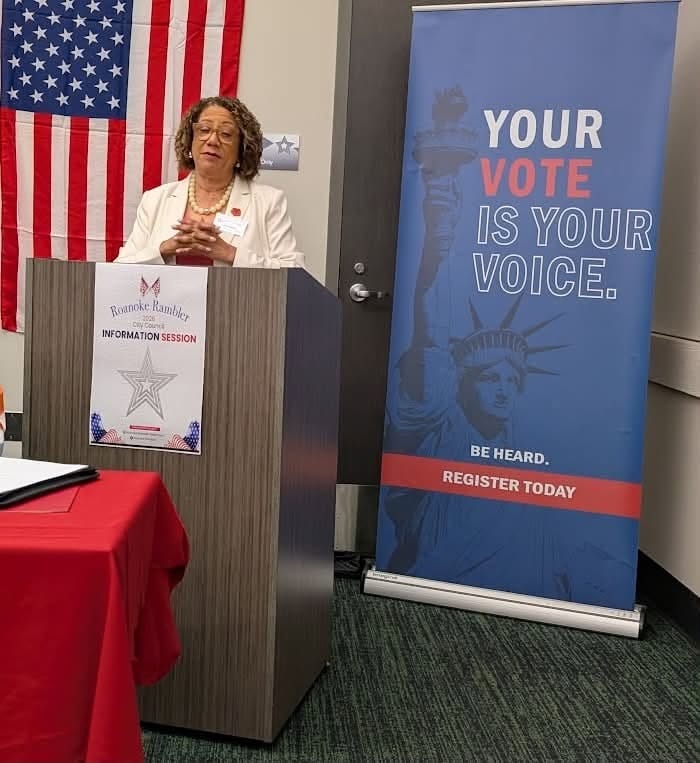
I don't have a whole lot to say about the formula. I just want to tell you that as an employee of the Roanoke City Public Schools, I am not allowed to vote by conflict of interest.
I was really disappointed that the city had to cut back the 6%. At the same time, I also know that my colleagues didn't have an easy time making that decision. And another thing that I want to address is the lack of discipline that some of our children have. So, I think as a community, maybe we should get together and be with the parents and help parents, help them raise their children. Yeah. And that's what we need.
Stephanie Moon Reynolds (Independent)
"I have to agree with Vivian, Harvey, and even Peter because there's a lot needs to be done in our school system and again having worked there I see the disciplinary problem we have, it is a serious one and if you cannot rely on the parents, these babies who are raising babies and the generations that keep continuing on, we're going to continue to have these problems.
So, there is no real solution. But I think we can still continue to talk about it, get these parents to understand that their kids' education is their livelihood to move them beyond poverty. I raised my kids in the public school system, my grandkids, and now I have great-grandchildren. Both of them go to Roanoke Academy, which is a serious underprivileged school with a lot of issues. And I think we've got to call on the parents, retired teachers, the whole community to step up."
Raekwon Moore (Democrat)
"So in thinking about transformative changes to our school system, I think that one of the biggest examples of a transformative change was when our current superintendent, now leading superintendent, transformed William Ruffner Middle School into a technical school. I was in Roanoke City Public Schools when that school was closed. It was closed under the guise that it was inoperable and somehow it became a school for administration.
Somehow for years it became a school that I worked in as officer of election and it was safe enough for the people at the top to work in, safe enough for us to run elections out of, but for some reason it was not safe enough for our kids to go to. I think that we need to lean and she did that through her own words by leaning on listening to our community, by connecting with our parents, by connecting with teachers and seeing what exact things we wanted to see improved in this community. I was a manager in banking and the best policy changes came from when we listened to the frontline workers and I think that we need to lean on our teachers and our parents to improve our schools transformatively together."
Flock Cameras and Surveillance
The surveillance issue remains particularly raw in the wake of City Council's dramatic unanimous vote on July 6th to completely repeal its gunshot-detection program. Roanoke Police Chief Scott Booth had heavily backed the technology, pitching the state-funded cameras and sensors as a data-driven necessity to build on his department's recent momentum. Since taking the helm, Booth’s strategy of targeted community policing has yielded undeniable results, driving down fatal shootings by 55 percent, non-fatal shootings by 44 percent, and overall citywide violent crime by 28 percent.
However, criminologists and public health analysts note that this downward trend is part of a broader, complicated equation. While the department's enforcement shifts have been vital, Roanoke’s violent crime drop is also remarkably synchronous with macro-level changes, including a natural stabilization of community structures following the disruption of the pandemic, alongside a gradual cooling of the local opioid crisis as harm-reduction initiatives expanded their footprint.
Hoping to lock in those hard-won safety gains, the department looked to Flock to drop gun violence rates even further and track down shooting victims faster. But after a massive administrative blunder exposed that 30 sensors were mistakenly installed in unapproved locations without homeowner consent, public trust tanked. Council stripped the technology away from the department entirely, leaving the candidates at the mixer to debate how the city moves forward from the fallout.
Audience Question:
"So while the recent appeal of the encroachment permits for Raven audio detection is a good first step despite the gross lack of research done by the city and the Roanoke Police Department and zero exploration of actually effective ways to spend government grant money to improve safety. It does barely scratch the surface on an existing government and RPD surveillance with a proven unreliable company that is blocked and is continually changing number of cameras installed on city property that the public is aware of or unaware of. Two of you are city council members who voted in favor of this surveillance, but I would like to hear from each of you.
And so what are your plans on council to increase public transparency on the city's surveillance of its citizens? And do you plan to actually listen to both concerns and factual evidence, non-conspiracy theories to permanently remove this company from our city entirely and the racist, sexist, xenophobic, and overall danger it puts your constituents in? All in a minute."
Danny Clawson (Democrat)
"So I'm very clearly opposed to Flock and Raven as companies in our city because we cannot surveil our way to safety, right? We need to be investing in community-based solutions like we've been doing with things like Fed Up and these organizations, social networks uh, that are changing the way young people react and respond to violence.
Criminal violence is a social problem. I have a degree in sociology and a masters in public health. The push towards surveillance right now is like a band-aid on a gaping wound. We need to be working to get violence interrupter interrupters, require our uh, law enforcement to live in the communities that they are policing and work with, directly with the repeat offenders for criminal violence, right? We need to be focusing on them because it's a small group of people. So, if we want to make our city safer, we have to invest in people, not technology."
Raekwon Moore (Democrat)
“So I am also against these Flock cameras. I think that our Roanoke City Police Department implemented these recording devices as a way to try to respond to situations quicker because ultimately that's what police do. They are called right after something happens and they're looking into a way to just respond as quickly as possible.
But I think from a right to privacy standpoint and these cameras are encroaching on our right to privacy. And so I believe that we should more so be looking at people who are already doing the work. FEDUP is already doing the work. There are people who are working with our police departments who already make our neighborhood safer. And I think that we need to continue with that. I also agree with supporting more programs for our youth. Part of my push for public parks is because a lot of our kids have nothing to do and they just need more to do. They also need more activities when it comes to schools. We cannot expect safer cities when they don't have activities outside of school to do.
Kathy Cohen (Independent)
"Thank you for your question and it was a difficult one for me. I'm going to admit as chair of the Gun Violence Prevention Commission, we received a private briefing on them from the police. I had some questions about what we were told. But I took my time. I took a lot of time to investigate them and I came to the conclusion that no city should have these cameras.
We are simply not ready for them. We do not have laws for them. We are a society that is moving towards surveillance, Ring cameras, Blink cameras, everything else. And we need to figure out as a society how we're going to handle that. But I would like to see these cameras removed. I don't think that they increase public safety. And I also think that we need to take more time rather than rushing to a decision when a grant is given to us.
Vivian Sanchez-Jones (Democratic Incumbent)
"One of the reasons why I voted for the Raven listening device, one, we were guaranteed that it was only going to be listening to shots fired or a call for distress. By doing this, it alleviates the need for residents to come forward and say when there is a shot because there's a lot of times when police comes out to a neighborhood, they don't want to say where the shots came from because they're afraid of retaliation.
Since we took out the Flock Raven listening devices, a lot of people in the community have come to me and said why did we allow a small group of people saying nobody wants surveillance when in the community it is needed. After those detectors were taken away, there were some shootings that happened in those areas is my understanding. We looked into how long the data was kept, if for more than 21 days. And not only that, but the data is not shared with anybody else. And in Virginia, it's illegal to share that information with ICE. Something that is very close to my heart, not sharing information with ICE."
Harvey Brookins (Democrat)
When the Flock and the Raven program was first presented, it was supposed to be for gunshot detection or for first responders, but these cameras had capabilities much more beyond that.
What I would propose doing, what I've shared with others is that I would put a pause on the program, bring these cameras down and only look at the ones that have the capabilities of just gunshot detection. Take the cameras out. Take the surveillance that can overhear conversations out. So that capability isn't even capable of being used for anybody whether it's ICE or police or whether it's a hacker that's going to get into those systems. But if you just put boundaries in them, put boundaries in place where you can just narrow it down to the gunshot, then you strip away if you burn the trust of the public because those cameras don't have those capabilities. But in the meantime, pull them back until you can figure that out."
David Bowers (Independent)
"I guess I can say as a lawyer I'm obviously very aware of the constitutional implications of this kind of surveillance. We just celebrated the 250th anniversary or birthday of America. But the Bill of Rights actually came around about 17 years later in, I want to say 1793. Those are important rights for Americans and we need to protect those rights.
And let me say the implementation of this program by the city was awful. The council was right to have it rejected again and it shouldn't have ever been de-implemented the way that it was. Finally, I would want to talk to those folks who live in gun in crime-ridden neighborhoods, some and particularly those people, those family members who have lost a loved one due to gun violence and get a reaction from them as to whether or not they think limited use of cameras or the the gun detection the gunshot detection devices are helpful in the prosecution of criminals in their neighborhood."
Stephanie Moon Reynolds (Independent)
"What I need to say about the Flock cameras, I said it before. I am one of those who support public safety, but also citizens' rights to be private. And I did not agree with how that came down. When I found out that the contract had been signed in November and council acted on it in April, no one took the time to question why is this so and why didn't we have RFP? [request for proposal]
I even talked to others in other localities who used this Flock company and again they were more or less looking at low-income housing, low-income property, high poverty in those neighborhoods and that was a big concern of mine. I think we have community policing in place. We also are working with the police department, working with the sheriff's department. And also, I think we also need to continue to show our children that we care. Talk with the kids, talk with the parents, keep talking, and not dismissing what they're saying.
Vivian Sanchez-Jones (Democratic Incumbent)
"We ask a lot of questions before we sign on. While we were doing the ordinance, I asked for right here to see how it was going to work, a test pilot over here. I just want to clarify that. And none of the devices are up. The Raven, the Flock are all out."
[Editor’s Note: Councilman Volosin passed his turn during the microphone rotation on surveillance. Professionally, Volosin was part of the 5–2 council majority that originally approved the placement of the 75 Flock and Raven sensors. He later joined the full body in the unanimous vote to completely repeal and dismantle the program following the public outcry over unapproved neighborhood installations.]
Residential Zoning Reform
The city's ongoing battle over residential zoning reform hits a critical administrative chokepoint at the upcoming 2:00 PM City Council session on Monday, July 20th. The meeting is expected to feature tense finger-pointing following Council's tight 4-3 vote to delay the sweeping housing density overhaul for a fourth time.
While that delay was pitched as an opportunity for further review, it exposed deep operational fractures within City Hall. City Manager Valmarie Turner and Planning Director Catherine Gray have issued explicit warnings that the planning department is too severely understaffed to handle another comprehensive rewrite. At the weekend mixer, candidates were forced to address this looming July 20th administrative bottleneck, balancing neighborhood demands for density protections against the stark reality of an overstretched municipal workforce.
Audience Question (Fowler):
"I thought it'd be apropos with the recent fourth vote on single-house by-right zoning here, four to three. This is the fourth time it's going back to the planning commission that's already overworked over there. Something's got to give or is it just going to go away? I mean, I wonder if you were elected to council, how would you vote on, I guess the repeal of single by-right housing amendments or are you for them?
Kathy Cohen (Independent)
"I think the zoning amendment is a red herring. The point of the zoning amendment supposedly was to bring more affordable housing to Roanoke. It is not going to do that. With 24 units built since 2024, it would take over a hundred years to get as much housing as we need in Roanoke.
And so the zoning amendment from my point of view is simply not helpful. What we really need to do is to look at the 4,000 units of dilapidated and blighted housing and to figure out a way, as has been done in other areas, to reconstruct those and to have them as truly affordable homes."
Peter Volosin (Democratic Incumbent)
"As the person that led the drive for these new zoning amendments, I would be opposed to any repeal of that. And I've said that many times before. Not only is this about affordable housing, but it's also about racial justice as well. These zoning amendments get rid of all the redlining that has been done over the many, many years.
Single-family zoning is available in all of these districts. There is no removal of single-family. All we've done is added the ability to have duplexes, triplexes, and medium-sized buildings so that more people can have more places to live in Roanoke, because that's what we have as an issue with that.
Now, I think it's a waste of resources for us to have sent it back to the planning commission a fourth time. But I also think that the zoning amendments are part of a much larger system and that's where I've worked on a housing toolkit, and that's why I was recognized by my peers about the affordable housing that we're doing here in the city.
One of the things that we got done this year is legislation to make sure that we can take those vacant homes that Rabbi Cohen was talking about and flip them. For a long time, there was a cap on the amount that you could get, which was $75,000. Well, it's very hard to find a property under $75,000 these days. And so, that's what we did is we changed it to $150,000."
[Editor’s Note: Volosin is referencing the city’s recent expansion of its local blighted property and vacant housing rehabilitation programs. Historically, the city’s funding allocation cap for acquiring and rehabbing single dilapidated residential properties was limited to $75,000. In response to rising post-pandemic real estate values and construction material costs, local and state-level policy updates successfully doubled that local municipal cap to $150,000, allowing the city to effectively acquire, revitalize, and flip severely blighted homes back into affordable housing inventory.]
Danny Clawson (Democrat)
"I am opposed to overworking staff. That is my number one and two issue is housing and taking care of our workers. So, that's number one. And I think this is hard on the workers and we should be looking for different solutions.
But since we do have to go back into a public comment period, my opinion of the resistance to the 2024 reform package is that a small group of privileged people didn't get their way and are bullying the city council into rolling back those 24 reforms.
To me, what I am seeing is that people who are working, who are busy, who are serving their community didn't have time to have their voices heard on this issue. So, I'm going to be spending my next year, however long it takes, creating opportunity, organizing our neighbors to be able to show up to these new town halls and be able to talk about the concerns that they have like gentrification and like having say in your neighbors. So, I want to focus on the real issue instead of getting bogged down in the politics."
Stephanie Moon Reynolds (Independent)
"I was one of those on council that said no to the residential reforms on the zoning, and basically it was because of the process. The citizens had not had enough time to review and process what was being told to them. It started even though the planning department said three years, two of those years was during the COVID time as we were coming out of it, and before you know it, it was already being presented to council two-by-twos, and then it was presented to the public.
There was more than just a short group. They were more or less interested in sharing to the public what was going to be happening in their communities. We look at the community—at least I do. Each community has its own character and you cannot take a broad brush and go through each community and say this is what we want to do on your property, and also not let you know what is going to happen next door. I think we need to go back and revisit this reform."
Harvey Brookins (Democrat)
"Roanoke needs leadership that can move discussion to action. I spent a career banking, building partnerships, and building people, bringing people together to solve problems, and I want to do the same for city council. Government must take time to make thoughtful decisions, but it must be willing to act.
When decisions are delayed and continually revisited, it creates frustration for residents, uncertainty for businesses, and challenges for the city staff to move forward. So, let's keep it the same, put a period on it, and pour in the resources in the planning and building department that's desperately needed so we can get some shovel-ready developments done and move forward from there."
Raekwon Moore (Democrat)
"So, I am for development in this city. I am for reworking the zoning amendment to make sure that the things that the community have brought up are implemented. I don't think that asking for taking into consideration street size so that people are actually able to drive through their neighborhoods is too much. I don't think talking about parking spaces so that folks aren't having to walk a block to their house, especially folks who are older or disabled, is too much.
I also want to make sure that we are ensuring that the right folks are developing. I think that sometimes with development, you have room for a lot of bad actors. And as somebody who grew up in Section 8 housing, I don't want folks who are allowing people to live in houses with mold or bad plumbing to be incentivized to buy and develop more. I think that we have a lot of great potential for development. I think that there are a lot of developers in the city who will implement responsible development. But I think reworking that zoning amendment makes that happen."
David Bowers (Independent)
"As I said earlier, this current city council has dilly-dallied about this rezoning issue for two years now, and now they're sending it back for the fourth time—for the fourth time—revisions, proposed revisions of the new ordinance.
My position is to scrap the new ordinance, repeal it, implement the old uh, ordinance, and then once again reassure the homeowners the right to a notice and opportunity to be heard if there's going to be development in their neighborhood."
[Editor’s Note: Councilwoman Sanchez-Jones declined to take the microphone during the zoning question rotation. Legally, she voted in the 3-member minority during the July 6th City Hall session, supporting Mayor Joe Cobb and Councilman Peter Volosin in their failed attempt to move forward with the planning commission's vetted compromises instead of sending the housing density rules back to staff for a fourth review]
Introductions (Transcribed)
Danny Clawson Introduction
"Good morning everyone. My name is Danny Clawson and I currently serve as the Executive Director of the Virginia Harm Reduction Coalition, which serves 2,000 people with substance use disorder throughout Southwest Virginia, including 1,500 people right here in Roanoke.
I was raised by a single mother alongside seven children. I was right smack in the middle—a classic middle child. So, if you think a peacemaker could do a lot of good right now in our communities, I'm a pretty good peacemaker. We grew up on church and state welfare. For a single mom without even an associate's degree, it was tough for her to make ends meet for us. I'm really grateful for the support of my church community as I was growing up because, without them, I truly wouldn't be here today. They stabilized me during a very difficult time in my family and made sure that we didn't go hungry.
Despite the struggles, my family really loved politics. We actually call it our favorite sport. We're not big into football, but politics is a blood sport and we enjoyed it. Because of that, I've always been really civically engaged. I got my Bachelor's in Sociology in 2010 and then served in the Peace Corps for two years in Cameroon. That was a really formative experience for me as I was deciding if I wanted to go into education or public health.
I lost my uncle to HIV when I was 11 years old. My experience working in Sub-Saharan Africa on HIV prevention and behavioral health in Cameroon taught me that the community is just as important to someone's health as access to doctors and medicine. I became really passionate about health and decided to come back to America after my two years in the Peace Corps, earning my Master's of Public Health from Emory University in 2017.
After that, I worked for Georgia Equality, a statewide LGBTQ advocacy organization. There, I worked on voter registration and protecting voter rights at the state legislature in Georgia. My time in Georgia really taught me the extent and scope of voter suppression in this country, particularly for Black and immigrant communities. It truly formed my sense of justice and showed me the systemic barriers to participation in government and civics.
In 2020, my wife got into medical school here in Roanoke, which is what prompted our move from Atlanta. Initially, we thought it would just be four years and then on to the next adventure. But moving here and spending time here, we absolutely fell in love with Roanoke. Instead of making plans to leave for residency, we actually bought a house in Southeast during her second year of medical school. I'm told that I'm the only candidate running for City Council from Southeast in over 30 years.
I love my community. I think it's rich and vibrant. I care deeply about workers and the working class, which defines my neighborhood in Southeast. After my time at Georgia Equality, I got a job here working for the Virginia Harm Reduction Coalition. When I started as the interim director, we had three staff members and no office; we had just lost access to our space due to bad press. I took that organization from being fully mobile with no office and three staff to what it is now: we have two offices, one here in Roanoke and another building we are about to buy in Vesta. We have 21 employees, and all of them are provided with healthcare, supplemental six-month disability, and life insurance through the VHRC. I care deeply about workers and I want to bring that sensibility to our government to ensure workers are being taken care of in our city.
During my time here, I have cared most about homelessness and housing, becoming an expert on the issue since I started. I went toe-to-toe with Bob Cowell over the downtown sleeping ban in 2021, and it's been a wild ride ever since. I'm really looking forward to getting into your questions. For me, the most important part of my candidacy is raising the issue of homelessness and helping voters understand that there are solutions. I'm an expert in substance use disorder and mental health, and in getting people the help they need so that they can thrive in our communities alongside everyone else. Thank you."
Peter Volision Introduction
"Yeah, good morning everybody. I'm Peter Volision, one of your current Roanoke city council members. Excuse me. Um, I was born and raised here in Roanoke. Went to Patrick Henry High School and the Governor's School. Uh, graduated—excuse me. First off, my dad owned Jimmy B's restaurant over on Brandon Avenue, uh, which led me to a life of knowing what it's like to be a small business owner and what the struggles of that are. Um, and also I had a mother that was a teacher, and she always taught me that opening doors meant that education opens doors, and when they're open for me, that I need to open them for others as well.
And so that's when, um, I went off to, uh, college at Brown University. Um, I was a biology and urban studies major while I was there, uh, and also made it to the Olympic trials while I was in college. Um, after that, it was 2008 and it was probably one of the worst years to graduate from college, and there were no jobs. So I moved back to Roanoke trying to find a biotech job. Those didn't exist at the time here. So I moved out to San Diego. Uh, when I moved out there, there still were no jobs. Uh, but I was lucky enough to find a brand new Hilton hotel that had just opened up. Uh, when I went to go to the, uh, hiring fair, I thought, 'Oh, I'll be there for an hour or so.' I got there at 9:00 a.m. I wasn't seen for my interview until 6:00 p.m. that evening. The line went four floors long. That's how we were in 2008.
And so, um, when I became a member of the Hilton staff, I also became a union organizer and helped us, uh, organize under, uh, Unite Here Local 30. Um, and we organized. I was a shop steward for the front desk, but I was also a negotiator, uh, in the actual contract negotiations. And, um, I'm really proud to say that we got a lot of great things for our workers. I was a front desk agent and we got, uh, a commission package put into our contract, which was the first time in Hilton history that that had been done, and is now a Hilton standard that they do. So, I was really proud of my time and of learning how to organize, and learning what it means to speak truth to power, uh, when it comes to, uh, corporations.
Uh, after that, I got my EMT certification and actually moved back east to, uh, Washington D.C., where I served as an EMT for several years and realized that, you know, the medical field wasn't for me. And so, I went back to college and, uh, got my Master's in Urban and Regional Planning from Georgetown. Uh, after I got my, uh, my Master's, I went to work for the World Bank, which was one of my favorite jobs I had. I was working for the city planning labs of Indonesia. And what we were doing is we were taking, uh, the data from all the different local government departments, putting it into one place so that it could be used by everybody. So open and transparent data that citizens can see, that the leaders can see, that then allows them to make better evidence-based decision making. And I'll tell you that really stuck with me, and it's something that I work on today on city council—making sure that we're doing evidence-based decision making. Um, and I'll probably talk about that more a little bit later.
At the World Bank,, um, our job was to reduce poverty. The cities I was working in, their poverty rate was only about 10%. And I realized that Roanoke's poverty rate was around 25% at the time. And so I said, 'What am I doing here?' And I left the World Bank and came to Roanoke and got involved as soon as I moved back, uh, helping out with different nonprofits and seeing what, uh, uh, what ways we can help move Roanoke forward. Um, I now serve as, uh, I'm a realtor here in the area with Legend Realtors, um, as well as being on city council.
And on council, I want you to know that I've been working very hard for you. Um, I've actually been recognized as the National League of Cities 40 Under 40 for the work I've done in Roanoke—getting the, um, affordable housing, uh, packages up, and getting the zoning reforms done, working together with people in the community and getting actual results. And one of the things I'm proud of is that we're going to be, on August 1st, starting a, um, data dashboard so that you can see the city's data on our website at any time that you want. Um, and that's going to start out with 35 different metrics and then grow from there. Uh, but we're really excited about having that transparency and bringing that, uh, back to Roanoke city government to make sure that we're spending your taxpayer dollars correctly and we're getting real results for Roanoke in every neighborhood. Thank you."
Kathy Cohen Introduction
"Hi everyone, my name is Kathy Cohen. I have lived in the Roanoke Valley for 30 years—longer than I have lived any other place, uh, in my life. And, and I really love it here. But, um, in order to understand who I am, I want to go back just a little bit in my history.
Um, my grandparents were immigrants to this country. Uh, they came as teenagers not speaking any English. Uh, my father was born into a household with two immigrant parents. His third language was English. Um, and I was taken care of by my grandmother every day after school, um, and before I went to school for a long time. So, my second language was sort of English. Um, when I was little, I kind of just spoke a whole bunch of words that were not one language, but several, and everybody understood in my house. Uh, but I say that to say to you that on a great level, I understand the immigrant experience.
And furthermore, um, my grandparents were fiercely patriotic to this country, and they were so because, without a doubt, this country saved their lives. All of their siblings and cousins who stayed in Eastern Europe were murdered in the same day: March 23rd, 1942. And it did not matter whether my grandparents agreed with what was happening with the president or the government or anything else. This was their home. This was the land that saved them. This was the land that gave them their family. And my grandmother taught me: you always give back.
Um, for 30 years, I have served as a member of the clergy here, and that has been a phenomenal experience. I have worked very hard to bring together minority groups in that time period. I developed a wonderful friend in Dr. Brenda H., and we worked together on many occasions to bring together the Black and the Jewish communities. And I work very hard to bring together the Muslim and the Jewish communities, with an understanding that all of our minority communities need to work together as one to be the strongest Roanoke that we can be.
I have served for the past several years as the chairperson of the Gun Violence Prevention Commission of Roanoke City, and we have seen a 50% decrease in violent crime in Roanoke city—more than any other city has seen since 2023. That is a phenomenal statistic, and it is not because of 'we' or the Gun Violence Prevention Commission; it is because our community worked together, and I believe in all of us working together as one.
One of the most important issues to me, and one of the reasons why I decided to throw my ring in the hat, is that I was really upset when the Roanoke City Council took 14 million away from our children in their public schools. The reality is that that led to 60 staff cuts. Now, sure, some of those positions were not filled, but 65 people were let go. That is going to bring our class sizes up—some estimate from 20 children per class to 30 children per class in our elementary schools. It means that our children who are having emotional issues will unlikely have the opportunity to see a counselor in a timely manner. It means that those children who were not falling between the cracks because there was someone there to support them will unlikely have that person there to support them. In my mind, children come first. When a family is experiencing financial hardship, they do their best to protect their children, and the city should as well.
I ask you to trust me to become one of your council people, um, based on my record of working with the Gun Violence Prevention Commission, of sitting with our grieving families who have experienced gun violence, working with the Roanoke Police Department, with FedE, uh, with Reset, and seeing this tremendous drop in crime."
Harvey Brookins Introduction
"Good morning everyone. I'd like to thank the Rambler for hosting today's event, and I'd like to thank each and every one of you guys for being here today and being a part of today's discussion. My name is Harvey Brookins, and for more than 30 years I built a career in banking, helping individuals, families, and businesses make sound financial decisions to grow and prosper. I serve as Roanoke City Executive for the National Bank of Blacksburg on Franklin Road, where every day I work with entrepreneurs, nonprofits, and everyday Roanokers who are investing in themselves and our city's future.
But my commitment to Roanoke extends well beyond my profession. For the past 20 years of living in Roanoke, I've invested my time in serving this community through civic and nonprofit leadership. I appreciate today's forum being right here at Melrose Library because it's now part of Melrose Plaza. Prior to it being Melrose Plaza, it was the headquarters for Goodwill Industries of the Valley, where I served on their board for six years. For three of those years, I was finance chair, vice chair, and chair. And during my leadership there, I noticed that senior leadership did not reflect the community it served. And so I pushed, and the board pushed staff, to put together a diversity plan. Now, this was back in 2014, well before any DEI initiatives, but Goodwill implemented those plans, and you see them here today. One example is Donna Davis. She was the executive assistant when I served on this board, and now she's in charge of community engagement and in charge of Melrose Plaza. When you get a chance to see her, say hello and thank her for her service.
Another example well beyond my service to the board after I rolled off: Goodwill hired Richmond Vincent, who had the vision to turn this building into a grocery store in a 40-year food desert. It features the state's first adult high school, an awesome museum, and fitness and wellness centers to help bring the life expectancy up in this zip code to match its neighboring zip code, which is six years less where the neighboring zip code is six years more. And during that time, they asked me to come back during the time of construction and the Plaza's capital campaign, where I was part of a team that helped solicit private and corporate dollars to make this building one of the best collaborations between public, private, and community partnerships.
I also serve on the board of the Western Virginia Water Authority, which has gotten plenty of news lately. I am glad the added focus on water has been there because I've been serving on the board for the past 15 years and care about water access for all. I was chair twice, and I've been the long-term finance and audit chair. Some of the things I focused on are the 300 to 400 water disconnections that happen every single month in the Roanoke Valley, with the vast majority right here in the city. And so what I did in an effort to eliminate the reconnection fee—there was a disconnection fee and then a reconnection fee when you got your water turned back on, which didn't make any sense to me—so I got them to eliminate the fee. I led those efforts, and I'm really proud of leading the effort in 2017 to start something called Authority Cares. And two times during the year, everybody who's a customer of the Western Virginia Water Authority who is subject to disconnection can call into the Water Authority and get their water bill paid twice a year. During that time, $1.3 million has been deployed to our neighbors to help them retain and maintain water and sewer services.
I have other examples, but I must move on. I'd like to also share my experience on the board and executive committee of the Roanoke-Blacksburg Innovation Alliance. It's an organization that supports local tech and biotech industries by creating an ecosystem that promotes networking events, mentorship for entrepreneurs, job placement, and helping them raise capital. As part of the RBIA, I have mentored 61 business founders and created over 850 jobs in nine years. I also led an effort in 2020 to bring more diversity to the tech council and helped launch the Blacks in Technology Southwest Virginia chapter. Oh, I did not even see that timer. But I have much more to tell you, much more regarding my leadership qualifications. Thank you for being here, and I look forward to getting to know you further. Thank you."
Candidate 6 Introduction (Vivian Sanchez-Jones)
"Thank you for inviting us, and to all of you that on this beautiful morning decided to be here with us, thank you. I want to tell you a little bit about myself. In 1998, my husband and I were living in Colorado. We decided to move to the Dominican Republic to serve as missionaries. When it was time to come back to the States four years later, we did our research and we wanted to come back to raise our children in a community that was safe, that had great schools, and had good diversity. So we picked Roanoke.
Since 2002, our children graduated from William Fleming High School, and I started working at the refugee office in 2004, working with refugees and immigrants, helping them navigate the school system as well as the new culture that they were experiencing. In 2015, I went to work for the city public schools as a student support specialist, and one of my major inspirations, who I thought might be here today, was Mrs. H. As a student support specialist, we are responsible for ensuring that the children attend school and finding out what barriers are keeping them from attending school.
As a student support specialist, the greatest joy for me is to watch hundreds of children come through the graduation stage. Some of them will say that even if it was by the power of the skin of their teeth that they made it through, I tell them, no, it's because you didn't believe in yourself and I believed that you could do it. So they have been very successful. Some of them have gone on to college, others have earned degrees in technical careers, and others founded their own businesses and are doing quite well in the valley.
In 2020, I was appointed to City Council, and in 2022, I was elected. So I have served on council for the last four years. Being on council has been one of the greatest honors of my life. I have advocated and pushed for higher wages for first responders and city employees. I have tried to find ways to help our unhoused community, as well as our disabled community by making sure that they have better access to parking.
Our council has been great. I am not one that likes to stand here and give you a bunch of fluff. My power is pushing for those issues and representing our people with a strong voice, and I'll be honored if you support me. So, thank you very much, and I yield my time."
Raekwon Moore Introduction
"Good morning everyone. Thank you so much for being here. My name is Raekwon Moore. The first two questions I was asked were, 'Who am I and what issues am I focusing on?' So, who am I? I am somebody who grew up in this city. I grew up right down the road on Hanover. I was a library kid. My siblings and I grew up going to this library, as well as the Gainesboro Library. Megan, the head librarian at Gainesboro Library, watched my siblings and I grow up and she was actually the first person to sign my petition for city council. [1]
I went to Roanoke Academy for Mathematics and Science. If anyone knows Miss Belton, I was there when she first came to Roanoke Academy. Over 20 years later, she still looks exactly the same. I don't know how she does it, but um, I also went to James Madison Middle School and I graduated from Patrick Henry High School, only because the zoning was a little weird at the time.
I volunteer a lot in this city; I'm very active in this city. I'm a mentor with the Young Doctors Project, a group focused on encouraging young Black men in high school who are interested in the medical field. We actually meet here multiple times a month when they are not at Howard University learning about biology and psychology, taking trips to Howard Medical Hospital, and getting to shadow doctors in real time to see exactly what they're doing. I'm on the board of directors for the Grandin Theatre, so I help oversee that theater's multi-million dollar finance organization. I am on the community impact committee for the United Way, so we oversee grant allocation to local nonprofits like TAP—Total Action for Progress—as well as CHIP of the Roanoke Valley, which is focused on helping families with children who are younger than kindergarten have the basic essentials that they need, from maternity care items to Pampers, diapers, food, and even things as minuscule as wall socket protection covers, which you wouldn't think would be that expensive, but actually can be. I've also been a volunteer since I was a teenager with the 4-H program here. I've taught archery, climbing, and high ropes to kids in our area as well as surrounding areas, and I continue to be on their advisory council overseeing scholarships and donating.
I've also worked as an officer of elections for Roanoke City for 11 years, working to register students to vote at William Fleming High School, Patrick Henry High School, Community High School, Forest Park Academy—every high school in this city—as well as making sure on election day that folks are able to vote. Without us being there, people would not be able to vote. And I count it as a privilege to have been a chief officer of elections at William Fleming High School in this area, in such a time where people are trying to roll back voting rights for many of us in this room.
The reason I'm running for city council is because I want to focus on building the infrastructure of this city. I'm focusing on our public schools because I went to them. I'm focusing on public parks because as somebody who went to the old Roanoke Academy and then walked to the new one, what is now known as Horton Park was torn down 20 years ago. It became an empty lot that we call a park, and 20 years later, it is still just an empty lot that is called a park. I believe that the people of our community deserve more than that. I'm running to focus on public transportation because I believe, as somebody who used to take public transportation to work, that every bus stop in the city should be accessible. There should be a bench there. There should be a covering so that people are not forced to catch the bus in the rain. I believe we should be able to use public transportation with dignity, and I also believe in making it more efficient and supporting the workers of our public transit so that people are able to have easy access to upward economic mobility. [1]
The last question they asked me is why the community should trust me. I think the community should trust me because not only am I from this community, but I am of this community. I have been volunteering in this community since I was a teenager, which according to the kids that I mentor was a long time ago. But I don't hold it against them, and I will continue—regardless of the outcome—to be involved in this community because that's my focus, in and out of office. Thank you all so much for being here. Thank you."
David Bowers Introduction
"Okay, I want to talk about four issues today. This is the beginning of the campaign, the first candidates' forum. I want to talk about the nondisclosure agreement, secondly the school funding which at least one other candidate has mentioned, thirdly the rezoning debacle of City Council, and fourth is a developing issue involving the Parks Foundation.
I want to say that I am offended by the use of nondisclosure agreements. When you are elected as a state senator, as a delegate, as a city council member, or as a member of the Board of Supervisors—when you're an elected official, your obligation is directly to the people, not to the city manager and not to the other council members. I don't like the idea of city council members, including our current City Council, entering into a contract with a private entity promising that they're not going to tell you, the people, what is happening. Of course, I'm referring to the casino issue which came up back in the fall. We still don't know anything about the status of that, the lobbyists, any other money transactions, or what went on behind the scenes. We don't know any of that because this council entered into nondisclosure agreements, and if they said something about it, they would be in violation of the contract. I think nondisclosure agreements are illegal, but that's my opinion as a lawyer. I'm certain there are other lawyers more well-trained in the subject than I am who can offer an opinion, but I would tell you that as a former mayor, a previous member of the council, and as a new council member, I will never, never enter into a nondisclosure agreement preventing transparency.
Just recently, before I left for Honduras, I was talking to residents of the county. They're upset because there's talk about a data center going up in the county. I'm sure all of you have heard about it, but the citizens and developers, I'm told, have entered into a nondisclosure agreement. I want you to know these are very important issues. There are Virginia state laws regarding confidentiality for personnel matters, real estate matters, and economic development matters. They are the law of Virginia, and they can be abided by without signing these secret agreements, and I don't recommend them for anyone in the city.
Secondly, I was interested in Rabbi Cohen's comments regarding the school funding issue. To me, that is a very important issue as well, and I want to address the school funding issue fully when I get a chance. I didn't hear the beginning of the program, so I'm sorry, I was just notified about the time. I also want to talk about the zoning debacle in the city yet again for the fourth time. I will tell you, I will reinstate the old procedural due process of notice and the opportunity to be heard when there are changes in your neighborhood. The last issue that I wanted to talk about in more detail was the Parks Foundation. Thank you for your consideration, and thank you."
Amanda Marko Statement (Read Aloud)
"Thank you, and we have a final presentation. Amanda Marko sent the following statement for today:
'Statement by Amanda Marko, candidate for Roanoke City Council. I am grateful to the Roanoke Rambler for allowing my voice to be part of this important conversation. Even though I cannot be with you today, let me tell you a little about myself. I am Amanda Marko, a small business owner with a background in global economic development, which means that I have dedicated my entire career to creating jobs, attracting investment, and building stronger communities. I am the current chair of the Roanoke Regional Airport Commission and the immediate past chair of the Mill Mountain Advisory Board. I have taught financial literacy to our school children with Junior Achievement and mentored under-resourced women seeking a fresh start with House of Bread. Through these experiences, I understand both what makes Roanoke special and what is holding it back.
We are a small city with vast potential, but we're saddled with some leaders who are thinking too small—incrementally shuffling around game pieces on a board without changing the game for anyone. As a result, our prosperity is stagnant and our residents feel stuck. Roanoke's impressive assets are undeniable: a diverse manufacturing and medical sector, a beautiful downtown, an outdoor recreation area that draws visitors, and a location that connects us to the global economy. These should be advantages, but instead they keep translating into missed opportunities. Our city's finances are stretched, our schools and public safety are strained, and everyone I talk to is frustrated.
But it doesn't have to be this way. Imagine a Roanoke where a new business can open its doors without months of red tape, where our city and our schools pull in the same direction, and where the trails on Mill Mountain, the labs at Fralin Biomedical Research Institute, and the runways at ROA all add up to something bigger than the sum of their parts. That Roanoke is not a far-off fantasy. It is a plan waiting to be built, and I am the candidate with business sense, common sense, and the courage to act who can build it.
I want to be very clear on how I will do this. I will do this by working with anyone—any member of council, any candidate, any of you—who wants to move Roanoke forward. We will identify common goals, generate good ideas, and act on them because I want to be your partner on this council. I will listen, I will collaborate, and I won't steal the credit. What I will do is put in the work. Roanoke is a city with vast potential that has been hindered by small-thinking leaders, but that ends now. It ends with you, the citizens of Roanoke, who are ready to stop wishing for tomorrow and voting for yesterday. Because of you, our brighter days are ahead. Amanda Marko, Republican candidate, Roanoke City Council.'"
The Roanoke Rambler is scheduled to hold another candidate mixer on September 29th.