
Roanoke Federal Courthouse Was Renamed for Civil Rights Leader Reuben Lawson. Then His Name Disappeared.
When Lawson's name will be reinstalled is unclear as a project that faces complications is dealt with by the GSA.

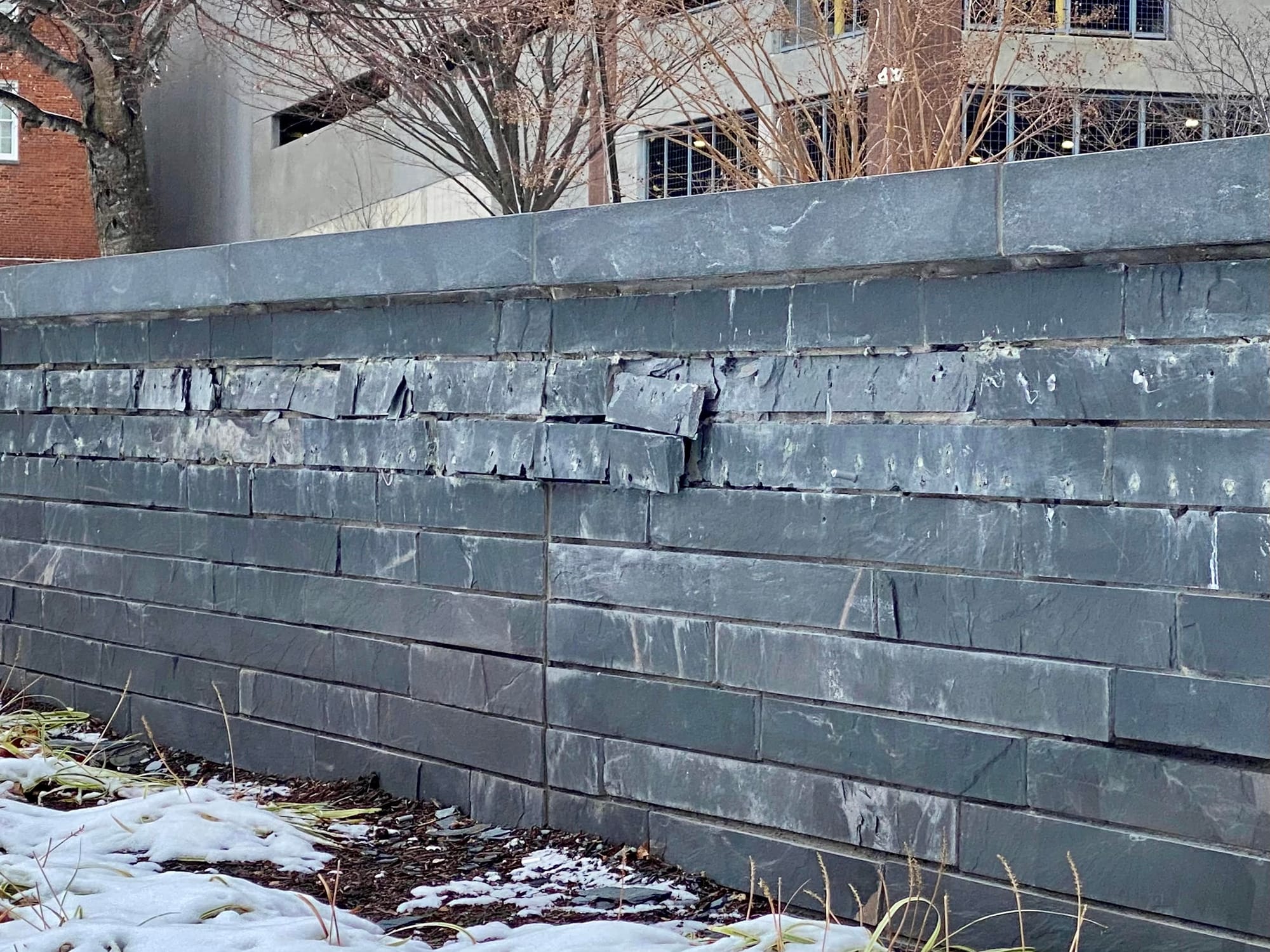
Just three months after Roanoke’s federal building was officially renamed for civil rights lawyer Reuben E. Lawson, his name disappeared from a backdrop in front of the courthouse.
There is a reason, those involved say, and it is not because of anti-diversity policies of the Trump administration.
Instead, the removal stems from what federal court Clerk Laura Austin described as a “comedy of errors.”
The original letters that formed Lawson’s name on the sign blended in with the color of a stone backdrop, and the letters needed to be more visibly prominent, Austin said. So, the U.S. General Services Administration, which is in charge of the courthouse upkeep, started a process to install new letters.
In doing so, however, the contracted workers damaged the stone backdrop, and nothing can be done until that is repaired. Karl Brockenbrough, the GSA property manager for the Roanoke building, said Monday there is not a timetable for completion.
“We’re working on getting the letters replaced,” he said.
Brockenbrough said he did not have a cost estimate for the repair project or what’s been spent so far. He had no other comment about the situation.
The courthouse was renamed for Lawson in July after a campaign for the change started in 2022. Congress and President Joe Biden later approved legislation backed by Virginia Sens. Mark Warner and Tim Kaine.
The courthouse, constructed in 1975, was formerly named for Richard H. Poff, a politician and judge who opposed racial integration and federal civil rights legislation. Poff, who died in 2011, said in a 1971 interview that he lamented his support for segregation and that he did so to keep his seat in Congress, according to his New York Times obituary.
In October of 2022, Roanoke lawyer and former Western District U.S. Attorney John Fishwick and Roanoke Rev. Edward Burton, a friend of Lawson’s, held a press conference to raise the idea of the name change.
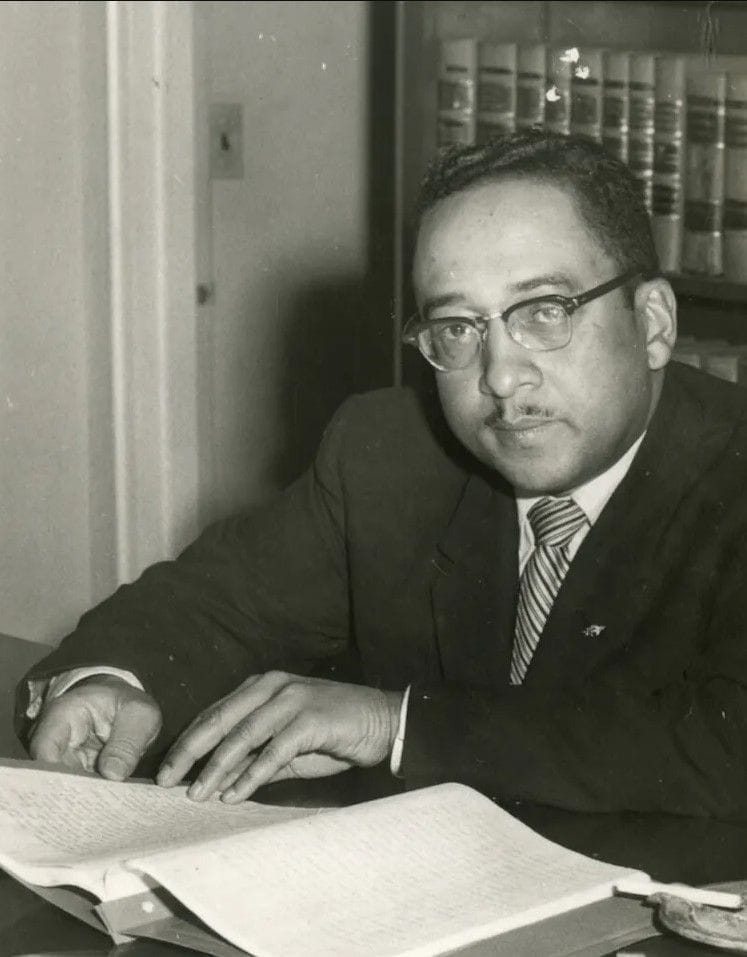
Lawson, who died in 1963 at the age of 43, was a Black attorney whose federal lawsuits helped end school segregation throughout Southwest Virginia.
“A federal courthouse is where our citizens go to vindicate their rights, and it should be named after someone who reflects that principle,” Fishwick said then.
Fishwick said Tuesday that when Lawson’s name was first added to the backdrop a person involved with the work seemed skeptical of how it looked.
“We’re just glad the name has been changed,” he said. “However the government wants to do the work is fine with us.”
Fishwick has described Lawson as a “civil rights titan,” who has been overshadowed by a fellow legend of civil rights law, Roanoke-born Oliver Hill. One of Hill’s cases, challenging segregation in Prince Edward County, culminated in the 1954 Supreme Court case, Brown vs. Board of Education, which declared such segregation unconstitutional.
Burton, a longtime pastor at Roanoke’s Sweet Union Baptist Church, said he knew Lawson when Burton was the vice president of the Roanoke chapter of National Association for the Advancement of Colored People and Lawson was the group’s attorney.
Burton described Lawson as “a really outstanding attorney” and a “quiet and peaceful man” who “was so enthused about accomplishing the things he accomplished.”
Roanoke has taken steps in recent years to commemorate the contributions of its Black icons. In 2019, the city named its courthouse after Hill, and in 2021 renamed a plaza for Gen. Robert E. Lee after Roanoke native Henrietta Lacks, whose cancer cells provided invaluable medical data that is still being used in research today.