
Roanoke Schools Floated Shuttering New Empowerment Center, Then Changed Course Amid Fiscal Fight with City
A school board member said division will be "collateral damage" of city problems, while Roanoke's mayor said school officials have offered "resistance at every turn."

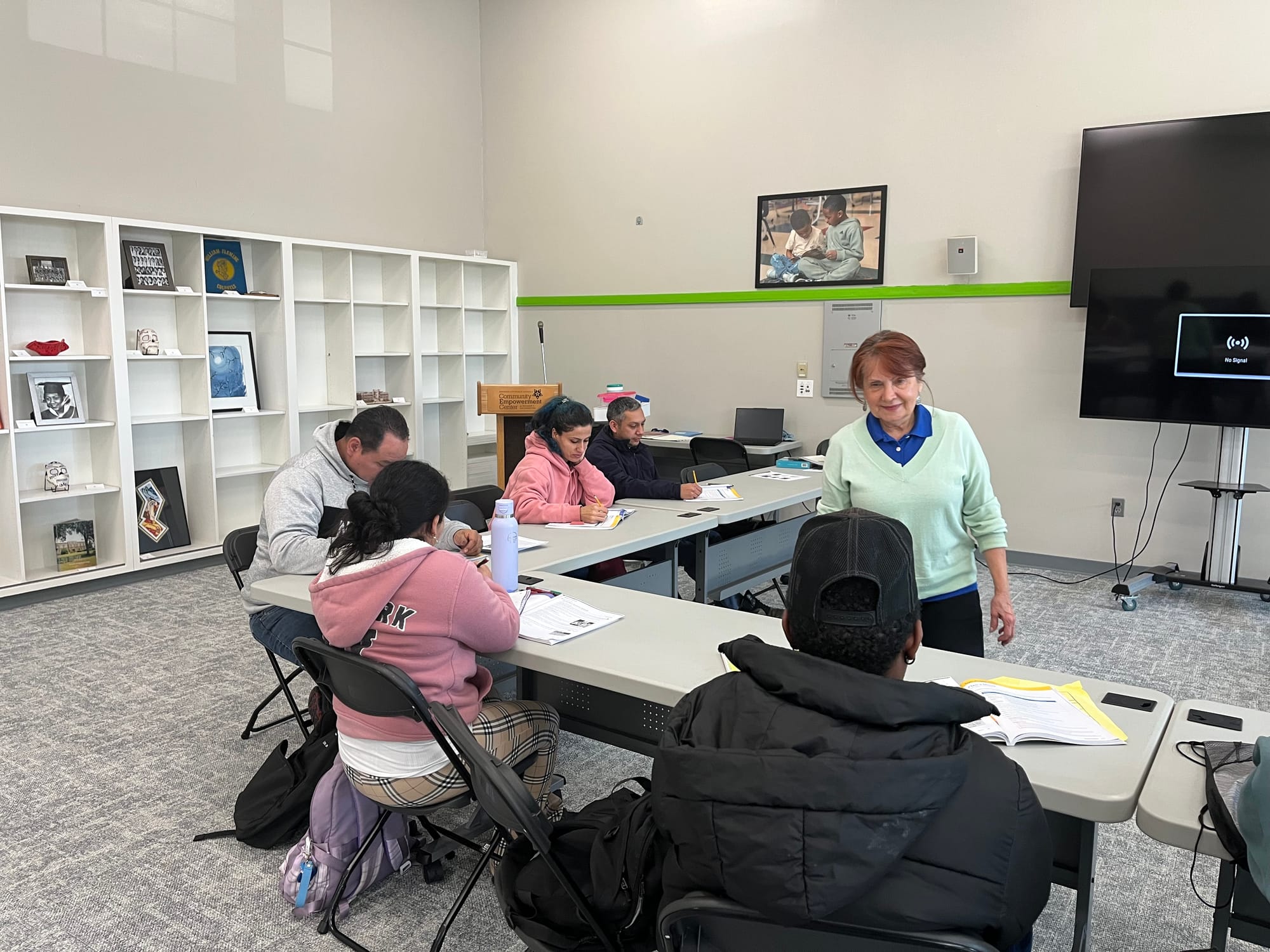
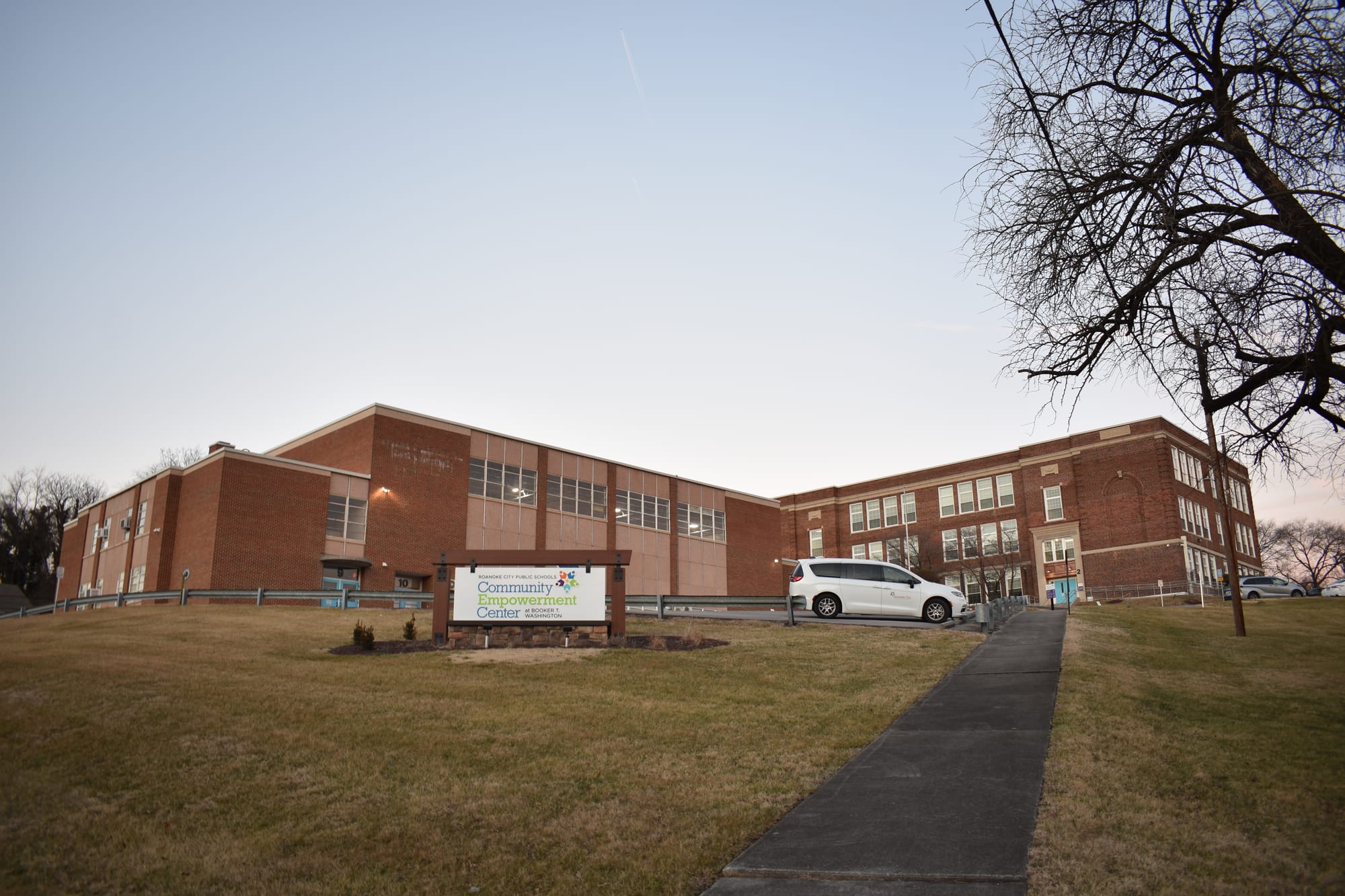
When Roanoke City Public Schools opened its $3-million Community Empowerment Center last summer, district leaders hailed the new hub of resources as a cornerstone of their vision for an equitable school system.
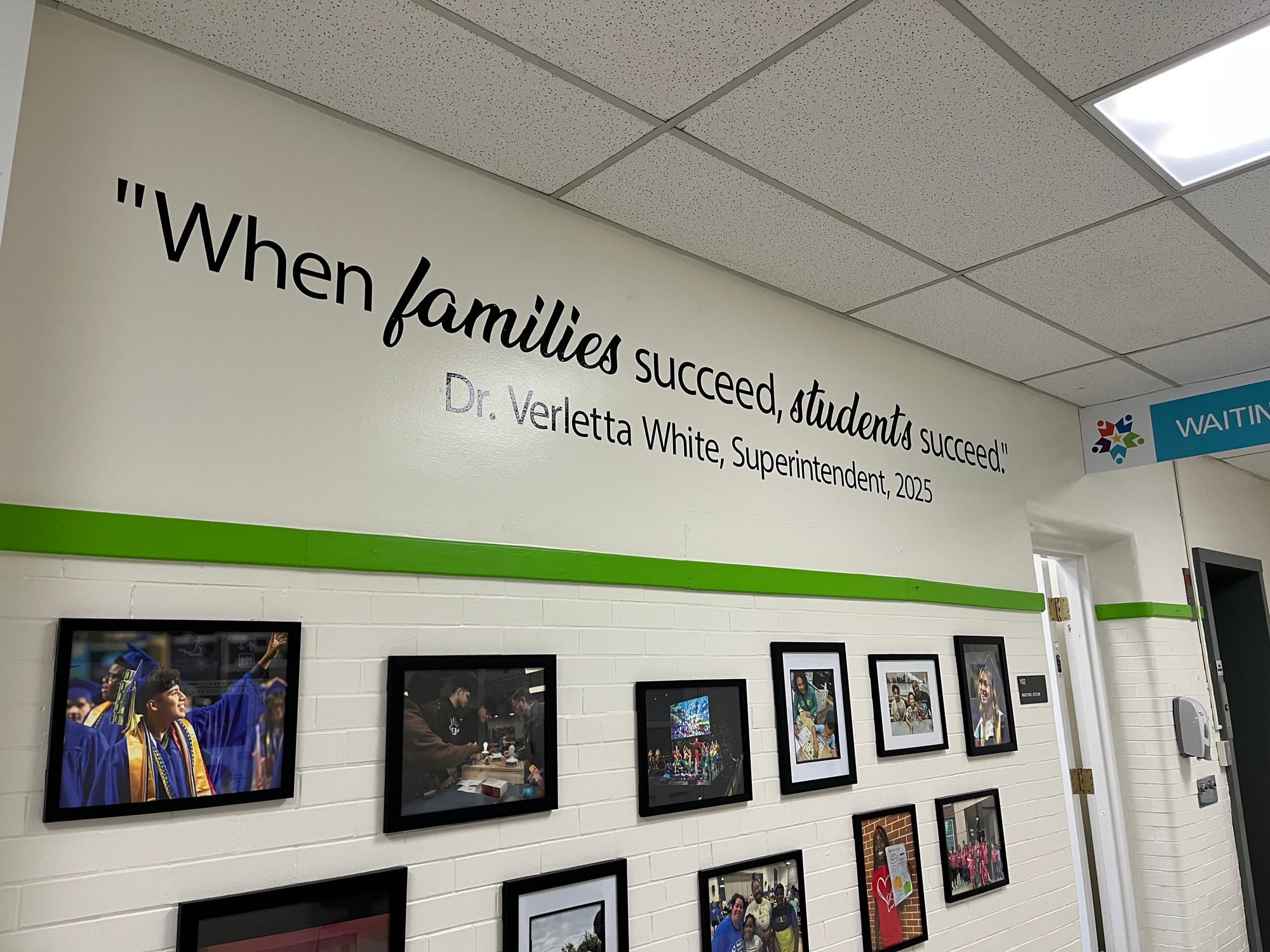
Since opening in July, the center has served more than 1,200 visitors, many of whom are immigrants, refugees or facing poverty. Superintendent Verletta White praised the center as a model “in the state, and I would even offer in the nation,” saying it reflects the school system’s unique mission to serve community needs.
Despite that praise, Roanoke City Public Schools floated in recent weeks whether to close the center for good. Following City Council’s January vote to change how school funding is determined — a move school officials say contributed to a $16-million deficit — the district placed the Community Empowerment Center on a list of programs facing possible elimination.
But on Tuesday, the division reversed course. Chief Financial Officer Kathleen Jackson announced that the district would remove the Community Empowerment Center from budget cut consideration, citing obligations tied to a state grant and an existing solar power agreement. Board members did not comment after Jackson made the recommendation.
The fate of the Empowerment Center aside, the relationship between city and school officials is as tense as it’s been in years.
While veteran school board member Eli Jamison said the school system will be “collateral damage” because of the city’s current fiscal challenges, Mayor Joe Cobb said city officials have tried for months to be open about the situation with the schools but have “run into resistance at every turn.”
And the fact that the school system considered cutting the Empowerment Center — along with other celebrated programs like the PLATO gifted education program and three-year-old preschool — raised questions about the district attempting to rouse community emotions after council’s funding vote. “It feels like they've pinpointed things that pull at the heartstrings of people,” Cobb said in an interview last week. “And while I get that, you know, when it comes to budgeting, we have to be realistic.”
A vision of equity
Olga Zakharchenko, who is originally from Ukraine, had long been searching for English classes for her mother when her daughter brought home a flyer from school advertising English classes at the Community Empowerment Center.
Just a month ago, Zakharchenko didn’t know the center existed, she said. Now, both she and her mother spend two mornings a week there, enrolled in Region Five Adult Education classes. Zakharchenko said the resources and sense of welcome she’s found at the center are unlike anything she’s experienced in her 10 years of living in the U.S.
“I’m still amazed that this program exists — that it’s not just my responsibility to try hard to fit into this puzzle of the American community,” she said. “The American community wants me to succeed. They provide [the resources], make it available for free. They want me to be a better version of myself.”
The Community Empowerment Center was designed to provide exactly that kind of support, according to White.
The center was first imagined in 2021 as part of the district’s Equity in Action Plan, a three-part initiative spearheaded by White to increase equity and “enhance the division’s accessibility and support for the community.” Prior to opening the center, the plan established the Charles W. Day Technical Education Center (DAYTEC) and relocated the school system’s central administration to the former Roanoke Times building downtown.
Housed in the historic Lucy Addison High School building — built during segregation as Roanoke’s first four-year Black high school — the center underwent a $3-million renovation to become a “one-stop shop” for enrollment, social services and more. White said the center was designed in response to Roanoke City Public Schools’ needs as an urban school district, where many families face poverty, housing instability and language barriers.
White argues that Roanoke’s students cannot perform their best academically until their basic needs are met: “It's hard for me to teach reading to a hungry child,” White said in an interview last month.
She views meeting those basic needs as the district’s responsibility, which the Community Empowerment Center embraces.
“If we can provide help and support with mental health services, registration services, with some basic needs, food security, housing security, those kinds of things,” White said, “then that child that I'm trying to teach reading has a better shot of being more available for learning.”
The center was also designed with Roanoke’s growing immigrant and refugee population in mind. English learners make up 18 percent of the student population, according to the center’s director, Corey Allder.
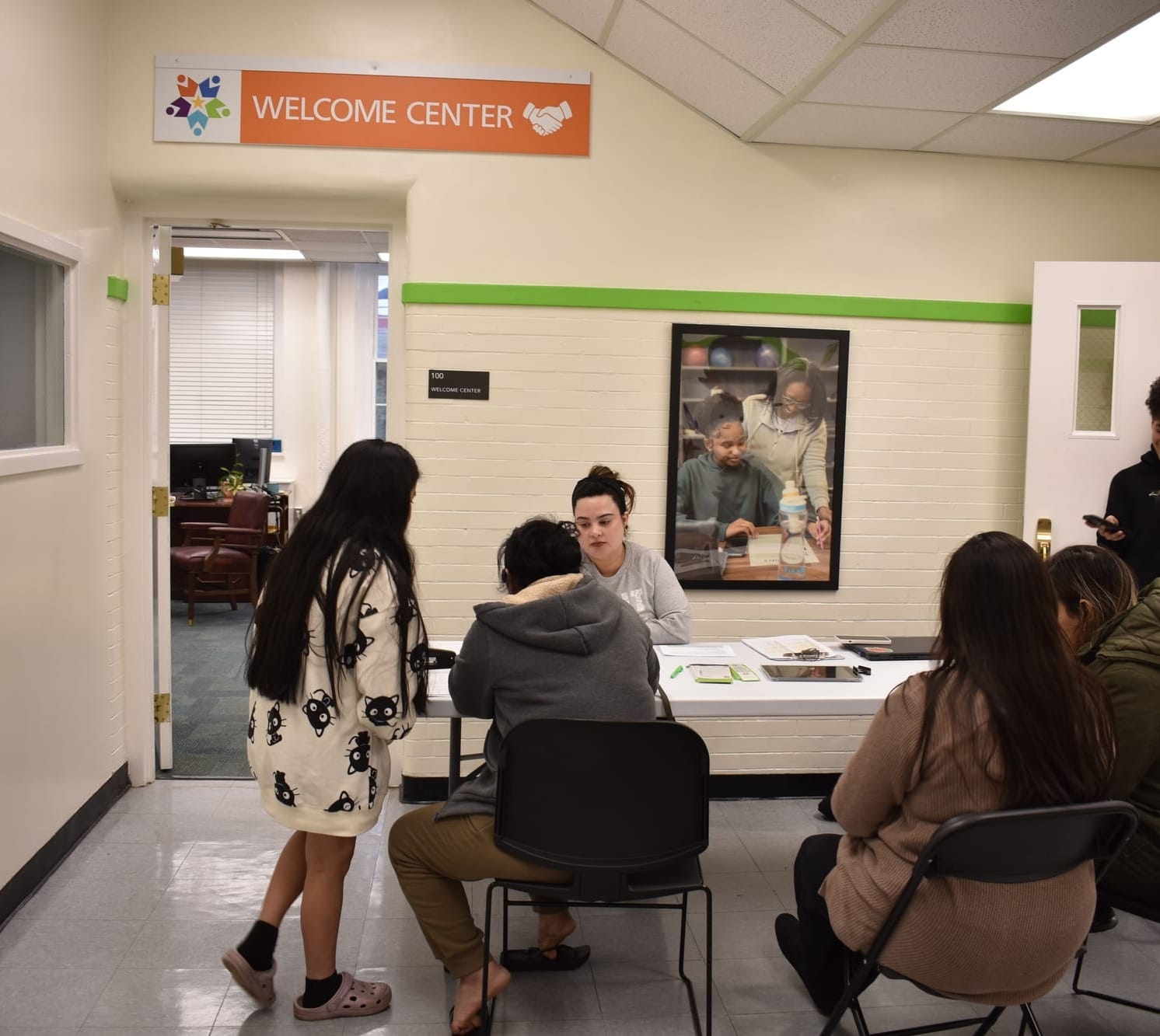
Before the center existed, navigating the school system could be especially difficult for those families facing a language barrier, he said. Now, Spanish-speaking families are directed to the program’s Bilingual Welcome Center. Additional grants also support liaisons for Afghan refugees.
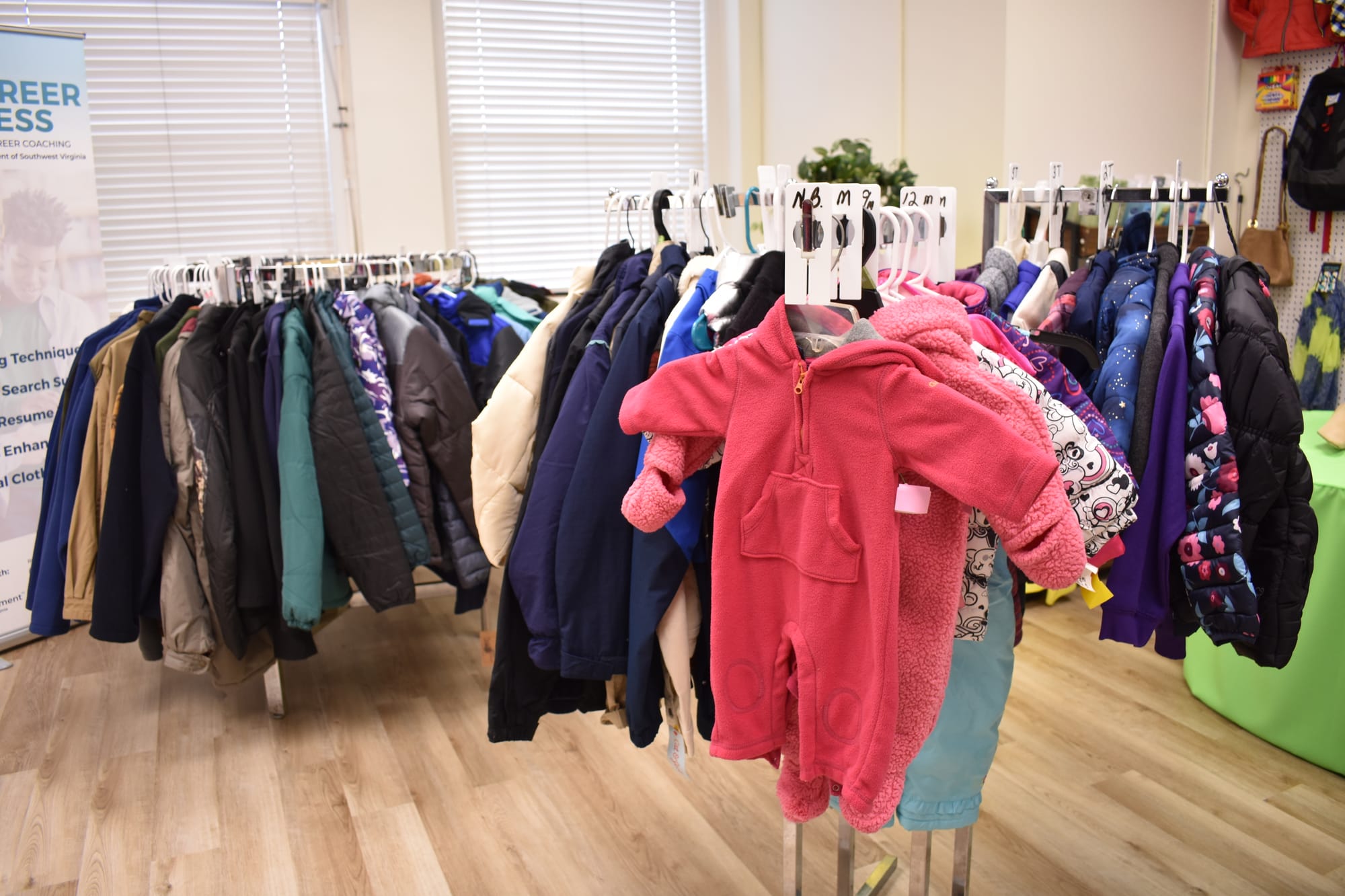
Numerous community partnerships housed within the center expand the school system’s web of support. In a single day, parents can enroll in adult English classes through the Region Five Adult Education program, students can access a professional clothing closet from Junior Achievement and student-athletes can receive physicals from the Virginia Department of Health at the center’s clinic.
Having a presence at the Community Empowerment Center has also benefited those partner organizations.
Jessica Chenoweth, who manages Region Five, runs three ESL courses in the center’s classrooms. Partnering with RCPS at the Empowerment Center allowed Region Five to expand its capacity from fewer than 10 students per class to as many as 40, she said.
“It’s just helped us expand our offerings to our students tremendously,” Chenoweth said. “I mean, it’s nothing like I ever even imagined.”
Israa Alhaddad, who immigrated from Iraq with her family, has two children in middle and elementary school. She said the ESL classes at the Empowerment Center have not only boosted her confidence in English, but have also given her practical guidance on navigating daily life in the U.S. “We talk about all these things here,” she said, from finding health insurance and paying electricity bills to enrolling her children in school.
Most recently, Alhaddad said the center introduced her to Governor’s School, a program she hadn’t known about before. She now plans to enroll her son there when he enters high school.
“Answers. Communication in real life,” she said when asked about what she’s gained from the center. “If you have something in your mind, you can say it here, and we discuss it all.”
As the center’s director, Allder has ambitious long-term goals for the program: improving “graduation rates, academic performance, literacy, children's successes, children's ability to contribute to their own successful future and the successful future of our whole community.”
While those generational outcomes will take time, Allder’s team tracks more immediate successes: parents who arrive with nothing and leave with school supplies and a sense of dignity; families of children with special needs who finally feel guided instead of lost; immigrant and Spanish‑speaking families visibly relieved to be understood.
Just three months after opening, the center’s early progress was recognized by the state. The Virginia Department of Education awarded RCPS a $285,196 Community Schools Grant for the Community Empowerment Center and the LIFT Center, a pediatric clinic based in Fallon Park Elementary.
Allder said those funds helped get programs off the ground in the center’s early months and allowed the team to hire a part-time coordinator.
Budget pressure and policy shifts
That grant may have also helped pull the center back from the brink of closure.
Jackson, the district’s chief financial officer, cited the Community Schools Grant as one reason the district will no longer consider closing the center, noting that doing so would prevent the district from using those funds. She also said the closure would disrupt projected long-term savings tied in with the buildings involved in the schools’ existing solar power agreement. Closing the center would have saved the district an estimated $300,000 in annual operating costs, according to district spokesperson Claire Mitzel — about one half of one percent of the schools’ total budget. While the center “may make up a smaller slice of the budget,” Mitzel said in an email, “every dollar counts” when looking at the considerable deficit.
Moving forward, Jackson said the district will explore other ways to offset funds it would have saved by closing the center.
While the center’s future appears stable for now, the relationship between the district and the city remains tenuous.
In January, city council voted to revise the school’s funding formula for the third straight year. Previously, the schools could receive up to 40 percent of the city’s budgeted revenue. Under the new policy, school funding will now be capped at 34 percent of local tax revenue. Earlier that month, the council also required the division to return $20.5 million in unspent “rainy day” funds — something law allows but had not happened for years in Roanoke.
The changes come as the city itself is working to address overall financial challenges, facing what’s an early projected $18-million budget shortfall driven by projected revenue versus spending requests. The city is currently evaluating all of its departments’ budgets in an effort to cut costs, Cobb said — and the school district is no exception. “I'm a leading champion for our schools, and I always will be,” Cobb said. “At the same time, I'm the mayor of our city, and I have to look at our city as a whole, and all of the citizens, and do what we can to continue to prioritize education funding.”
Despite the recent cut, he added, school funding remains the single highest item in the city’s budget.
Cobb called the schools’ previous 40 percent funding rate “extremely generous,” but unsustainable in the current fiscal climate. The only way the city could maintain that rate would be to raise the real estate tax, which Cobb said would place an additional burden on residents.
Conversations between the school system and the city have been ongoing, he said, and City Manager Valmarie Turner started keeping the school system informed of the city’s budget concerns as they became apparent early 2025.
“There have been concerns about the sustainability of 40 percent funding for a number of years,” Cobb said, “and in our conversations with the school board and district on amending the funding policy, we have been very conscientious and trying to both convey our realities and understand their realities. And we've, frankly, run into resistance at every turn.”
Jackson said the funding changes leave the division facing a $16-million deficit. She attributed the shortfall to a combination of current and previous budget cuts and rising costs tied to employee raises, insurance, reading specialists and security officers, cost of materials and special education services.
As a June deadline nears for the school board to finalize its budget, the PLATO gifted education program and three-year-old preschool remain on a list of proposed cuts.
That list of considerations is not final, White said, but “in terms of evaluating programs and positions, everything has to be on the table”
“Everything that you saw on that list, we would not have been doing in the first place if we didn't have evidence to speak to the fact that these services are needed, particularly in an urban school division,” White said. “So each of these hits us in the heart.”