
Same Calories, Different Response: Roanoke Researchers Test Ultraprocessed Foods, and Find a Surprise
Two meals with nearly identical nutrient totals produced different responses inside a Roanoke laboratory, raising questions about what a food label can tell us.

Two meals with nearly identical nutrient totals produced different responses inside a Roanoke laboratory, raising questions about what a food label can tell us.
Roanoke, VA
Author: Roanoke Rambler Staff, Tina Charisma Lead
Published: 9:50 AM EST October 21, 2026
Edited: 9:50 AM EST October 21, 2026
Listen Here: Roanokesradio.com
Two meals served inside a Roanoke research lab each contained roughly 300 calories, with closely matched amounts of carbohydrates, fat, protein, fiber, water and salt. The people eating them responded differently.
The meal made of ultraprocessed foods prompted a greater insulin response than a nutritionally similar meal made from less processed foods, according to research conducted at Virginia Tech’s Fralin Biomedical Research Institute at VTC in Roanoke.
“If the meals in the study had a nutrition label, they’d be nearly identical,” Alex DiFeliceantonio, an associate professor at the institute, said in written responses to The Rambler. “What surprised us the most was that we saw any large differences at all.”
The study, published Oct. 5 in Nature Metabolism, examined short-term metabolic responses and brain activity. Its authors include DiFeliceantonio and Zach Hutelin, a researcher at the institute.
It did not establish whether the differences cause diabetes, weight gain or other long-term health problems.
Instead, the team investigated a narrower question: Are the health risks associated with ultraprocessed foods explained by their nutritional content alone, or could processing also matter?
“We have a lot of population level evidence that ultra-processed foods (UPFs) are linked with poor health outcomes,” DiFeliceantonio said. “UPFs also tend to have less fiber, less protein, and more fat and sugar than minimally processed foods.”
The researchers wanted to know whether differences would remain when those nutritional factors were closely matched — and whether they could detect a related response in the brain.
Two Meals, Similar Nutrient Totals
The ultraprocessed meal included small portions of a peanut butter and jelly sandwich, deli turkey, veggie chips, a cookie, cereal and instant mashed potatoes, accompanied by water. The comparison meal contained sliced banana, dried cranberries, cheese and egg.
The team classified the foods using the NOVA system, which groups foods by the extent and purpose of their processing. Ultraprocessed products are typically industrial formulations made with ingredients not commonly used in home cooking.
The study included 57 healthy adults ages 18 to 45. Of those, 32 completed both the metabolic testing sessions and brain imaging at the Roanoke institute.
Participants ate each meal on a separate day inside metabolic chambers that allowed researchers to measure how much energy their bodies used. Blood samples tracked glucose and insulin responses.
In a separate session, participants viewed food pictures and bid on food items while inside an MRI scanner.
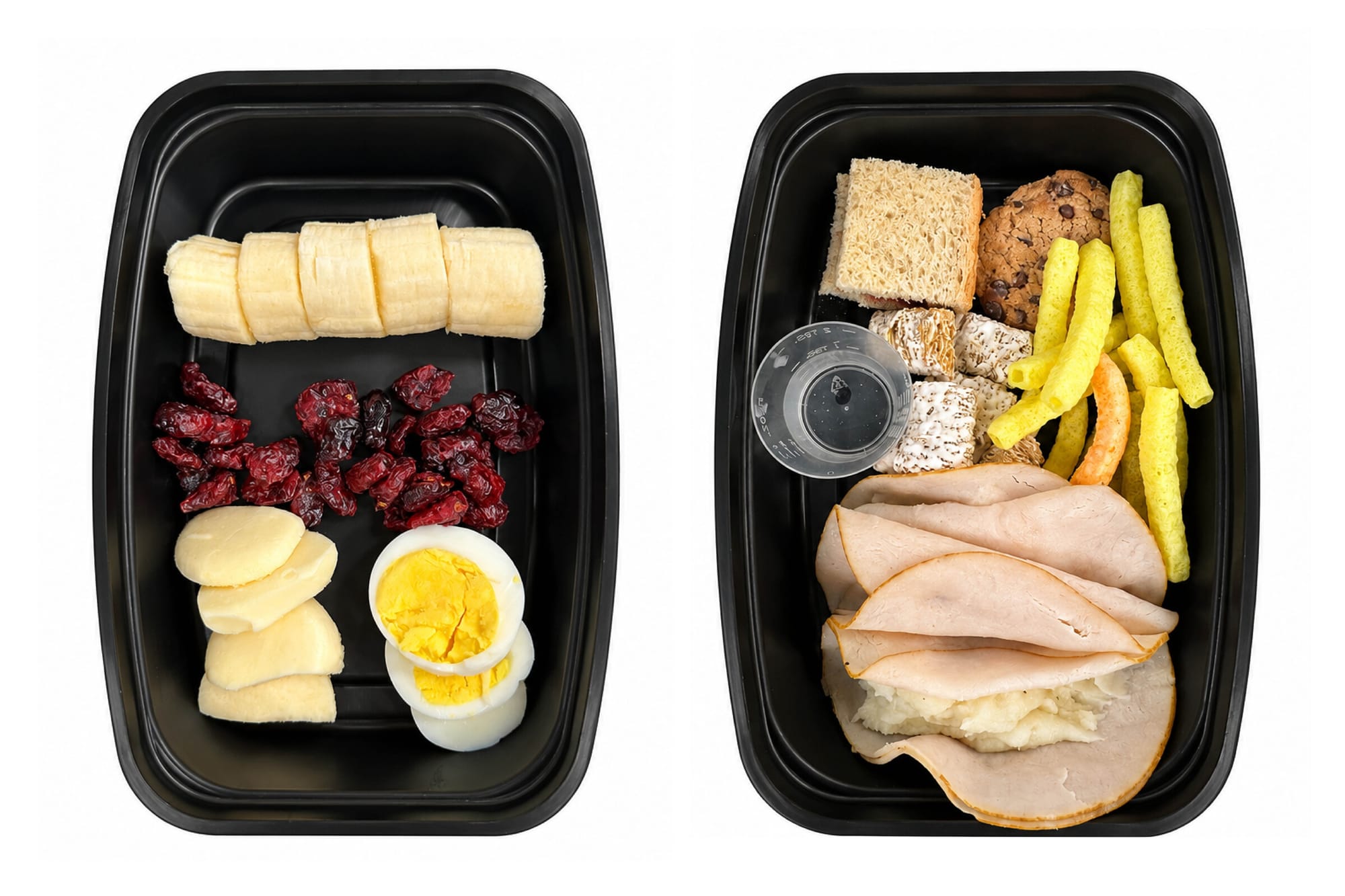
An Unexpected Insulin Response
The researchers had anticipated that processing might make nutrients more readily available, producing an earlier rise in blood sugar.
“We thought we would see an earlier, sooner spike in blood glucose,” DiFeliceantonio said. “But what we saw was an increase in insulin.”
The result was so unexpected that she contacted her lab to ask whether an error could explain it. Staff members conducting the analyses were blinded to the meal conditions, she said.
“The insulin result was the most surprising,” she said.
Insulin levels were higher from about 40 to 120 minutes after participants ate the ultraprocessed meal. Overall blood glucose exposure did not differ significantly between the meals, although the timing of the response did.
Participants also expended more energy and burned less carbohydrate for fuel after eating the ultraprocessed meal.
In the brain scans, activity in the striatum, a region involved in reward, was associated with differences in carbohydrate metabolism. Participants’ willingness to pay did not significantly differ between the two food categories.
The findings do not show that ultraprocessed foods cause addiction or overeating.
What the Study Can’t Say
“The study was not designed to assess chronic outcomes,” DiFeliceantonio said. “We have a lot of data linking ultraprocessed food intake with poor health outcomes, but we don’t know how these foods exert their effects. This gives us some clues.”
A higher insulin response and reduced carbohydrate burning, she said, “might help us understand” why these foods are associated with poor metabolic health.
The experiment had limits. It tested one pair of small meals in younger, healthy adults. Matching nutrient totals did not make the foods identical: Their ingredients, protein sources and structures differed.
Those differences mean the experiment could not isolate a particular additive, ingredient or manufacturing step as the cause.
DiFeliceantonio said future research could examine different populations, longer periods, larger meals, additional food combinations and specific additives.
Beyond the Label
For readers weighing cost, convenience and food access, the study does not offer a tested shopping plan or show that every ultraprocessed product produces the same response.
DiFeliceantonio, who describes herself as a basic scientist, said her goal is to give people and policymakers information rather than tell them what to do.
The study’s finding is narrower: Two meals can have similar nutrient totals and still prompt different short-term responses in the body.
“If you are using nutrition labels to think about the effects a food will have on your body,” she said, “they might not be the whole story, and it’s worth also considering what processing the food might have undergone.”