
Google Aims To Build 3 Data Centers, Totaling Nearly 1 Million Square Feet in Botetourt, Records Show
If the plan is carried out, Google should invest no less than $3 billion, according to a performance agreement with Botetourt County.

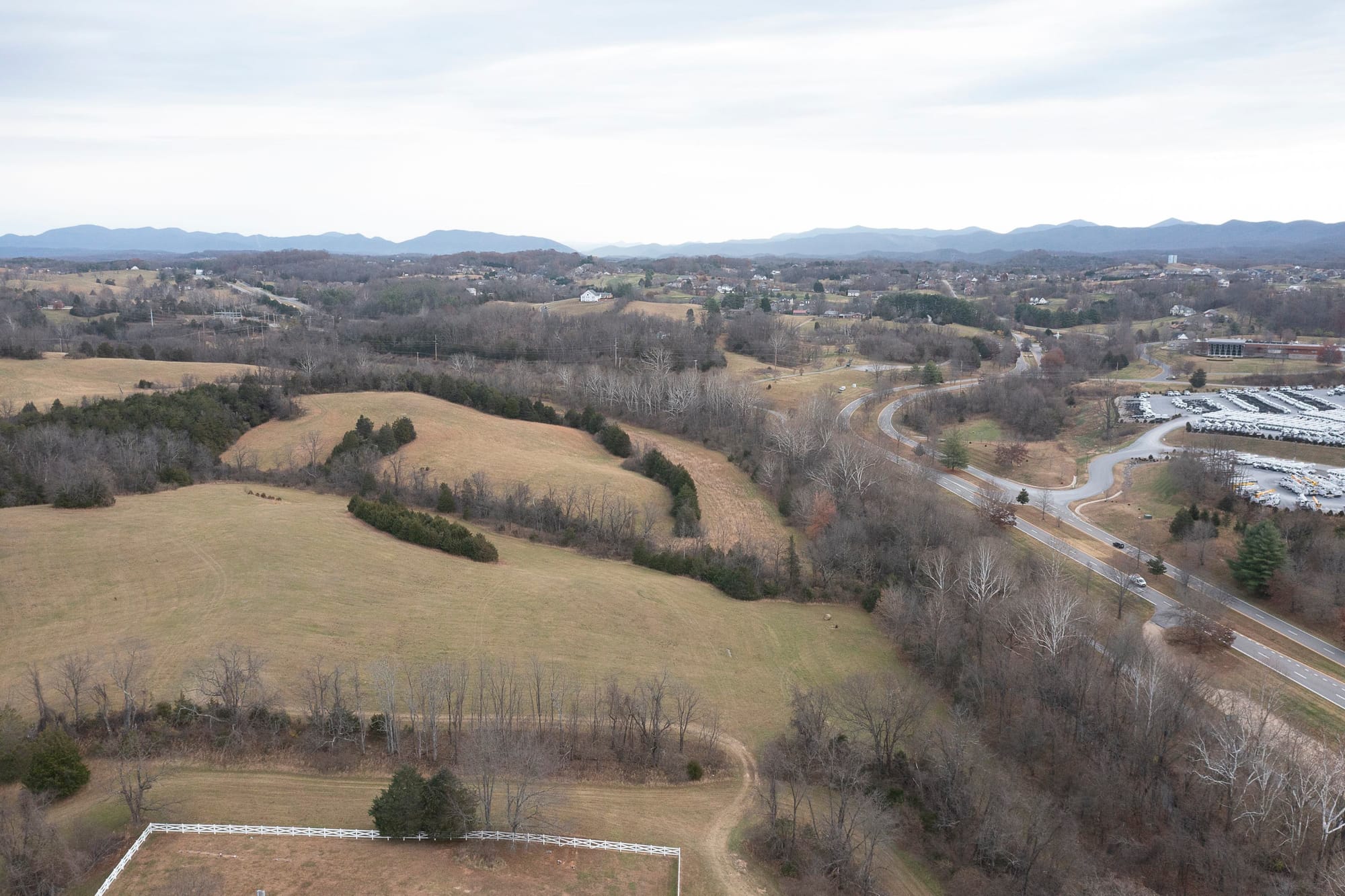
Google intends to build three data center buildings totaling nearly 1 million square feet for its planned Botetourt County campus, state records show.
It’s the first confirmation that Google wants to construct multiple data centers on a 312-acre site in the Greenfield industrial park that Google bought in June. That means the tech giant should invest no less than $3 billion and employ at least 150 workers if the first data center is completed by 2030, according to the terms of a performance agreement with Botetourt County.
More details about the project emerge in permit applications Google filed last month with the Virginia Department of Environmental Quality, which The Roanoke Rambler obtained in a public records request. Google is seeking permits from DEQ and the U.S. Army Corps of Engineers because construction would impact wetlands.
Google says the campus will include three data centers of about 307,000 square feet, a 28,000-square-foot office building and three substations to distribute power. Google’s application, prepared by the engineering firm Timmons Group, identifies the Rocky Forge Wind Farm as the campus’s primary source of electricity, though a Google spokesperson said power will come ultimately via Appalachian Power’s grid.
Google had announced in 2024 that it would buy all of Rocky Forge’s estimated 79.3 megawatt output — enough to power 21,000 homes — to support its Virginia data centers. Google has a goal of operating on carbon-free energy by 2030.
In its permit request, Google also reveals more about what led the company to purchase the properties for $14 million from Botetourt’s Economic Development Authority last summer.
Relatively cheap land and ready access to electricity and water were key drivers.
“The specific location is critical due to the necessary confluence of required utilities, particularly sufficient electrical power, adjacent fiber connections, and available water,” Google says.
Data centers use water to cool their computing equipment. Estimates that the center could use between 2 million and 8 million gallons daily have sparked public debate over the project. Those numbers are in a draft Botetourt County agreement with the Western Virginia Water Authority, though both agencies and Google have declined to confirm them. The Roanoke Rambler is in litigation with the water authority to force the release of the final contract. The water authority has appealed the case after a Roanoke judge sided with The Rambler.
Other sites in the Roanoke Valley were not as ideal as the Greenfield industrial park, Google told DEQ in a required environmental assessment of alternative locations.
None of the other sites — including Franklin County’s Summit View Business Park and the Roanoke Centre for Industry and Technology near Salem — are planning water infrastructure upgrades necessary for the project, according to Google’s application. The third site, Wood Haven Technology Park, at the intersection of Interstates 81 and 581, is too small to contain three large data centers, Google said.
As part of the environmental review, Google concluded there are two threatened or endangered species “potentially present” within two miles of the Greenfield site, the Indiana bat and the Roanoke logperch. (The alternative sites also had at-risk species listed.)
Virginia is the world’s data center capital with hundreds of facilities, mostly in the northern part of the state.
“Southwestern Virginia currently lacks large-scale data center campuses, creating a gap in the state’s digital infrastructure,” Google says. “Moreover, data center development has become increasingly appealing to counties outside of Northern Virginia for their ability to generate tax revenue to help fund county projects without negatively impacting existing infrastructure.”
Botetourt County leaders have celebrated the potential tax windfall the project could yield, as well as $4 million Google has pledged for community projects.
Botetourt has earmarked money from the land purchase for a library expansion, soccer field upgrades and school projects, among others. Already, the county has used some of Google’s community incentive money to buy body cameras for the sheriff’s office and expedite the purchase of three new ambulances. Botetourt won’t have to return any of that money if the data center isn’t built, according to its agreement with Google.
Still, some area residents object to the project, fearing it could imperil the region’s water supply and lead to hikes in electricity rates. Opponents rallied outside the Western Virginia Water Authority offices in Roanoke last month, and have spoken against the project at recent public meetings.
The growth of data centers nationwide is not likely to slow down, according to Google.
“Industry experts expect projected growth in generative artificial intelligence, cloud-based robotics, financial services, and government sectors to result in a fivefold increase in data center capacity needs by 2030,” the company says in its application to DEQ.
As such, Google has determined it must double its capacity every six months to keep up with demand.