
New School Board Members for Roanoke City

City Council’s quiet move to appoint a retired healthcare finance chief and a real estate strategist to Roanoke’s School Board could reshape how more than a hundred million dollars in education gets spent, and revive the debate over who truly has a say in the future of the city’s most vulnerable students.
Roanoke, VA
Author: Roanoke Rambler Staff
Published: 7:20 AM EST June 3, 2026
Edited: 7:25 AM EST June 3, 2026
In mid-May, Roanoke City Council named Donna Littlepage and Derek Kaknes to the Roanoke City School Board, filling two of the seven seats that oversee everything from budget cuts and staffing to long-term academic priorities. Their three-year terms begin July 1 and run through June 30, 2029, a period when the district is already wrestling with deficits, staffing strain, and questions about how well the system is serving the city’s most vulnerable students.
Donna Littlepage:
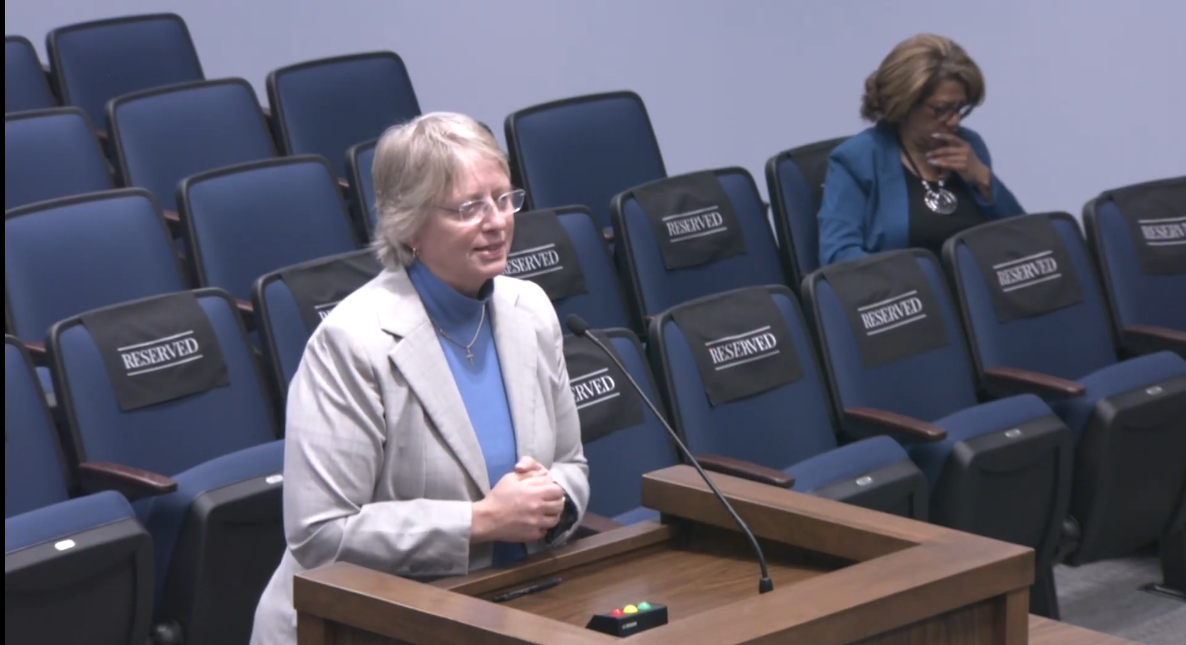
Donna Littlepage is a longtime Roanoke resident and retired healthcare finance executive with deep ties to Carilion Clinic and Virginia Tech Carilion School of Medicine.
- She has lived in the Roanoke area for about 25 years and describes herself as a lifelong Virginian focused on improving life for families in Southwest Virginia.
- Littlepage earned both her undergraduate degree in accounting and an MBA from Virginia Tech, which set up a 35-year career at Carilion Clinic.
- Over 25 of those years were in finance roles, including vice president of finance with responsibility for hospitals, physician services, retail operations, insurance plans, transport, pharmacy, and revenue cycle.
- She later served about a decade as senior vice president for population health/accountable care strategies, working on value-based care and payment reform for Carilion and leading its accountable care organization.
- Littlepage was the founding chief financial officer of the Virginia Tech Carilion School of Medicine, helping take the medical school from concept through accreditation and the matriculation of its first class.
- She retired from Carilion in October 2024, but has remained active in community service, serving on boards such as DePaul Community Resources, Family Service of Roanoke Valley, the Roanoke Women’s Foundation, The Twelve Foundation, and the Adult Care Center of Roanoke Valley.
- Her work has been recognized with honors including the Healthcare Financial Management Association Medal of Honor Award, DePaul Women of Achievement, and Virginia Lawyers Weekly’s Influential Women of Virginia.
- Politically, she ran as a Democratic candidate for the Virginia House of Delegates, District 40, in 2025, losing to incumbent Republican Joe McNamara.
Derek Kaknes:
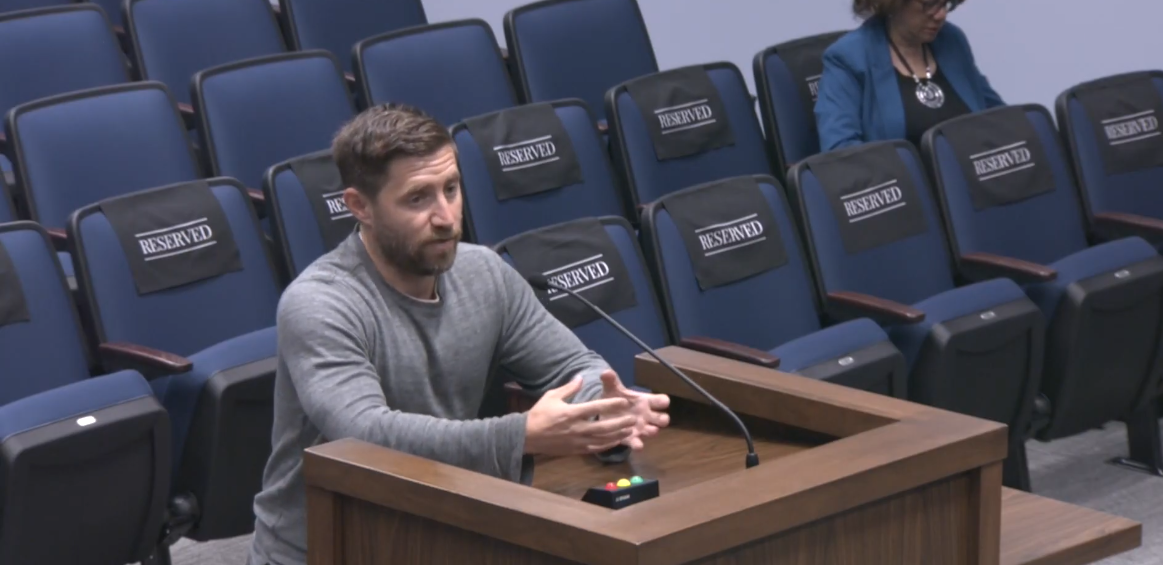
Derek Kaknes comes to the Roanoke City School Board from the private-sector real estate and finance world, with a focus on aligning big redevelopment projects with community goals and funding. Kaknes moved to Roanoke four years ago.
- Kaknes is the principal of operations and finance at Foundry Realty, a firm that is currently redeveloping the Walker Foundry site in Roanoke, one of the city’s notable industrial-to-mixed-use projects.
- According to Foundry Realty’s description, he specializes in operational and financial strategy, with an emphasis on aligning community objectives with available funding, which is directly relevant to school capital planning and budgeting.
- He also framed his interest in personal terms: as the son of a public school teacher, a product of public education, and the father of a five-year-old entering the public school system, he said he feels strongly about “engaging with and preserving the quality of our public schools”.
- Before appointment, Kaknes had been regularly attending Roanoke City Council and school board meetings, signaling an existing engagement with local governance.
- Local coverage and city materials describe his selection, alongside Littlepage, as part of an effort to add financial and operational expertise to a school board that will be navigating tight budgets and rising cost pressures over the next several years.
The appointments came after weeks of quiet but consequential deliberations. On paper, they look routine: two new board members replacing outgoing trustees at the end of their terms. In practice, the decision reflects something deeper about how Roanoke governs its schools, and how much say families really have in that process. Unlike many school systems around the country, Roanoke City’s School Board is appointed, not elected. City Council interviews candidates, weighs their résumés and reputations, and then votes on who will serve as the public face and governing authority over Roanoke City Public Schools.
That structure matters. It means that when parents and teachers talk about “holding the school board accountable,” they are, in reality, leaning on officials who answer first to council, and only indirectly to the public. The appointment of Littlepage and Kaknes is a clear example of that dynamic: seven council members, not tens of thousands of voters, narrowed a field of applicants down to two people who will now help decide how more than a hundred million dollars in public education funding gets spent.
For a city still processing budget cuts, school-level staffing anxieties, and a broader conversation about equity and student outcomes, those choices will ripple far beyond the walls of board meetings.
When asked what his objectives are by the City Council, Kaknes responded that he would be, “Separating them into short term goals and long-term goals; Short-term, the primary objective is to realign the current operational budget with the current fiscal plan … to establish a better communication between the school board and the city council... reestablishing optimism and a better path forward. Long-term, the increasing number of English Language learners in the school district, 20%, which has grown about 500% in the last 20 years, the on-time graduation rate for those folks is around 50%. The number one thing is how to align the school system to uplift that to a more acceptable level for the community.”
By design, school board appointments often favor people with deep institutional experience: finance, law, education, healthcare, or civic leadership. Supporters of that model argue that it puts sophisticated decision-makers in the room when they’re needed most. That also means the pipeline tends to draw from certain circles, people who are already comfortable in public meetings, already plugged into civic networks, and accustomed to moving in and out of leadership roles. The unanswered question is how often that pipeline produces representation that feels real to families in under-resourced neighborhoods or in schools that have struggled for years.
Littlepage and Kaknes arrive at a moment when Roanoke’s families will be looking for something specific from any new board member: a willingness to ask hard questions in public, not just nod along through staff presentations; an instinct to visit schools beyond photo-op days; and a habit of returning phone calls from parents, teachers, and staff, even when there’s no easy answer. Kaknes is new to Roanoke but has a vested stake with a child entering Roanoke City Public Schools. Kaknes said that he thinks that parental and family involvement is a number one factor of success after doing research. Kaknes recognized that success could mean different things for different children and one individual’s success definition is not better than the other whether it is a four-year degree or a vocational degree or other areas of success.
Littlepage has said she has not attended recent school board meetings, but felt that the budget was being “litigated through the newspaper.” She wants to be a part of “not doing that.” She went on to say she wants to match “investments with outcomes” to better identify what has the best return on investment for students.
Littlepage and Kaknes join a board already under strain. Kaknes acknowledged that the Roanoke City Council and school board have “not had the best relationship recently.”
The district is emerging from a budget season marked by cuts and revisions, where staff raised alarms about the impact of reductions at the school level and the board had to adjust plans to add back a handful of teaching and paraprofessional positions. That tug-of-war between fiscal constraints and classroom realities isn’t going away. State funding remains uncertain, inflation has driven up costs, the lingering effects of the pandemic, learning loss, student mental health, staff burnout, still show up in classrooms every day.
In that context, the new members will be asked to weigh:
- Whether to prioritize smaller class sizes, support staff, or specialized programs when there isn’t enough money for all three.
- How aggressively to push city council for more funding, and what political capital they are willing to spend to do it.
- How to make sure the loudest voices, often those with time and resources to attend meetings, don’t drown out families who can’t.
Their votes on the budget, staffing allocations, and long-term planning will be some of the most important decisions they make. But the way they get to those votes — what questions they ask in public, what data they insist on seeing, who they choose to meet with outside of formal sessions, will reveal just as much about how they understand their role.
Every school board appointment prompts a version of the same question: Who gets represented by this choice?
Some schools draw largely from affluent areas with stable housing and abundant extracurricular options. Others serve students who are juggling family responsibilities, jobs, and unstable housing, often while navigating systems that were not built with them in mind. Kaknas cited English language learning as the biggest challenge for RCPS while also highlighting the cost of healthcare for Roanoke City employees as a key incentive that they rely on. For the board, representation is not only a matter of demographics. It is also about lived experience and focus.
Parents and educators will be watching Littlepage and Kaknes for early signals: the issues they choose to highlight, the questions they ask about data broken down by race, income, and school, and the degree to which they center students who are most likely to fall through the cracks. Littlepage said during her interview with Roanoke City Council that she would “ask probing questions from a place of integrity ,,, really trying to understand what is needed,” and referenced that in her background.
Roanoke’s schools do not exist in a vacuum. They reflect, and reinforce, the choices the city makes about housing, transportation, public safety, and economic development. Over the next three years, the school board will be making decisions in a landscape shaped by budget constraints, demographic shifts, and the long tail of pandemic disruption.
In that context, the appointment of two new board members is more than a personnel change. It’s a fresh test of whether Roanoke’s governing institutions can align around a simple idea: that every child, in every neighborhood, should be able to count on a stable, well-resourced, and accountable school system.
The next time a parent stands at a microphone and talks about a class of 28 students with one adult, a missing bus aide, or a child slipping behind in reading, Littlepage and Kaknes will be two of the seven people deciding what happens next.
Their appointments were made with little fanfare. The real story will be written in what they do once the cameras are off, the budget binders are open, and the choices get harder.
The Roanoke Rambler Staff