
Roanoke Revitalized: Inside the $100 Million Wave of Infrastructure Upgrades
Roanoke is in the middle of a $100 million bet on itself. From a rebuilt river corridor and revived skate culture to a resurrected neighborhood “front porch” and a grocery store ending a 40–year food desert, the city is stitching together projects that don’t just pour concrete, they reshape how people live, play and stay healthy. Taken together, these upgrades mark a rare moment when infrastructure, public health and equity are moving in the same direction, at the same time.
Roanoke, VA
Author: Roanoke Rambler Staff, Hart Fowler Lead Journalist
Published: 9:00 PM EST June 9, 2026
Edited: 9:00 PM EST June 9, 2026
From a transformative new bridge to new lives for community hubs, a wave of multimillion-dollar infrastructure projects is fundamentally reshaping Roanoke's recreational, cultural, and health landscape. With opioid casualties waning, recently dropping to pre-pandemic numbers, and crime trending down, several positive developments in the city are coming together in a remarkably synchronous way. Backed by local funding and federal relief dollars, these developments are converging to reunite neighborhoods and address long-standing community disparities.
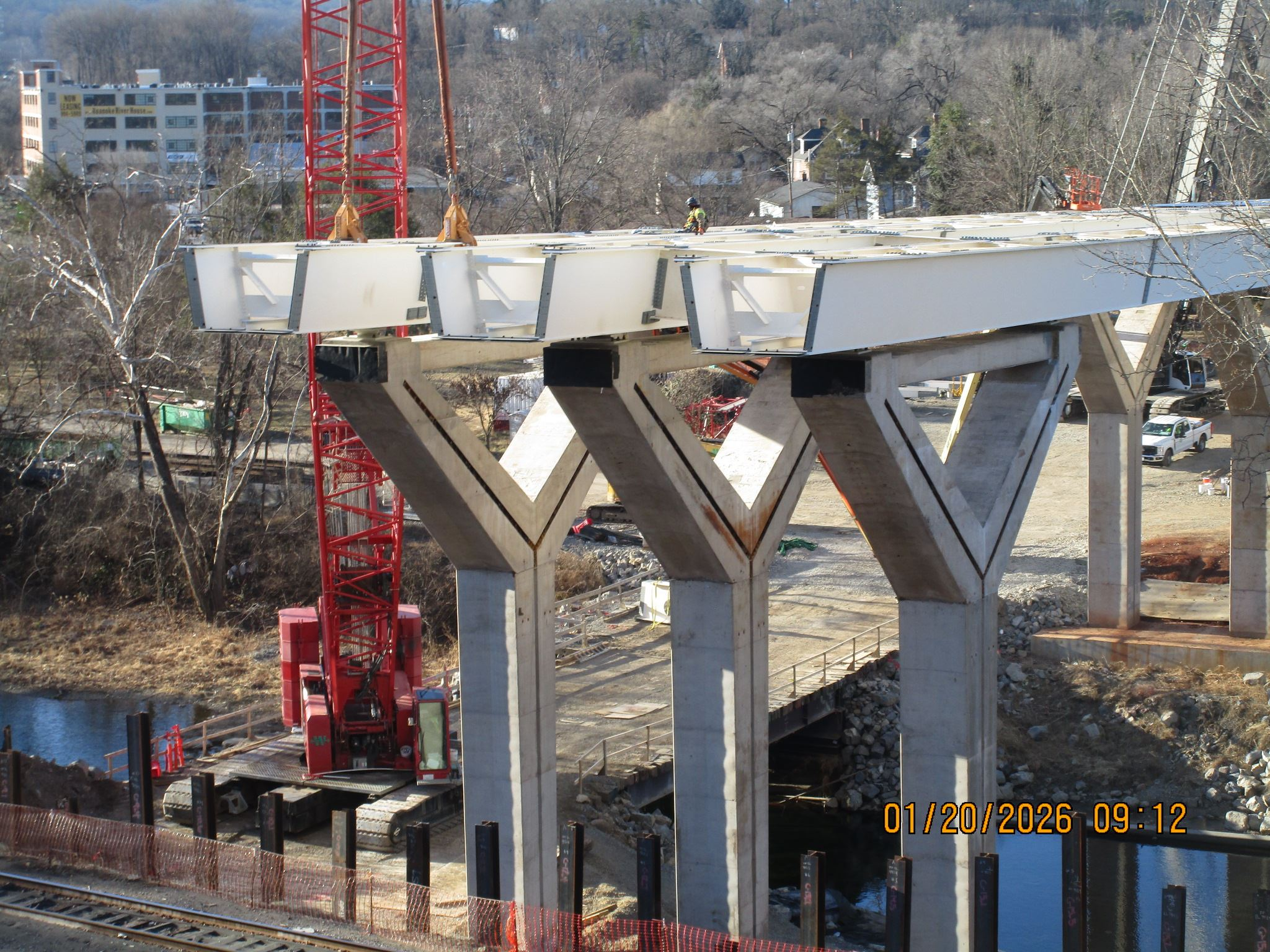
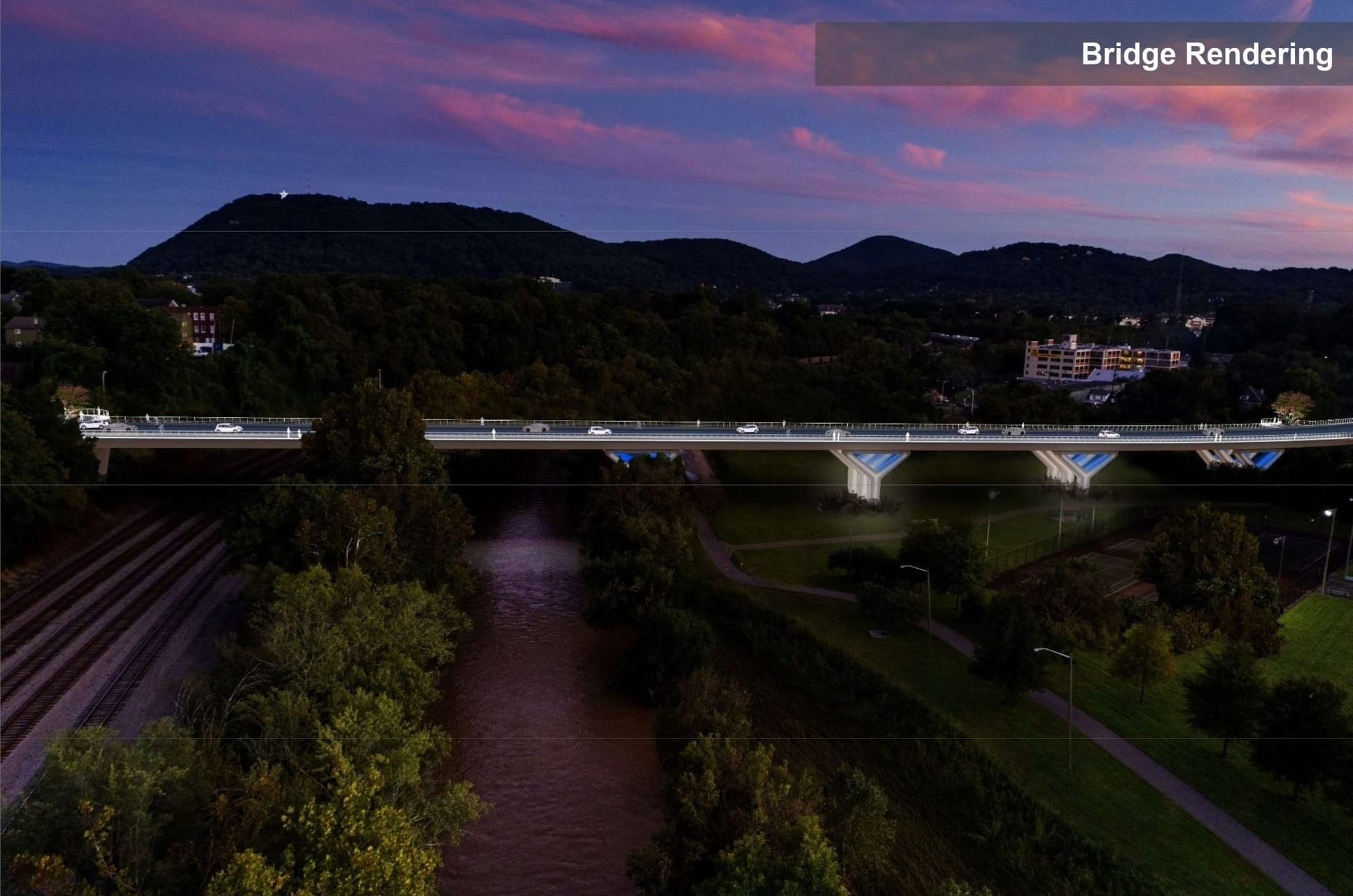
Construction crews systematically secure the upper roadway supports onto the Y-shaped substructure units of the Wasena Bridge corridor in early 2026. The massive engineering project replaces an aging 1938 span to bring modern multi-modal paths and decorative lighting to the local neighborhood grid.
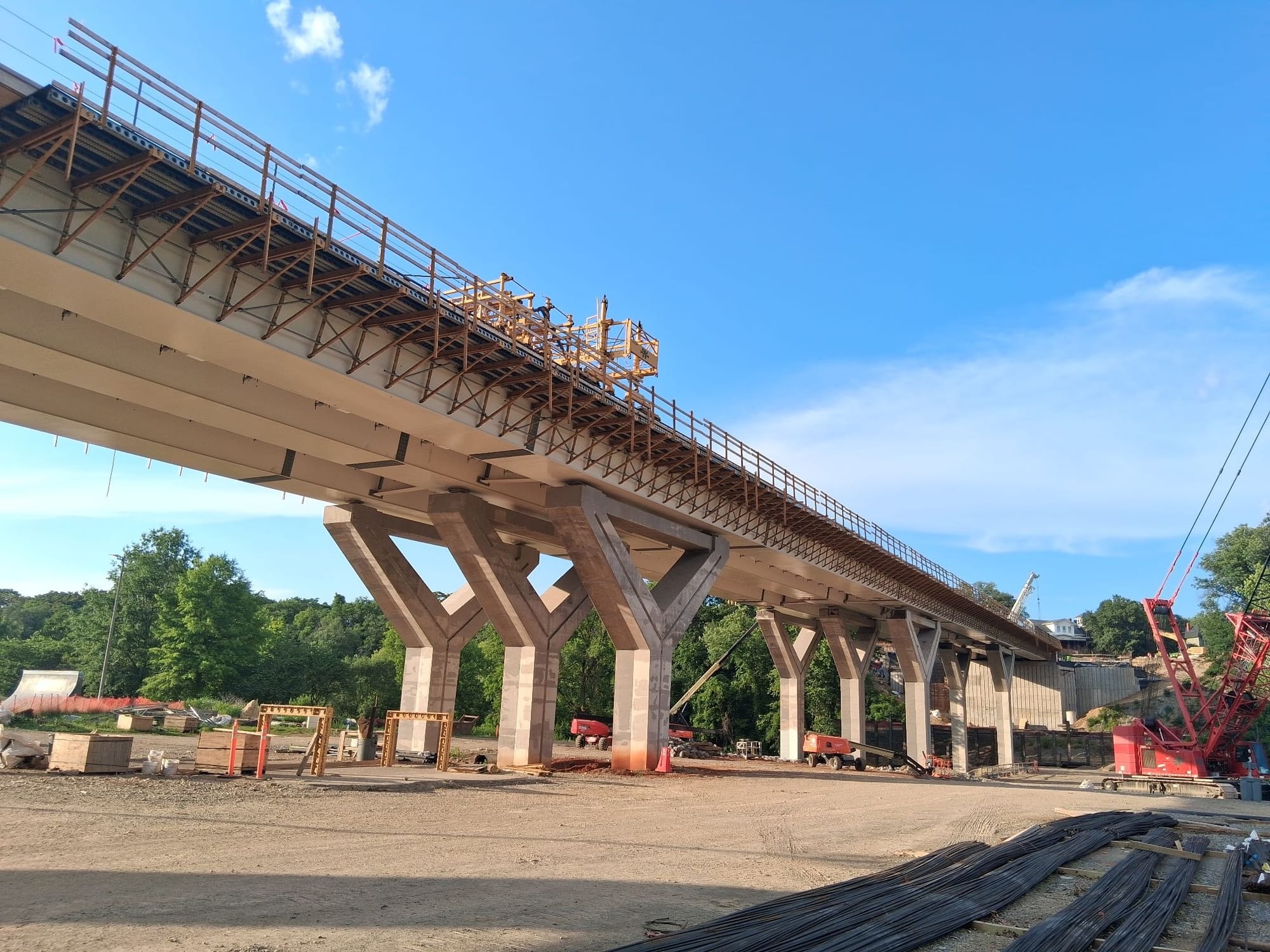
A RIDGE OF STEEL AND STONE: Massive concrete Y-piers stand firmly anchored along the Roanoke River as construction crews continue assembly on the bridge deck for the new Wasena Bridge structure. The major multi-year municipal project seeks to fully replace the aging 1930s-era corridor, modernizing neighborhood transit lines while introducing expansive multi-use pathways alongside dedicated bicycle lanes.
Bridges, Boards, and Better Transit
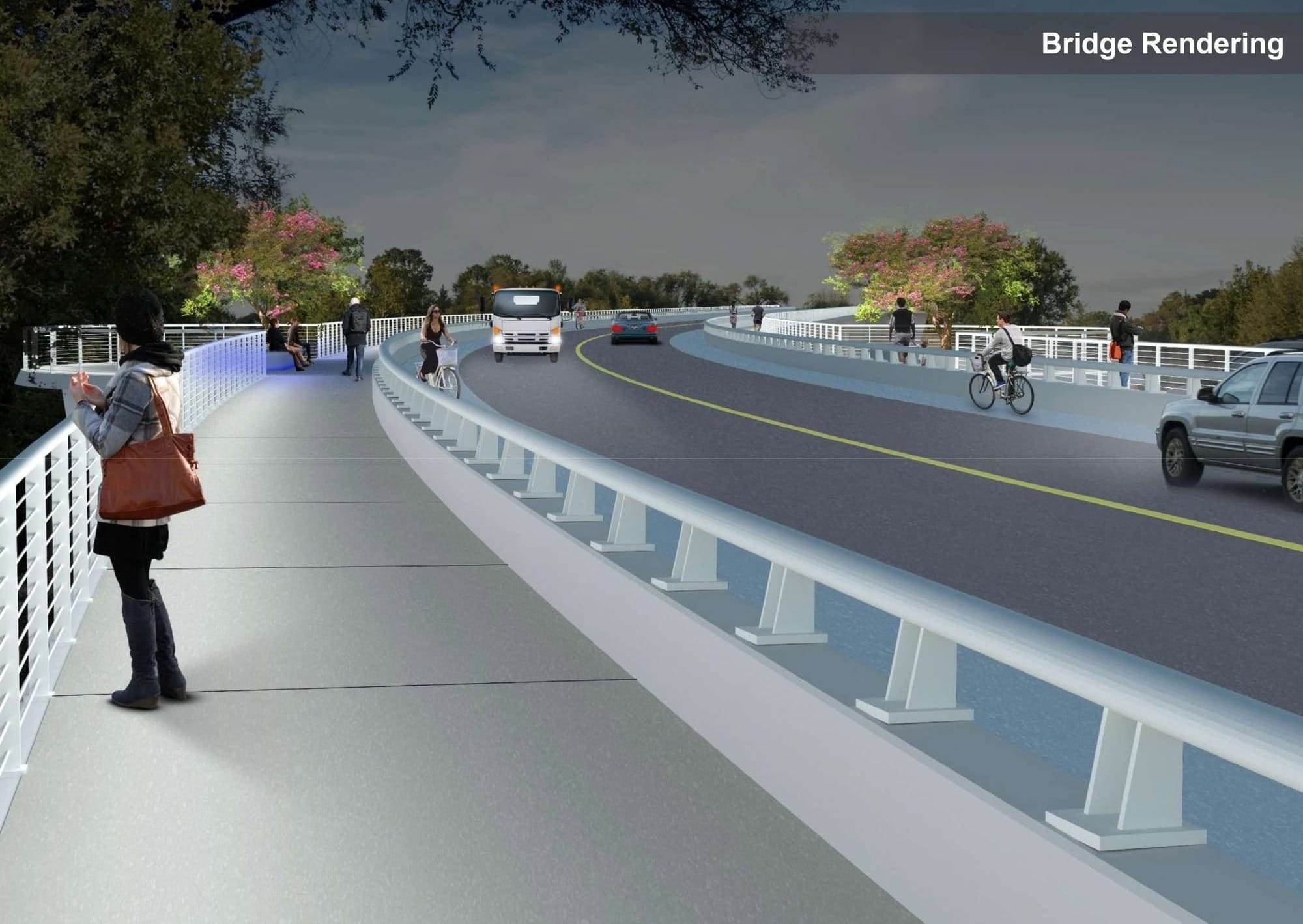
Scheduled to open this Fall, the new $50 million Wasena Bridge will feature wider sidewalks, designated bike lanes, scenic overlooks with seating, and decorative LED lighting on top and bottom. The massive structure is supported by elegant Y-shaped piers, with a new roundabout on the Old Southwest Side designed to improve traffic flow.
The nearing completion of the bridge project will finally make Roanoke's grandest park whole again. Right beneath the structure, local recreation has already received a massive boost.
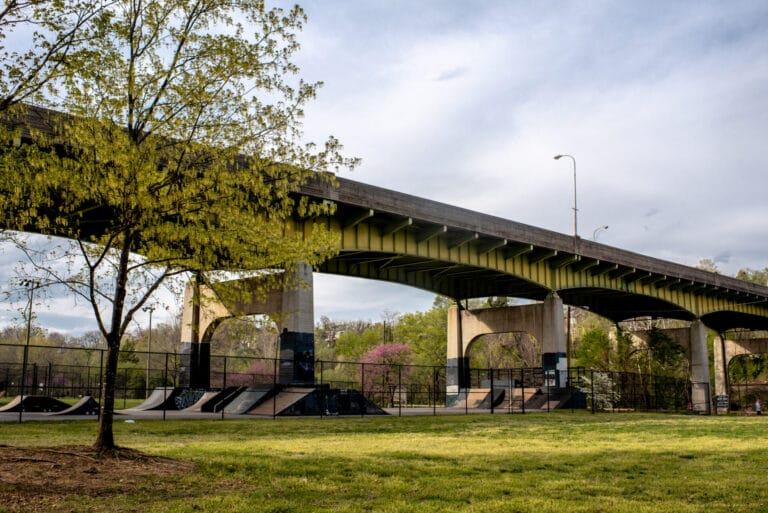
View of the legendary ramps that started a local culture. Unlike the vertical steel posts shown here—which frequently restricted open riding lines—the newly completed bridge reconstruction features sweeping, elevated concrete Y-piers.
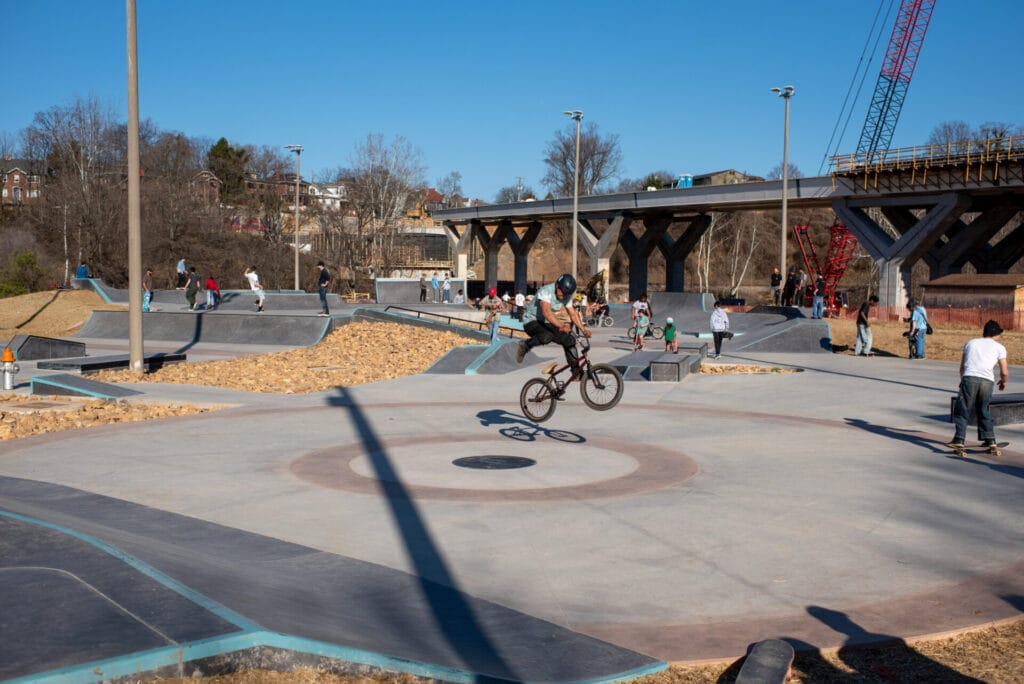
The legendary half-pipes and bleachers under the old Wasena Bridge—once as graffitied and gnarly as the days when skateboarding was an underground subculture— was resurrected in spirit by the newly opened Wasena Skate Park and Pump Track. The 24,000-square-foot facility opened this past January as a new gem of the region. Ten years in the making and costing $1.6 million, the modern features are geared for all ages and skill levels.
Whitewater Meets the Greenway
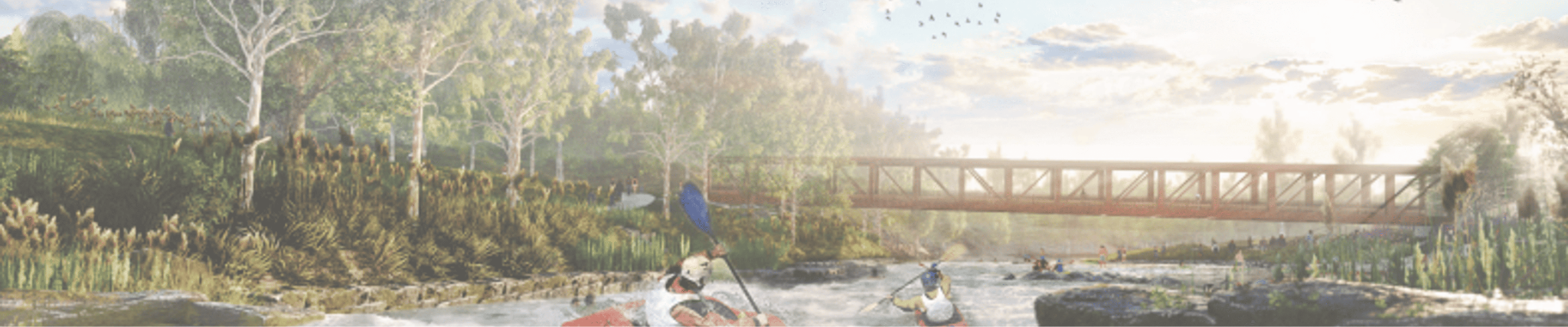
The recreational renaissance continues just steps away along the water.
Scheduled for completion in late 2026, the current $6 million phase of the In-River Kayak Park complements the city’s already robust options for outdoor recreation. While engineering designs account for a grander three-feature park, the city is actively seeking additional funding to construct the final two in-river wave sections.
Featuring strategically placed rock structures that create man-made waves, calm eddies, and mild rapids for surfing, eddy hopping, and slalom maneuvers, the project is also expected to benefit local fish habitats.
The Historic Renewal of the Eureka Center
For nearly six decades, the Eureka Center functioned as the primary cultural hub for the surrounding neighborhood. In its heyday, the brick community center hosted legendary local basketball tournaments, family reunions, and civic group meetings. However, following more than 50 years of continuous use, a 2019 assessment revealed that the Eureka Center suffered from the most severe structural and condition issues in the Roanoke Parks and Recreation network.
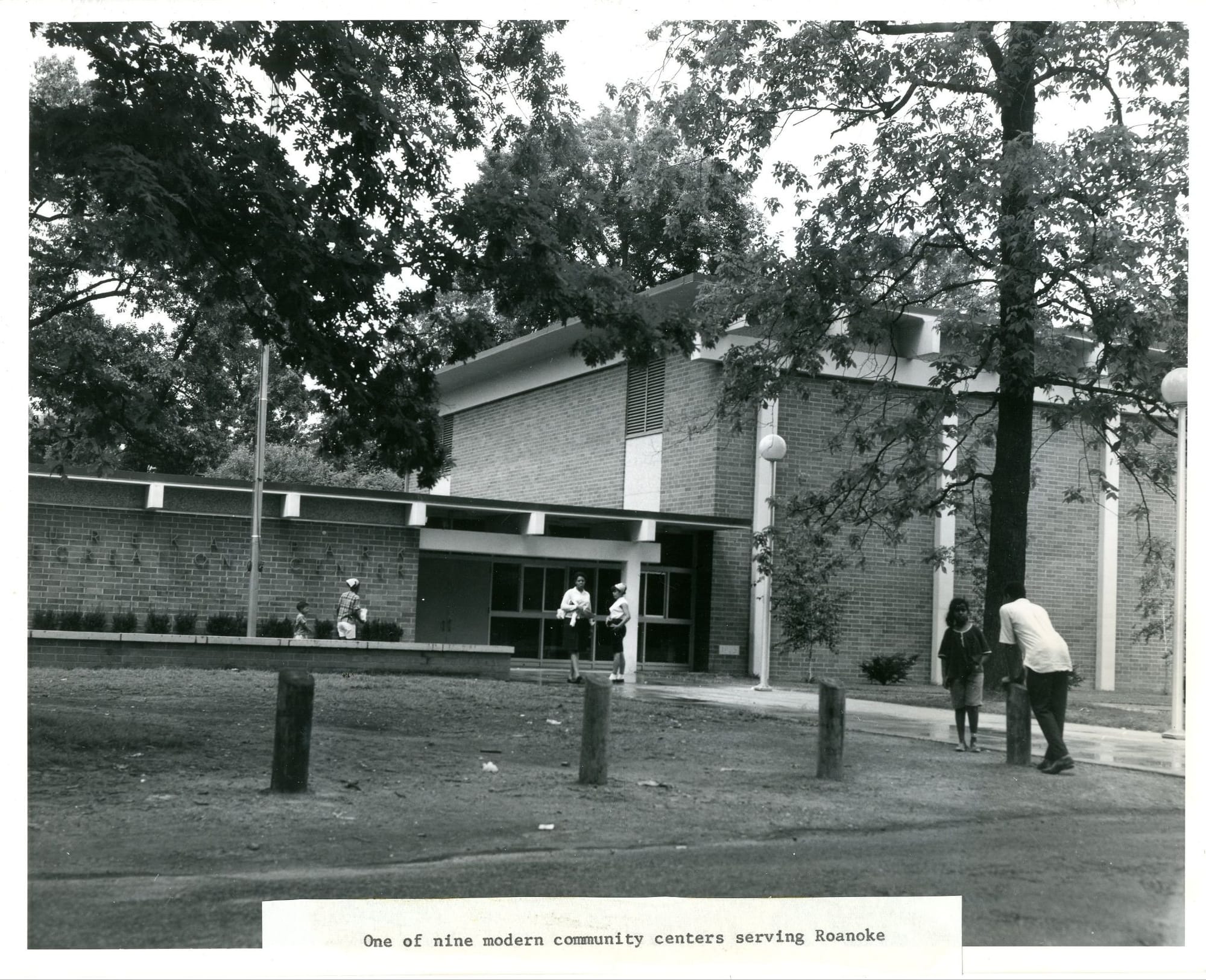
The city responded with $14.4 million in American Rescue Plan Act and city capital to fund the redevelopment of the 'Front Porch' of Northwest Roanoke — marking the largest single project investment in Roanoke Parks and Recreation history. The comprehensive project expands the facility to 16,463 square feet by pairing a complete overhaul of the original 1965 building with a brand-new 5,750-square-foot addition. As part of this expansion, the revamped gymnasium has been fully modernized with premium maple hardwood flooring, a fresh HVAC system, new skylights, a center divider curtain, and upgraded bleachers.
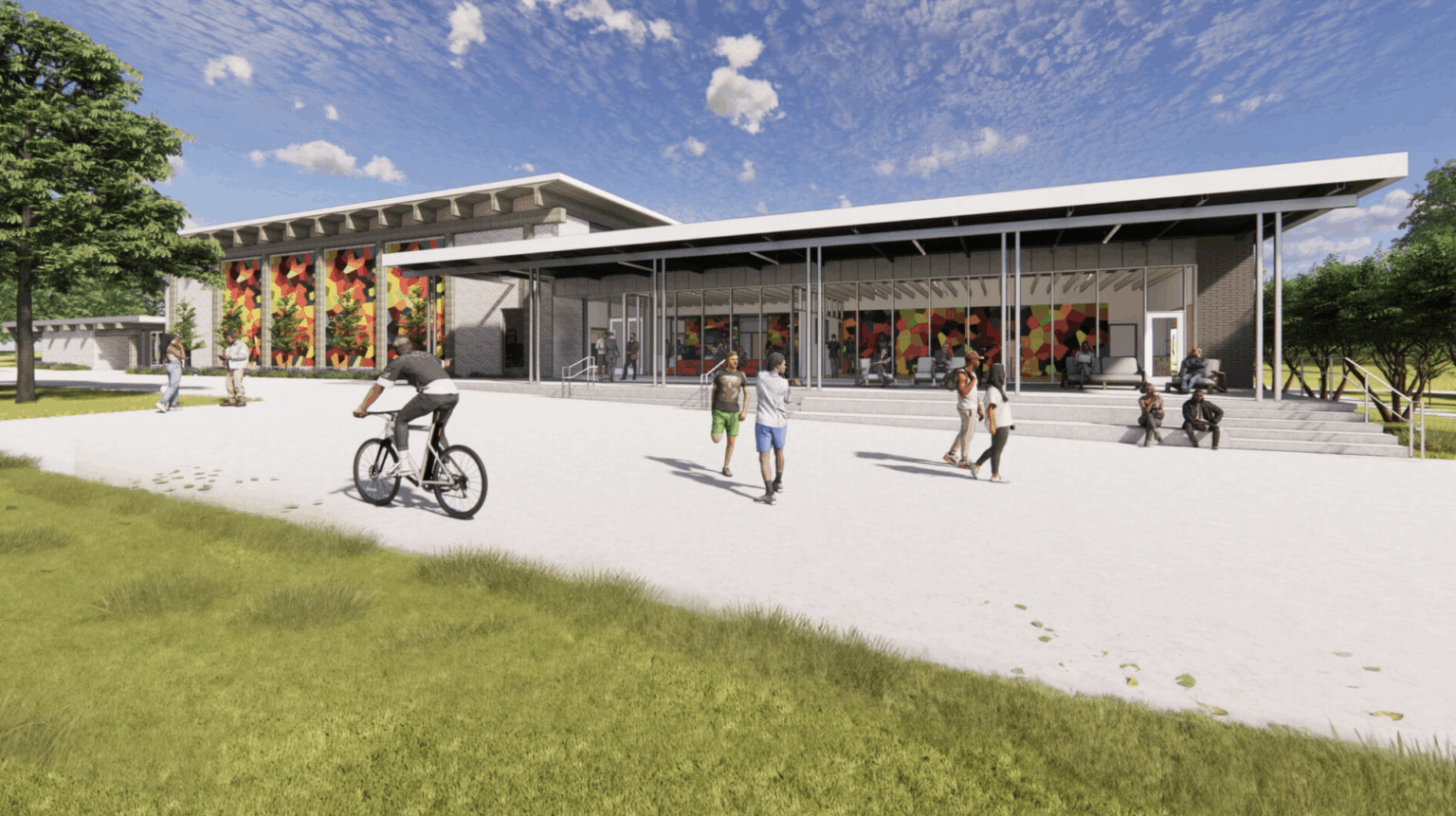
The renovation also continues the center's history of youth advocacy with an expanded vision, doubling the size of the dedicated wing for the city’s P.L.A.Y. After-School Program and summer childcare services. The updated space now features two independent classrooms separated by a shared kitchen to keep age groups focused.
Known for its abundant murals, outdoor stages, and festivals, Roanoke extends that cultural trend to the center's redesigned grounds. Richmond-based artist S. Ross Browne was selected to craft custom public art installations, creating interior and exterior visual pieces that depict the neighborhood's rich history.
The park now centers around a vast, flexible green lawn featuring a permanent built-in stage, specifically designed to accommodate major neighborhood gatherings such as the annual Juneteenth Celebration. A continuous, quarter-mile ADA-accessible walking path circles the great lawn, which features new picnic tables, a completely redeveloped outdoor basketball court, and a new sheltered picnic pavilion overlooking the main stage. Workers planted 140 native trees and doubled the parking lot capacity from 26 to 56 stalls to handle tournament and event crowds.
Additionally, the facility stands as the City of Roanoke's very first municipal building powered by a geothermal heating and cooling system, outfitted with a roof-mounted solar panel grid modeled for long-term net-zero energy readiness.
The city is hosting the official grand reopening and ribbon cutting on June 12, 2026.
An Oasis in the Northwest Food Desert
The Market on Melrose grocery center, anchoring the frontline of a major multi-million-dollar community reinvestment wave across Northwest Roanoke.
Directly addressing long-standing community disparities alongside these recreational upgrades is a major push for food equity. Food deserts—geographic regions where residents have limited access to affordable, healthy, and nutritious food—have increasingly become a reality for lower-income American communities.
Without a neighborhood grocery, and with lower-income residents often lacking a personal vehicle, relying on public transit makes it an exhaustive trip to gather fresh produce, lean meats, whole grains, and low-fat dairy. This logistical barrier often leads to a reliance on dollar stores, fast-food outlets, and gas stations that primarily sell highly processed, calorie-dense foods with elevated sodium and sugar levels.
Consequently, residents living in Northwest Roanoke neighborhoods have an average life expectancy that is six years shorter than residents living in more affluent sectors of the city. According to the Virginia Department of Health, several Northwest neighborhoods face hypertension rates exceeding 53%, drastically higher than the citywide average of 41.3% and the state average of 34.4%.
To directly combat these health disparities and eliminate a 40-year food desert, the city partnered with Goodwill Industries of the Valleys to open the Market on Melrose, a new 15,000-square-foot full-service grocery store that anchors the $30 million Melrose Plaza. Goodwill, a nonprofit better known for thrift stores, stepped into the untested role of operating a full-service grocery, planning from the outset to absorb early losses to keep prices stable. [Roanoke Rambler’s coverage from November 2025 A $30 Million Experiment': Goodwill Navigates Uncharted Territory, Deficit During Market on Melrose’s First Year]
As a stable nonprofit, Goodwill planned from the outset to operate the market at a loss during its first few years following the November 2024 opening to keep prices stable. However, early 2026 data shows an upward trend in sales, indicating that local residents are steadily breaking old commuting patterns and shifting their regular grocery habits to the neighborhood hub.
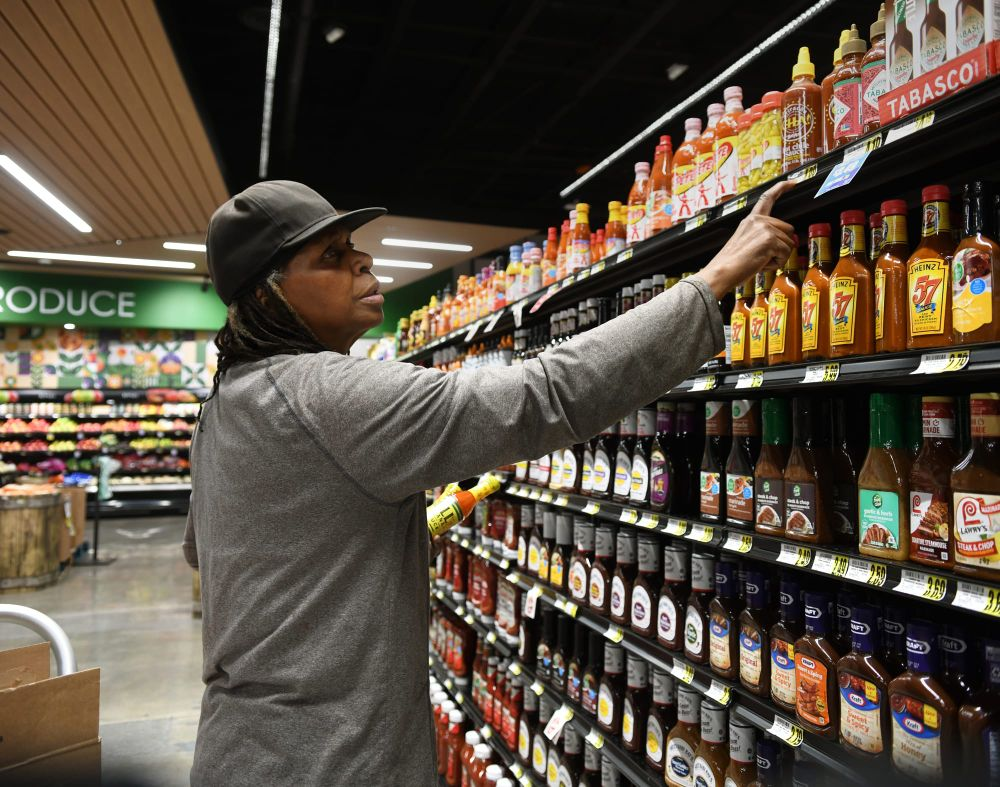
Over 75% of the market's 40-plus employees were hired directly from the Northwest Roanoke community, staffing both the grocery store and the adjacent Henrietta's Cafe—named in honor of Roanoke-born medical pioneer Henrietta Lacks. Due to the immediate popularity of the cafe's hot grab-and-go meals, community leaders are advancing active plans to expand the on-site layout.
The rest of the newly built plaza complex includes a Bank of Botetourt branch, "Wellness on Melrose" healthcare resources, the Melrose Branch Library, and the Excel Center—Virginia’s first adult high school. Once realized, future profits from the Market on Melrose will be reinvested into developing the broader Melrose Plaza complex. By pairing nutritional access with community infrastructure, Roanoke is working to bridge the healthcare gap and build a healthier, more connected future for all its residents.
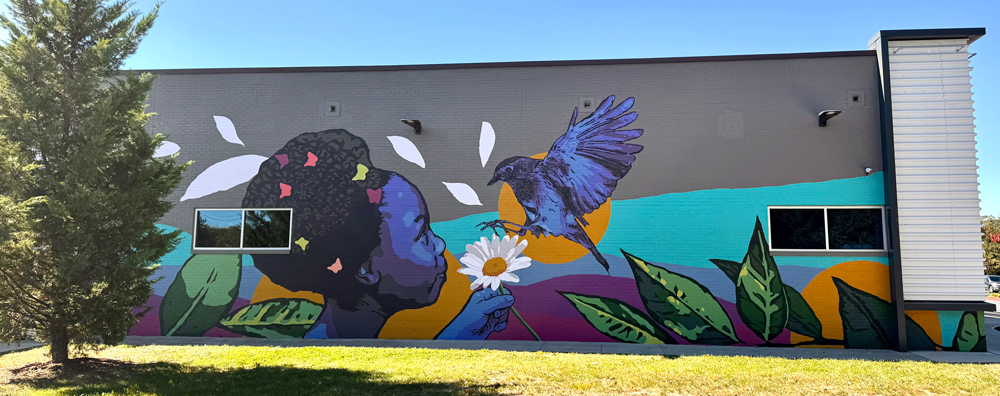
The completed exterior façade of the new $30 million Melrose Plaza neighborhood center features the community mural "Rooted in Joy," designed by local artist Bryce Cobbs. Painted collaboratively alongside neighborhood volunteers, the 1,758-square-foot public installation serves as a vibrant gateway to the Market on Melrose grocery entrance. Cobbs also painted the murals on the front facade.
Slightly Downriver, the grand openings of this year are only the first phase of a much larger blueprint for Roanoke's outdoor infrastructure. Construction on the $7 million Wiley Drive Low-Water Bridge replacement project is officially slated to begin in late summer 2026. Backed by $2.5 million in federal funding, the project will replace a frequently flooded chokepoint with a high-clearance span by late 2027, vastly improving both trail consistency and river recreation.
The existing low-water bridge on Wiley Drive remains a frequent regional chokepoint, routinely trapping river debris and flooding multiple times a year. A permanent, high-clearance replacement span is slated to begin construction in late summer 2026.
"Anybody who's canoeing or kayaking on the river will find it's a lot easier to go through a high bridge than the low one downstream," says Ian Shaw, Roanoke’s acting director of public works, in a May 2026 interview with WVTF Public Radio. "It makes it a lot easier for fish and other wildlife to move up and down stream, and the Greenway will be closed a lot less frequently."
From the Roanoke River to the heart of Northwest, the city's ongoing revitalization proves that targeted infrastructure can bridge generational gaps, building a healthier, safer, and more connected future. By linking neighborhood recreation, health resources, and food equity, the city is poised to enter a stronger, more unified era where structural growth directly fuels community well-being.
Taken in isolation, any one of these projects could be dismissed as a new bridge, another park, a fresh coat of paint on an old gym or a grocery store finally filling a gap. Viewed together, they amount to a recalibration of how Roanoke invests in its people, from kids learning to skate and paddle, to families gathering on a Juneteenth lawn, to neighbors finally picking up fresh produce close to home. If the city can sustain this momentum, the steel, stone and solar panels rising now may be remembered less as construction projects and more as the foundation of a new social contract between Roanoke and the communities long left waiting.
The Roanoke Rambler Staff