
The Reporter who Wrote about the Opioid Crisis is now Running Against the Congressman She Says Helped Cause It
Beth Macy has outraised Ben Cline for three straight quarters in a district Republicans win by 26 points. Here is where the two actually stand, verified against their own words and his roll-call record.

Beth Macy has outraised Ben Cline for three straight quarters in a district Republicans win by 26 points. Here is where the two actually stand, verified against their own words and his roll-call record.
Roanoke, VA
Author: Roanoke Rambler Staff
Published: 10:10 AM EST September 16, 2026
Edited: 10:15 AM EST September 16, 2026
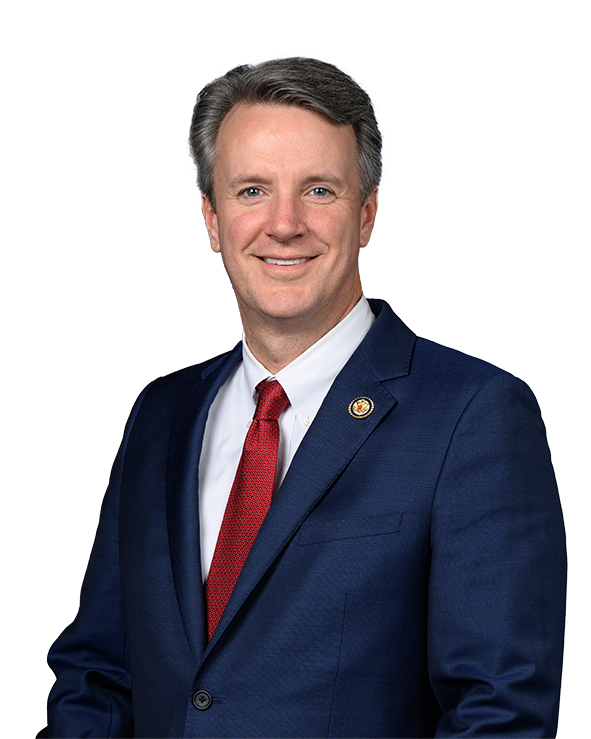
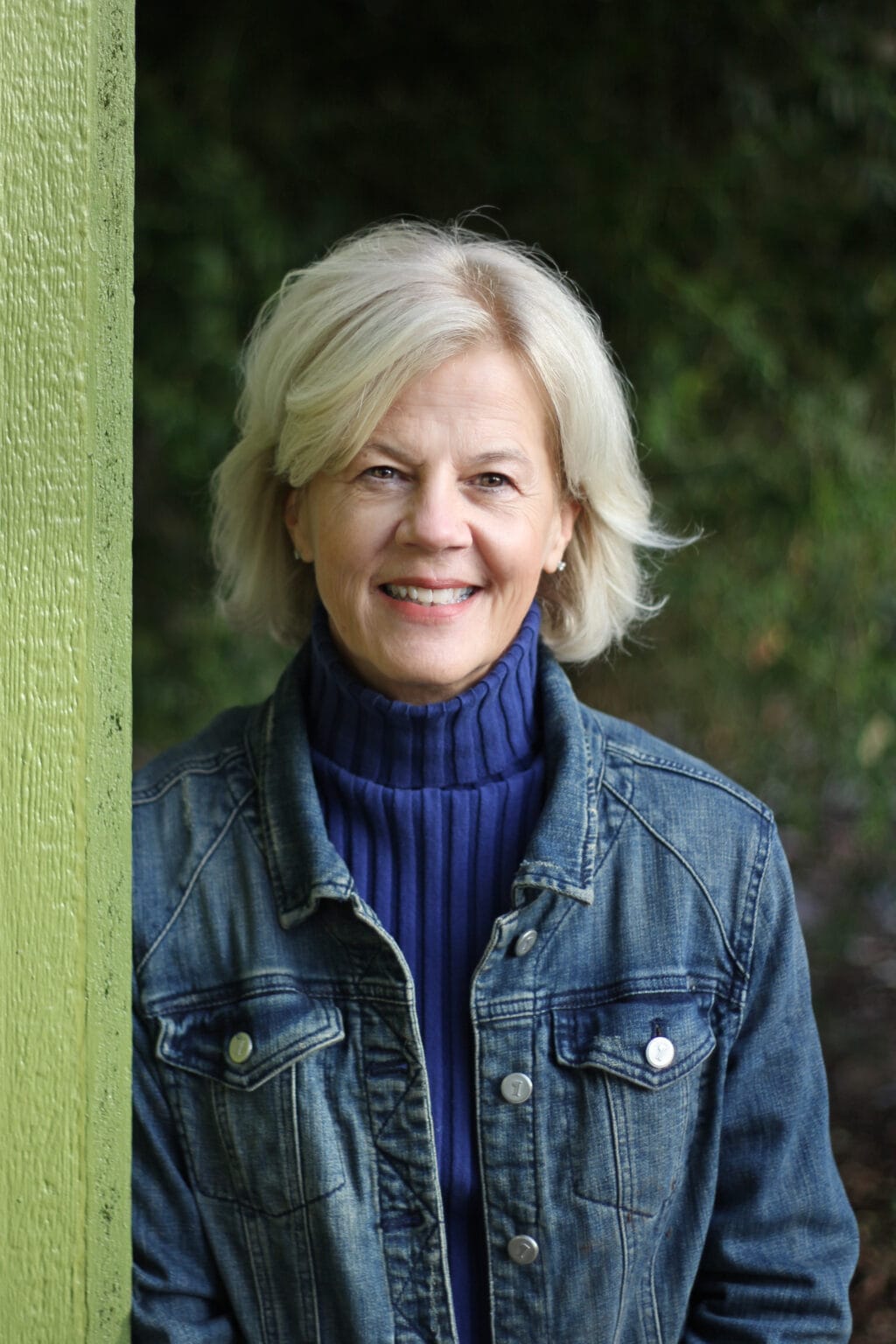
Ben Cline (R) Beth Macy (D)
For 25 years, Beth Macy's job was to ask other people uncomfortable questions. On Nov. 3, voters in Virginia's 6th Congressional District will decide whether she gets to ask them from a seat in Congress.
Macy, the Roanoke author whose book "Dopesick" reshaped the national understanding of the opioid epidemic and became an Emmy- and Peabody-winning Hulu series, is the Democratic nominee against four-term Republican Rep. Ben Cline of Botetourt County. She spent a quarter-century at The Roanoke Times covering the region she now wants to represent.
By the conventional math, she should not be competitive. The Cook Political Report rates the 6th District "Solid R," its most confident Republican classification, and Cline won his last race by 26 points. The money tells a different story. Macy has outraised Cline for three consecutive quarters and entered the fall with a cash advantage. Through the most recent reporting period, she had raised $1,590,045 to Cline's $1,413,561, including $491,143 to his $388,164 in the quarter. She raised $350,000 in the first 24 hours after announcing.
What follows is what each candidate says, in their own published words, and what the congressional record shows on major issues.
Labor and the Right to Organize:
This is the sharpest verifiable contrast in the race, and it runs directly through the theme of that unverified passage.
Cline's record: Cline voted Nay on final passage of the Faster Labor Contracts Act, H.R. 5408, which would compel employers to the bargaining table and route unresolved disputes to federal mediation and then arbitration. His own official vote record lists the Nay (cline.house.gov). The bill passed the House 230-193 with 20 Republicans voting yes — Cline was not among them (Cline Watch). He also voted Nay on the rule and on the motion to discharge that brought it to the floor (cline.house.gov). He has been explicit about the philosophy. In a 2021 constituent newsletter, Cline described the Protecting the Right to Organize Act as "a pro union, freedom crushing bill" and wrote that he opposed it (Sixth District Perspectives).
Macy's position: Her published priorities page does not contain a standalone labor plank. Her economic argument runs through affordability, taxation and workforce training: raising the Social Security tax cap "so the wealthy pay their fair share," fairly taxing capital gains, and investing in "job training happening in community colleges and high schools, creating direct workforce pathways to local industries" (bethmacyforcongress.com).
Where Cline stands generally: His campaign site lists nine issue headings — "Stop The Waste," "Bolster Rural America," "Hold Government Accountable," "Support The 2nd Amendment," "Keep America Safe," "Upholding Election Integrity," "Protecting the Unborn," "Educating our Children" and "Defend the Rule of Law" — without accompanying policy detail (bencline.com). His House biography notes he sits on the Judiciary, Appropriations and Budget committees (cline.house.gov).
Healthcare:
Macy is running to the left of most Virginia Democrats here. "I will fight for universal healthcare coverage including Medicare for All so that anyone can join and stop worrying about how they'll pay for an emergency room visit or a hospital stay," her priorities page states. She calls it "our surest path to stave off the health care deserts Cline promotes" and says she supports "fully funding and staffing VA because VA works well" (bethmacyforcongress.com).
She grounds it in district numbers: "Twenty-one percent of CD-6 residents are currently on Medicaid, and many benefited from ACA subsidies that just expired." She names a constituent — "hairdresser Allison Greeley of Roanoke" — whose premiums she says could go from $200 to $1,200 a month, and says eight Virginia rural hospitals are at immediate risk of closure while rural residents' lifespans already trail urban residents' by two to three years (bethmacyforcongress.com).
Cline voted for H.R. 1, the One Big Beautiful Bill Act, in May 2025 and again on final passage in July 2025 (Cline statement; Member Accountability). In his own statement, he said the bill "strengthens Medicaid by cracking down on fraud and protecting access for those who need it most" and "makes no changes to Social Security or Medicare," framing the vote as stopping "the largest tax hike in our Nation's history" (cline.house.gov).
He has since backed a different approach to premiums. In a December 2025 newsletter he wrote that he voted for the Lower Health Care Premiums for All Americans Act, arguing that "for over a decade, Americans have been burdened by rising premiums, fewer plan options, and higher out-of-pocket costs under the Democrat-passed Affordable Care Act," and that rather than "massive taxpayer subsidies," the bill increases accountability for pharmacy benefit managers and funds cost-sharing reductions beginning in 2027 (Sixth District Perspectives). He also cosponsored the bipartisan Improving Seniors' Timely Access to Care Act on prior authorization.
What the state projects: More than 1.8 million Virginians are enrolled in Medicaid and nearly 800,000 in SNAP, and Gov. Abigail Spanberger's administration has warned the state cannot absorb the federal cuts. A presentation to the Virginia Senate Finance Committee estimated 100,000 to 300,000 Virginians losing Medicaid coverage and $1.8 to $2.6 billion in lost state revenue in a single year (Senate Finance Committee).
Opioids: Her Subject, and Now Her Argument"
This is where Macy's biography and her politics converge, and it is the most Roanoke-specific fight in the race.
"Having written two books about the opioid crisis, including 'Dopesick,' I know treatment works when it's easier to access than dope," she writes. She argues Virginia's Medicaid expansion "allowed increased access to effective treatment for substance-use disorders and played a major role in reducing overdose deaths," and quotes Roanoke's Dr. Cheri Hartman saying that with 350,000 Virginians set to lose Medicaid, "addiction treatment will be set back 20 years" (bethmacyforcongress.com).
Her campaign also asserts Cline "has voted against addiction treatment programs, against efforts to reduce health care costs, and against investments that would strengthen rural communities," and has "reliably sided with pharmaceutical companies, billionaire donors, and the extremes of his party" (bethmacyforcongress.com). Cline's published statements on H.R. 1 do not address addiction treatment, and neither of his reviewed newsletters mentions opioids.
Roanoke's Antonio D. Hash, endorsing Macy, cited her advocacy "for evidence-based treatment in jail/detention centers" (bethmacyforcongress.com).
Cost of Living, Tariffs and Data Centers:
Macy opposes tariffs outright — "It should end tariffs, which are really a tax on purchased items" — and notes "a pound of ground beef now costs more than the federal minimum wage." She calls for cracking down on food-price "corporate profiteering," a farmer "right to repair," protecting federal crop insurance, and ending "Trump's ruinous trade wars" (bethmacyforcongress.com).
She has staked out an unusually specific position on data centers, calling for "a nationwide moratorium on new data centers" until energy, environmental, cost and workforce concerns are addressed by legislation, and for federal law making "Big Tech pay for all costs related to data centers." She frames it as a bipartisan opening: "I will reach across party lines to work with Congressional colleagues to regulate the proliferation of data centers" (bethmacyforcongress.com).
Cline casts the same economy in the opposite direction. At Buena Vista's Labor Day celebration this month he said: "We are rolling back the high inflation that came with Joe Biden. Inflation during the Biden administration, remember, was 9.5%. You know what? It's coming down." He added: "Working families are who we focus on in Washington when we deliver on legislation that helps working families by leaving more money in their pocket."
His case for H.R. 1 was built on district-level tax figures: without it, he said, "the average taxpayer would face a 26% tax hike," 78,150 families would see the Child Tax Credit cut in half, 51,860 small businesses would face a 43.4% rate, and 7,445 family-owned farms would lose half their estate-tax exemption. He noted the law eliminates taxes on tips, overtime pay and car loan interest (cline.house.gov).
After the Buena Vista event, Cline said there should be "guardrails" on artificial intelligence.
I-81: The One Thing Both Sides Call a Priority:
For Roanoke Valley commuters, Interstate 81 is a daily referendum. Cline has made it his signature appropriations claim, saying he "successfully secured an additional $17 million in the Fiscal Year 2026 Transportation, Housing, and Urban Development appropriations bill" dedicated to I-81 improvements (Sixth District Perspectives). The House advanced the bill 341-88 in January (cline.house.gov). For fiscal 2024 he had requested $80 million for I-81 corridor improvements (GovTrack).
Macy's priorities page does not address I-81 directly, though it repeatedly cites rural transportation barriers — she backs Sen. Tim Kaine's Pell-for-workforce initiative partly because rural students "struggle with transportation" (bethmacyforcongress.com).
Education, Immigration and Ethics:
Education. Macy would "double Pell grants," expand short-term community college funding for welding, nursing and medical technology, and notes the district's private four-year colleges "rely on Pell and Virginia's Tuition Assistant Grants for survival" (bethmacyforcongress.com). Cline lists "Educating our Children" among his nine issues without published detail (bencline.com).
Immigration. Macy calls the situation "both a humanitarian and workforce disaster," says America "must restore/preserve legal pathways" to permanent status or citizenship, and that "we must stop ICE from hurting our neighbors" (bethmacyforcongress.com). Cline, a former assistant commonwealth's attorney who chaired the Virginia House Militia, Police and Public Safety Committee, lists "Keep America Safe" and "Defend the Rule of Law" (cline.house.gov, bencline.com).
Congressional stock trading. Macy's site makes a specific, checkable charge: "Cline is not a co-sponsor of the bipartisan Stock Trading Ban discharge petition" (bethmacyforcongress.com). Cline's own site does not address it.
The Debate over Debates:
Macy challenged Cline to three debates — one in the Roanoke Valley, one in the central Shenandoah Valley, one elsewhere in the district. The Roanoke Times reported in late August that the two are set to meet three times, including once in the Roanoke Valley. Macy's campaign has disputed whether the scheduled formats, including an Oct. 5 Harrisonburg Rotary appearance, constitute genuine debates.
The Buena Vista speeches offered a preview. "He won't do a debate because he can't look you in the eye to defend taking food off the plate of children and giving billionaires a tax break," Macy said. "Two hundred kids in Roanoke city just this year lost Head Start." She said Cline "kisses the king's ring."
Cline dismissed it as "the same tired rhetoric that Democrats have been spouting since the beginning of the Trump administration," and turned the working-class claim around: "This city made up of hard working men and women vote Republican each and every year because Republicans support working families." He added that Democrats "voted against a farm bill to help farmers across this country."
Cline has faced sustained local criticism over town hall access. Constituents picketed a private Harrisonburg meeting in 2025 demanding a public forum (The Harrisonburg Citizen), and a tracking site has counted the months since he said he planned to hold town halls "in all 22 localities" in the district (Cline Watch).
Who Is on the Ballot:
Roanoke voters will see the U.S. Senate race between Democrat Mark R. Warner and Republican Bert Mizusawa, the 6th District race between Democrat Beth A. Macy and Republican Ben L. Cline, and three Roanoke City Council seats (City of Roanoke; sample ballot). Polls are open 6 a.m. to 7 p.m. on Tuesday, Nov. 3, and Valley Metro buses run fare-free on Election Day (City of Roanoke).
What to Watch:
Macy's endorsements are institutional, not just local. Sen. Tim Kaine ("Beth is the real deal"), Gov. Abigail Spanberger, former Roanoke Mayor Sherman Lea Sr. ("Beth Macy has been advocating for Roanoke for four decades"), current Mayor Joe Cobb and former council member Anita James Price have all endorsed (bethmacyforcongress.com).
Medicare for All is the biggest risk she is running. It is a genuine position, published on her own site, in a district Cook rates Solid R. Cline will campaign on it.
The gap between the ratings and the markets is the story. Cook says Solid R. Prediction markets have repeatedly priced the seat closer to a coin flip. One analysis found Trump's approval in the 6th low enough to matter even in Virginia's second-most Republican district.