
Where the Data Centers Could Go
The data center debate hits home a mile and a half into Roanoke County, tracking an infrastructure footprint partially owned and aggressively developed by the City.

The data center debate hits home a mile and a half into Roanoke County, tracking an infrastructure footprint partially owned and aggressively developed by the City.
Roanoke, VA
Author: Roanoke Rambler Staff, Hart Fowler Lead
Published: 10:35 AM EST September 16, 2026
Edited: 10:45 AM EST September 16, 2026
If it isn’t a data center coming to Roanoke, it sure looks, walks, chooses spots and draws immediate anti-data center opposition like one.
On Friday, the announcement of a potential sale of the Wood Haven Technology park to Clearview Dynamics LLC by the Western Virginia Regional Industrial Facility Authority (WVRIFA)—a multi-jurisdictional conglomerate pooling the interests of Roanoke City, Roanoke County, Salem, and Vinton, came as an unwelcome surprise to some, and a hope for Roanoke’s future financial security for others.
Best Running Guess; It’s Meta

When the agreement with global logistics data center broker Prologis dissolved in April, activists celebrated a victory for the future use of Wood Haven Technology Park, effectively burying the project due to the developer’s failure to clear stringent regional environmental impact review thresholds. This left the 126 acres primed for advanced industrial use just across the City’s northern border temporarily without a buyer.
This resurrected project cuts out the middle man operation that was Prologis with Clearview Dynamics LLC, a potential Big Tech shell, making a play after laying in wait and gaining information for its concerted effort that followed.
While Clearview Dynamics LLC was formed as an anonymous Delaware shell company on January 13, 2026, its Virginia corporate registration documents are signed by Pamela Gregorski, a senior manager at Corporation Service Company (CSC).
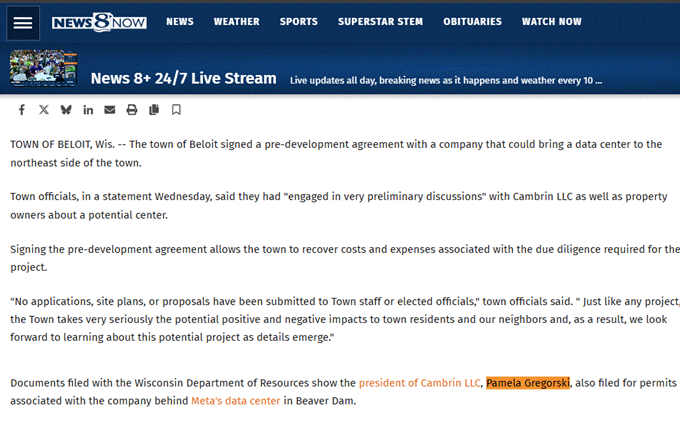
Recent industrial real estate patterns reveal that Gregorski is a known corporate signatory for Meta (Facebook) data center builds. Her name is on registration paperwork for active Meta server shells nationwide, including Scout Development LLC, Goat Systems LLC (Wyoming), and Cambrin LLC (Wisconsin). While local administrators use strict non-disclosure walls, the corporate paper trail heavily implies that Mark Zuckerberg's computing empire is the ultimate force driving the Wood Haven acquisition.
A Financial Windfall of Epic Proportions
Roanoke City holds a 44.2% cost-and-revenue-sharing stake in the property, making it the largest municipal stakeholder in the venture. Over the last ten years, local taxpayers have financed $9.3 million into the site to achieve a Tier 5 "Shovel-Ready" status, carrying an annual baseline debt and maintenance cost of $370,000. When Mayor Sherman Lea and City Manager Chris Morrill first authorized the acquisition in 2016, they could never have fathomed a payoff this massive—a project originally underwritten for low-density warehouse use turning into a high-stakes corporate cash engine capable of multimillion dollar returns.
The pivot to a sale with a direct user like Meta could pay off very well, with the city claiming 44.2% of the initial land sale profits, an estimated cut of between $4.4 million and $6.6 million—and collect millions in recurring annual returns once the server banks turn on. Under Virginia's Machinery & Tools (M&T) tax frameworks, these returns would see continuous, mandatory updates as computing hardware is systematically replaced every three to five years.
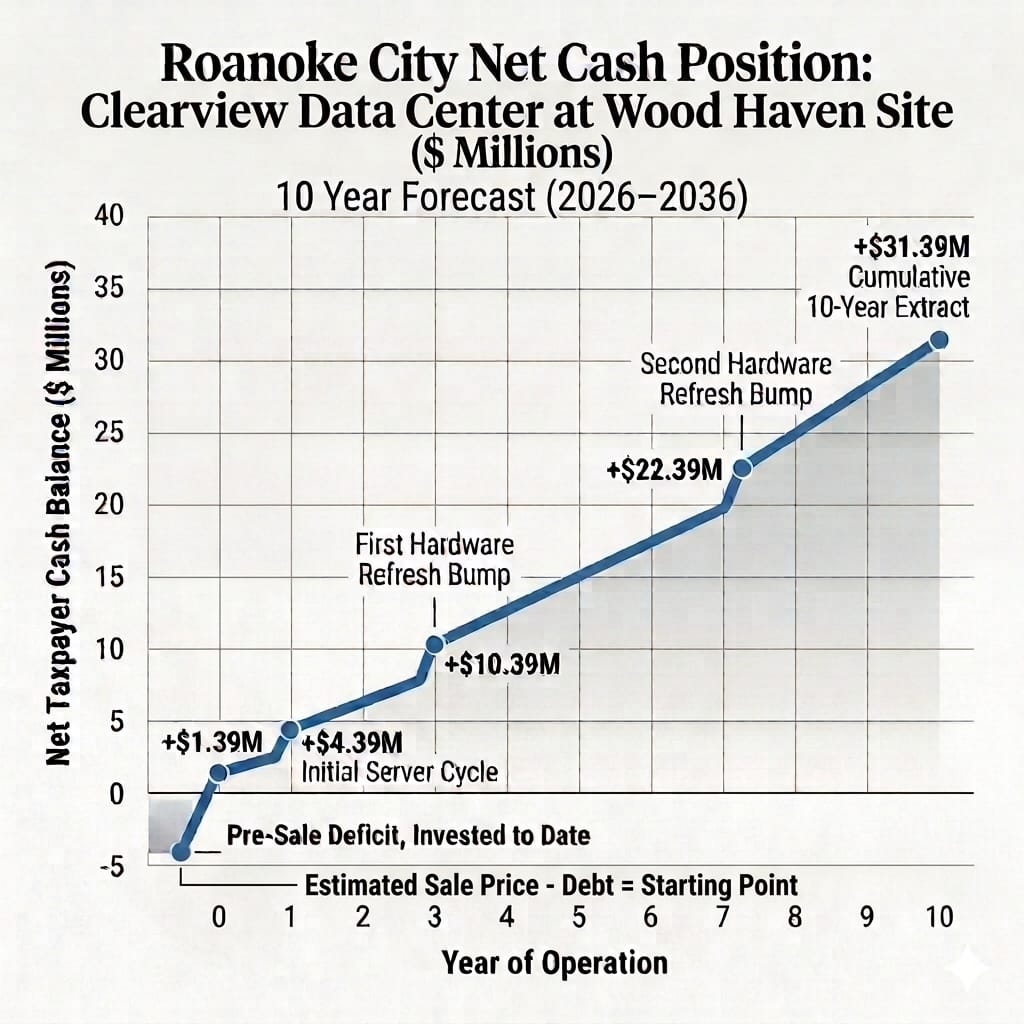
The return on investment is left out of most local data center discussions focused on the perceived negative aspects, but many experts are starting to explore the data on the benefits with more sites now online. An article recently published by The Economist—titled “The moral panic over data centers is foolish” with the tag “A backlash fueled by misinformation and misunderstanding”—references Loudoun County, Virginia, located in the data center capital of the world.
Excerpted from the piece: “Data centers pay huge tax bills, helping fund schools, libraries and police stations. In Loudoun County, Virginia, a tax on computer equipment inside its more than 250 centers is expected to supply 40% of the county’s total tax revenue next year. The windfall has allowed the county to cut residents’ property taxes by about 30%.”
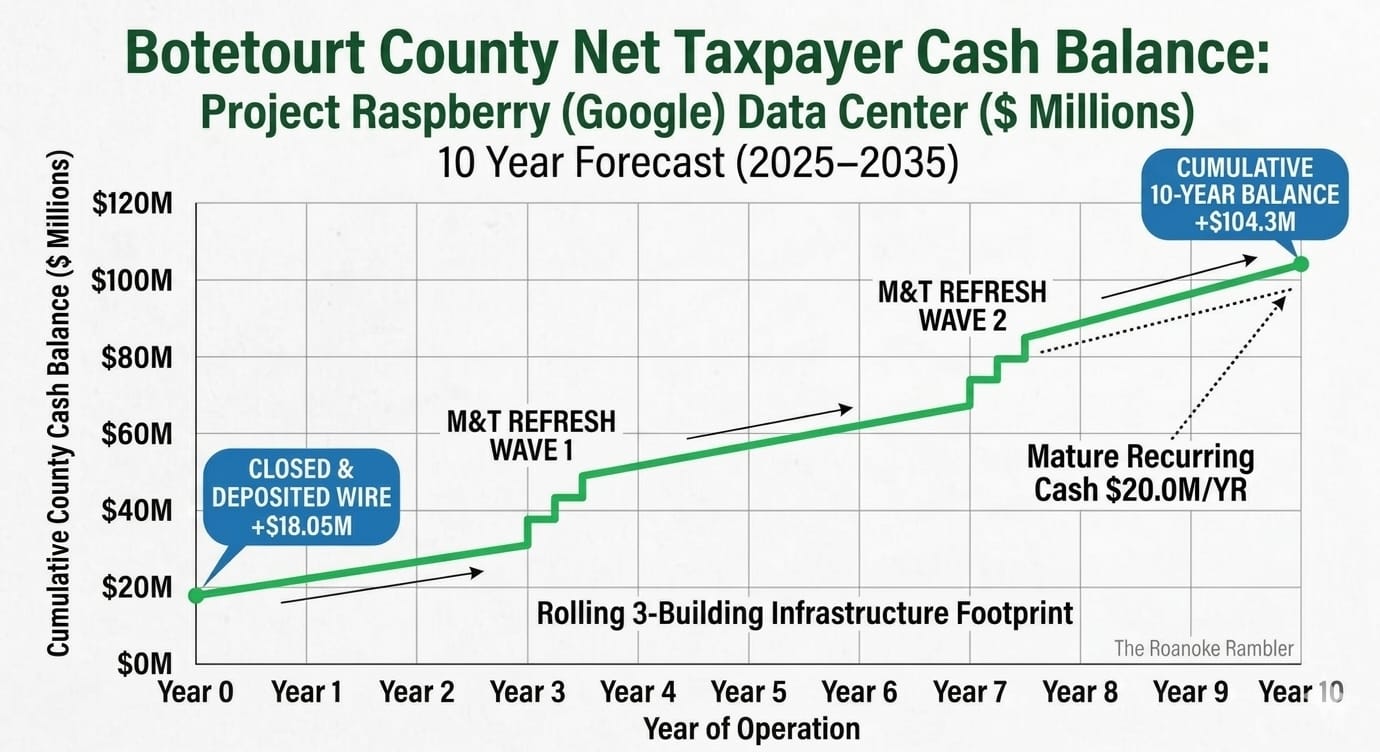
Twenty-two miles north and after a very public backlash, Botetourt County has begun collecting the returns on the Google Data Center, fully depositing the $18 million check for the land sale and community grants last month.
Botetourt County does not have to split the money with neighboring jurisdictions under any regional pact, and their three data centers are roughly three times the size of the potential one at the Wood Haven tract.
Botetourt also explicitly denied Roanoke City’s formal request for a 15% share of the project's tax revenue—which city leaders had aggressively pursued due to the data center's planned reliance on cooling water sourced directly from Carvins Cove.

"I drink your milkshake!" Daniel Day-Lewis’s iconic cinematic oil baron Daniel Plainview standing in for regional data center utility demands across the county line.
Shame on You - Hating on the Players when the Fight is in the Game
Following Friday's regional board vote authorizing the Wood Haven land sale, Councilman Terry McGuire publicly vented his frustrations over the outcome. McGuire confronted officials with rebukes of "shame on you" before turning his ire toward City Manager Valmarie Turner, insisting that the bureaucratic silence "wasn't funny" after he falsely perceived she was smiling.
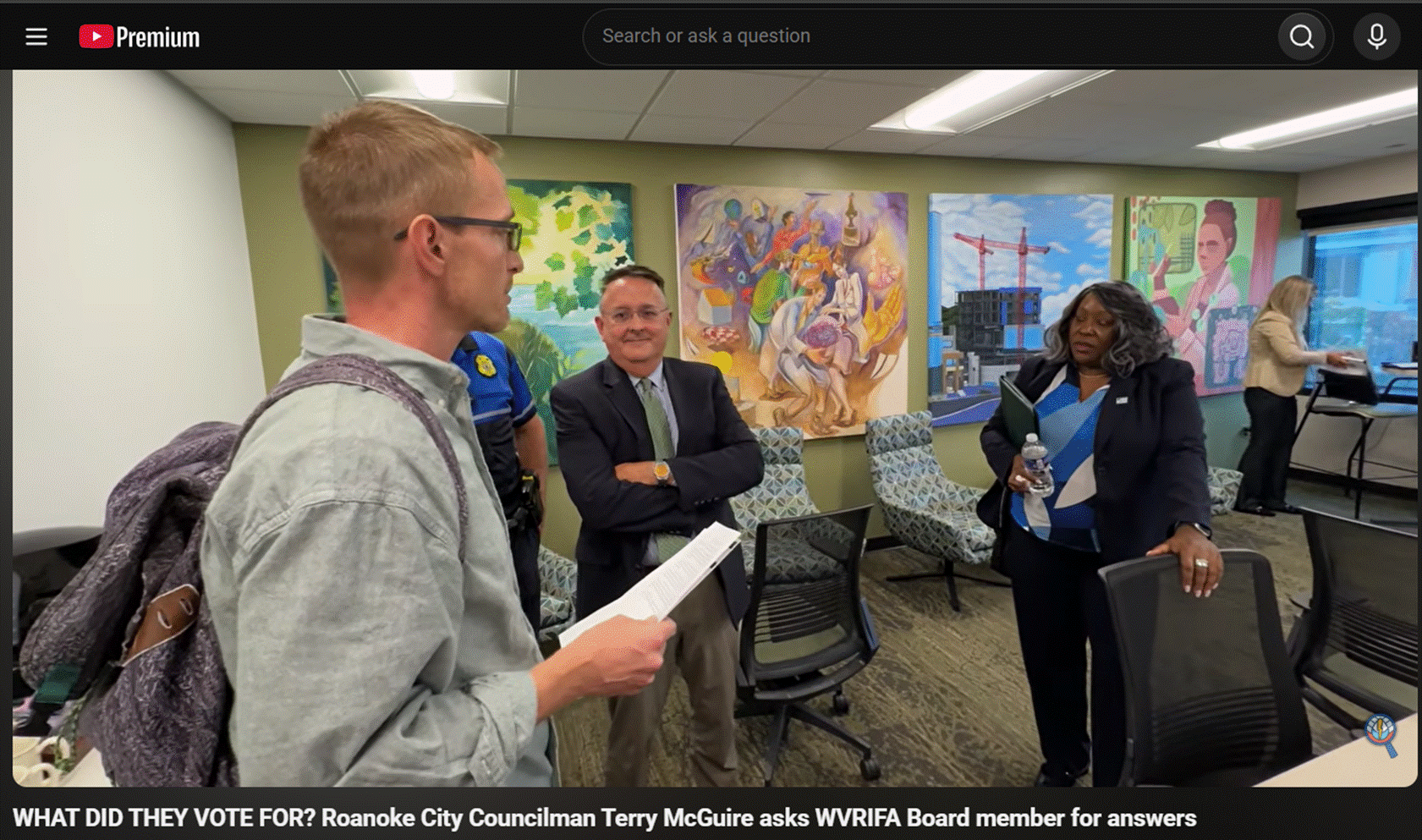
McGuire's hallway dressing-down functioned as purely political grandstanding—demanding public answers from appointed executives who were contractually and legally forbidden from speaking under binding corporate non-disclosure agreements. Non-disclosure agreements are regularly used in high-stakes economic development meetings, and for good reason. They prevent rival states from poaching corporate leads, insulate publicly traded companies from volatile stock speculation, and shield proprietary logistics networks from industry competitors.
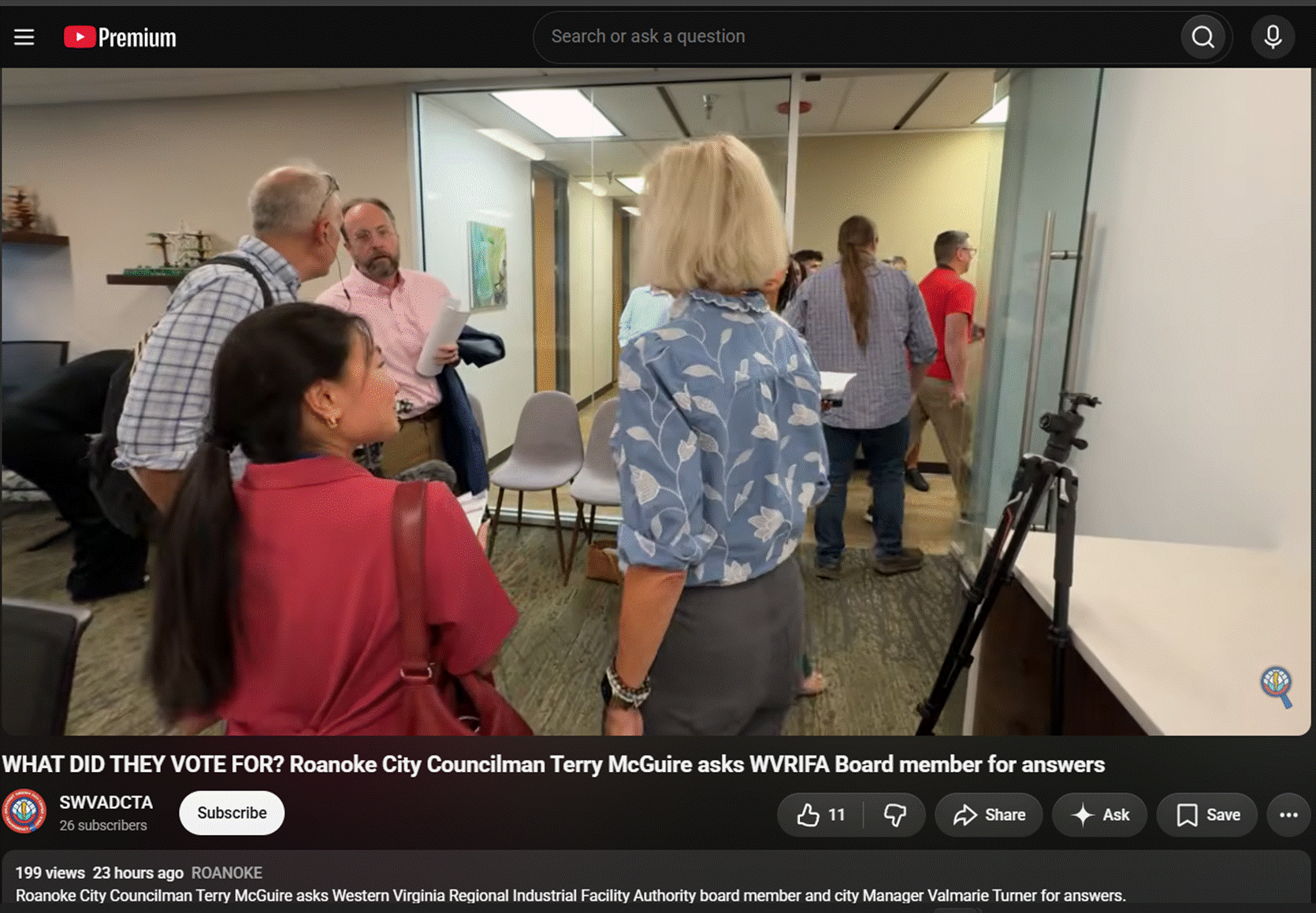
The presence of acclaimed investigative author and 6th Congressional District candidate Beth Macy (foreground center, in blue)—standing shoulder-to-shoulder with local community organizers—further establishes her high-stakes platform backing an aggressive, nationwide data center development moratorium.
Closed-door executive sessions—like the ones utilized by the city council members to evaluate and eventually give their blessing to the contract—are authorized under Virginia law explicitly to protect public negotiating leverage, ensuring that premature leaks do not inadvertently tank multi-million-dollar real estate deals and cost local taxpayers their return on investment.
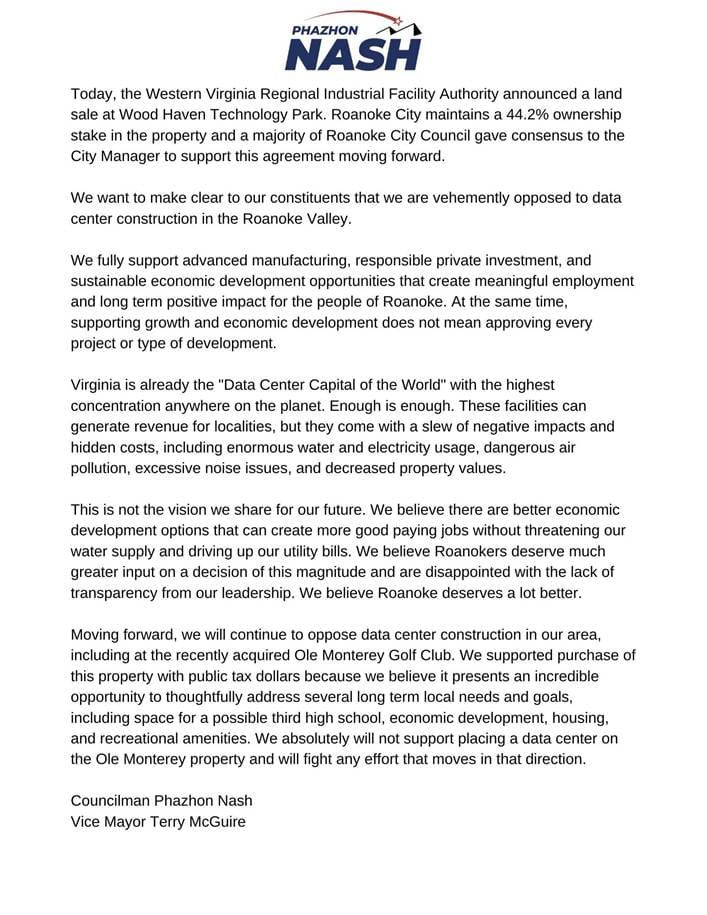
The joint statement published by Councilman Phazhon Nash and Vice Mayor Terry McGuire confirms the political split within Roanoke City Hall, while verifying that a council majority cleared the manager to advance the Wood Haven technology park deal.
Something in the Water
The water authority has not publicly announced any figures for estimated water use at Wood Haven, but projections using similar-sized facilities averaged across a full year of operation estimate a standalone data center on Wood Haven's 54-acre pad would consume a steady 300,000 to 500,000 gallons per day. This factors in temporary summer cooling spikes that are offset by low-demand winter months and is roughly the equivalent of the water usage of a single local 18-hole golf course.
In comparison, the water authority has finalized a binding legal infrastructure agreement for Botetourt's Google site that pulls from the regional network supplied by Carvins Cove. This contract allocates an initial 2 million gallons of water per day, with an engineered right to scale up to a massive 8 million GPD as the three-building campus matures. These three data centers will consume three golf courses worth of water when they reach full capacity, which is estimated to reach maturity by 2029.
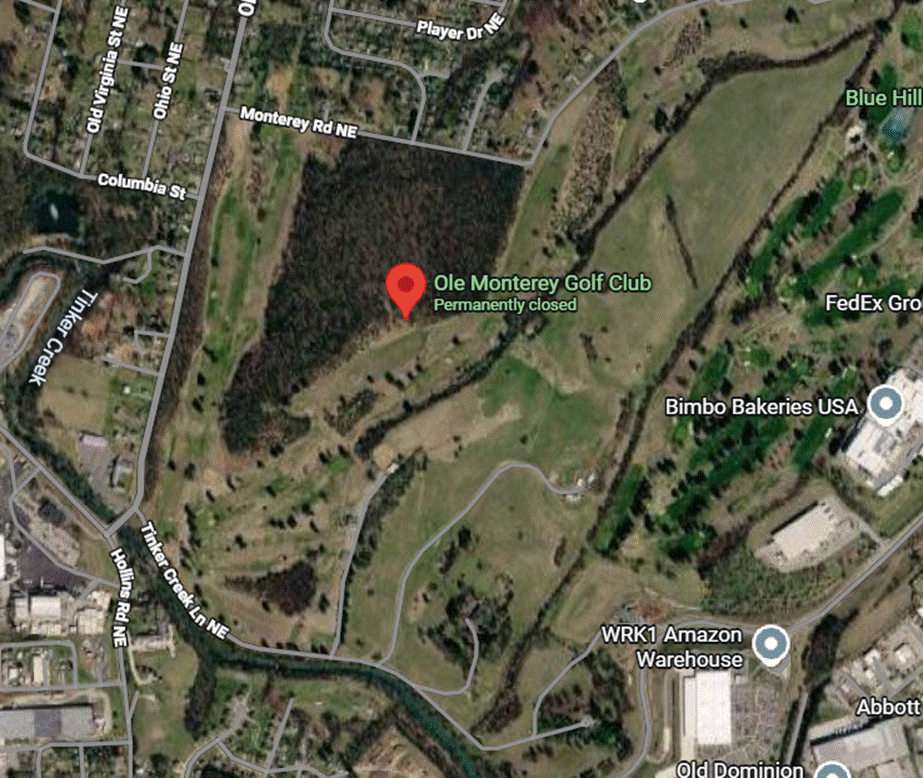
The Ole Monterey Golf Course is not a potential data center location. The city's landmark $8 million acquisition of the 236-acres triggered significant public confusion across the Roanoke Valley, as the property purchase executed around the exact same time frame that regional authorities announced the potential commercial land sale to Clearview Dynamics LLC just to the north.
Water will be recycled through internal cooling loops multiple times at the Botetourt sites, and the single-building design at Wood Haven is highly likely to deploy that same multi-cycle reuse framework before discharging its runoff back into the regional system—a standard mineral bleed that carries zero toxic chemicals and is entirely safe for ordinary municipal wastewater processing.
Once again, from “The moral panic over data centers is foolish": “And there is no reason to single out AI [for water usage]: just about everything in modern life, from streaming Netflix to running a dishwasher, consumes water at levels that can be portrayed as wasteful by environmentalists. Google has calculated that the median Gemini text prompt consumes about five drops, meaning even tens of thousands of AI queries would consume less water than a minute in the shower.”
The Power
To support rapidly growing large-load industrial capacity demands, Appalachian Power (APCO) filed a formal application with the Virginia State Corporation Commission seeking a $61.4 million base rate increase in May 2026. Residential customers using 1,000 kilowatt-hours per month absorbed a $9.10 monthly rate increase across Virginia’s service territory. The price increase was driven heavily by the massive infrastructure overhauls and high-voltage transmission line corridors required to hook up regional high-density computing clusters—otherwise known as data centers.
The 54-acre Wood Haven site is projected to require an estimated load capacity ranging between 40 and 80 megawatts at full operational capacity. Governor Spanberger has recently placed restrictions on power utilities shifting systemic grid-capacity costs onto residential ratepayers.
If the site reaches the building stage, short-term traffic disruptions localized to Wood Haven Road, Thirlane Road, and the immediate entrance to the technology park are expected. Power disruptions due to data centers are rare, with zero grid-level brownouts or system-wide blackouts reported across Virginia's service territory in 2026.
The Hum
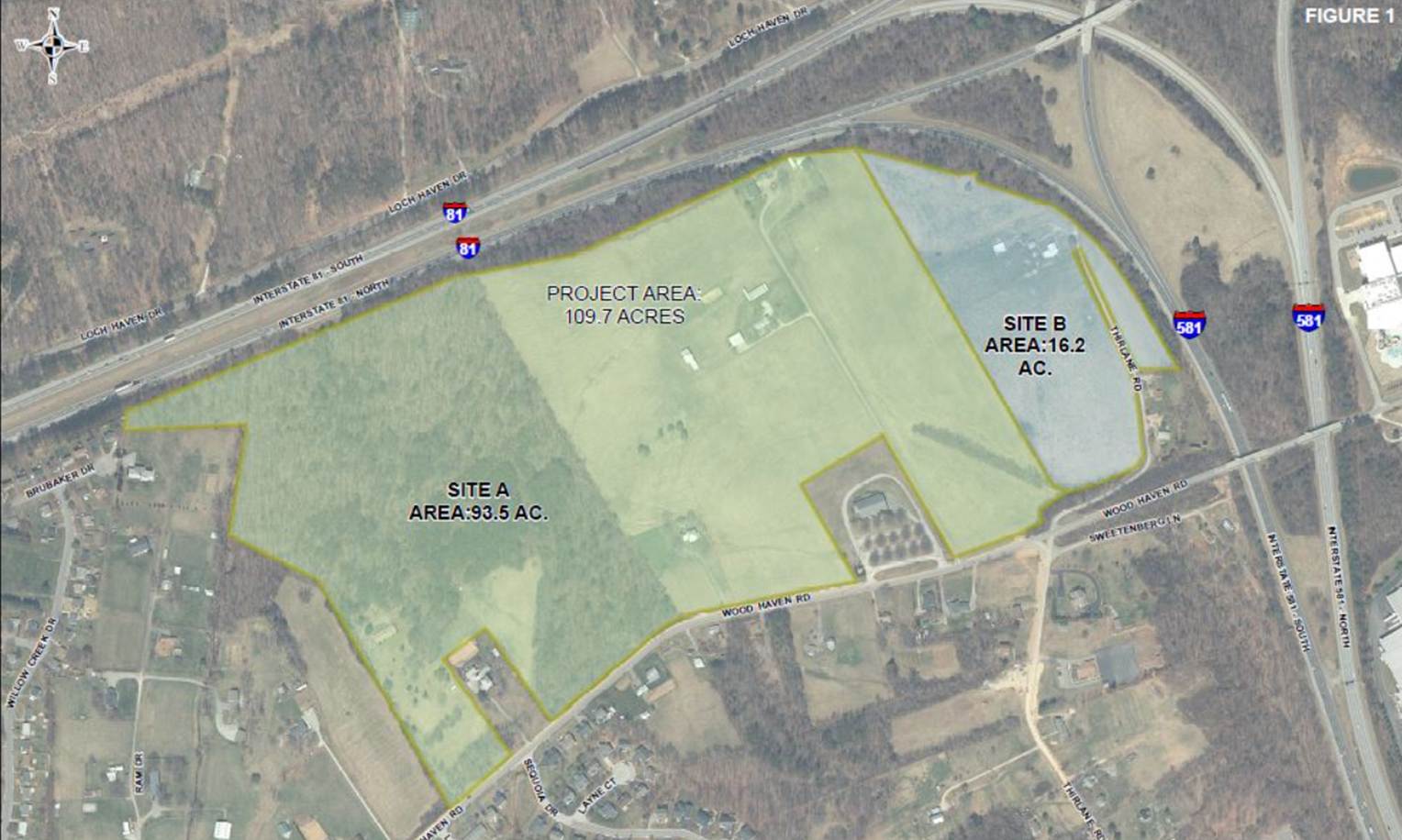
While the facility's massive cooling fans and HVAC chiller arrays would register a steady 55 to 65 decibels at the data center site's property line, dropping to 45 to 50 decibels by the time it reaches the closest residential property lines located just 200 to 500 feet away along Wood Haven Road and Thirlane Road. At that distance, the continuous hum is equivalent to a residential central air conditioning unit twenty feet away.
Green Ridge Recreation Center and Splash Valley are closer to a mile from the potential site, and at that distance, the industrial cooling noise will have faded entirely, sounding like a faint, continuous highway draft coming from the thoroughfare to the northeast.

Is the Threat of the AI Bubble Bursting a Risk Worth Taking
We’re dealing with mostly circumstantial evidence during a tech revolution that is evolving at a higher rate of speed than anything witnessed in recorded history, including the Industrial Revolution, the invention of electricity, automobiles, trains, and photographs—and we are just beginning to consider pumping the brakes.
Well-organized anti-data center activists in Botetourt County that tried were unsuccessful in their attempt to block development, with the Google site scheduled to open in 2029. Meanwhile, Roanoke City successfully passed constraints last summer to keep data centers outside of city limits without a strict, public-facing Special Exception permit process.
Alarms are naturally being sounded with Wall Street currently tracking an unprecedented spending arms race, and tech platforms funneling hundreds of billions of dollars into high-density data center construction to corner the generative AI market. If enterprise AI software fails to monetize rapidly enough to justify these astronomical infrastructure budgets, the speculative funding bubble will burst.
If that were to happen around Year 3 or Year 4 of the potential Wood Haven project, the operator would stop executing those rolling, multi-million-dollar server refreshes. The high-density hardware inside the Wood Haven shell would rapidly depreciate to near-zero along with the city’s projected tax stream, leaving a massive, permanent concrete block next to the interstate.
A Risk worth Taking? Not anymore for these Virginia locales.
● Roanoke City (Zoning Restriction)
● Town of Buchanan (Total Local Ban)
● Town of Front Royal (Industrial Permitting Ban)
● Virginia Beach (12-Month Total Moratorium)
● Chesapeake City (By-Right Elimination)
● Henrico County (Retroactive Zoning Elimination)
● Loudoun County (By-Right Removal & Application Pause)
Remembering the Doomsday Sayers of Y2K
As local resistance mounts, it is easy to hear echoes of the doomsday sayers of Y2K—voices that were convinced that the massive computer failures that would occur the first day of the new century would structurally fracture the foundations of ordinary civic life. Yet, as the corporate paper trails uncover the realities of the data center arms race, the true threat isn't a localized resource apocalypse, but rather a high-stakes Faustian bargain.
“Have you ever danced with the devil in the pale moonlight?” the Joker asked a young Bruce Wayne. “I ask that of all my friends.”
Whether the Roanoke Valley emerges as a prosperous participant in the global tech infrastructure grid or is ultimately left holding a collection of empty, stranded concrete hulls is the billion-dollar question being asked by similar communities nationwide. This depends entirely on whether regional leaders choose to roll the dice and take the money, or aggressively anchor their communities behind structural regulatory guardrails.
And if the AI bubble bursts nationwide, the Wood Haven site may be the least of our collective financial worries.