
Water Authority Seeks Emergency Appeal Pause As Clock Ticks on Releasing Google Data Center Information
A failure to deny the accuracy of already released information is confirmation of its accuracy, a lawyer said.

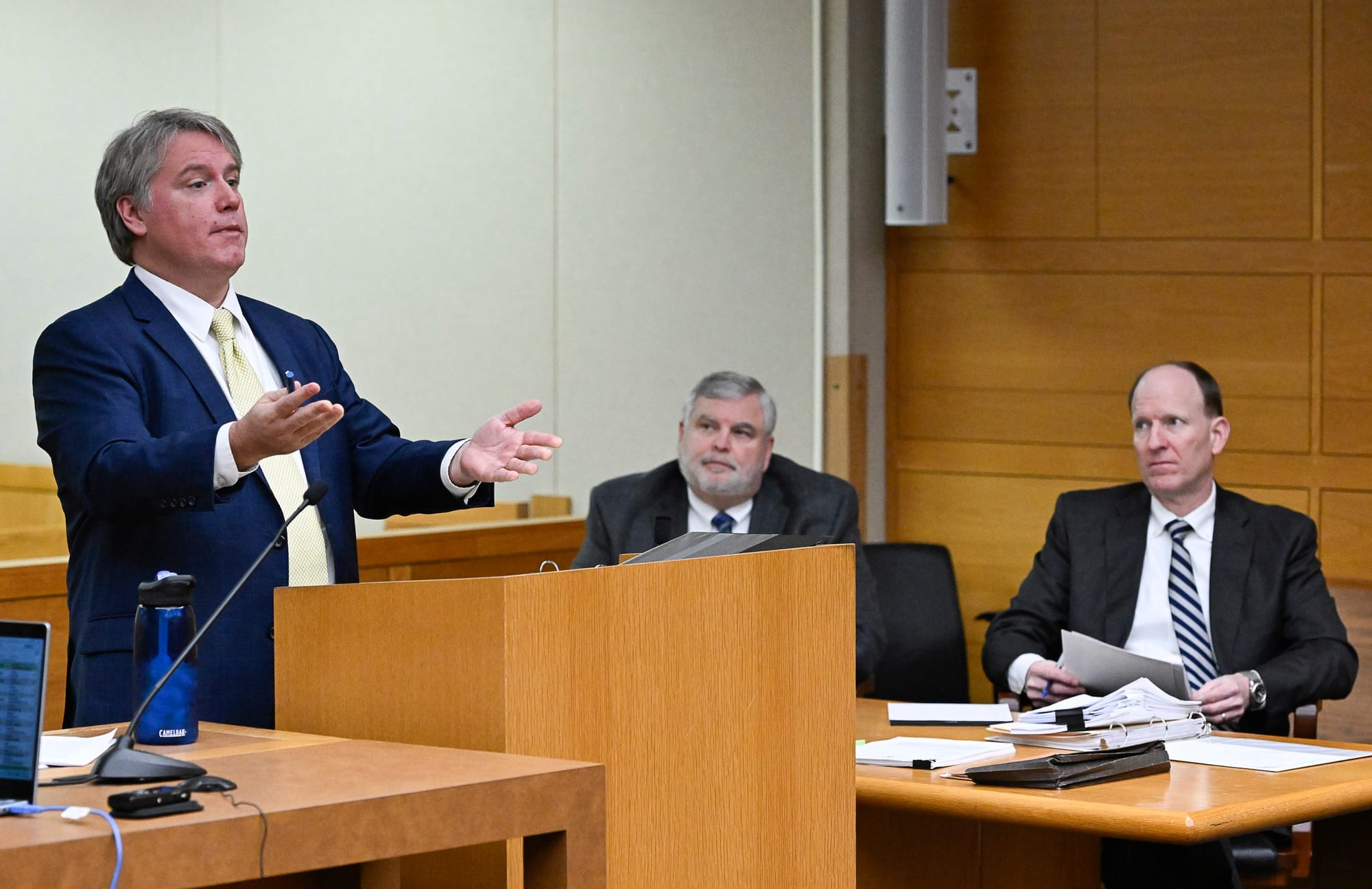
The Western Virginia Water Authority must still release records shedding light on how much water a potential Google data center could use, a Roanoke judge said Friday — unless the agency receives an emergency stay from the Virginia Court of Appeals.
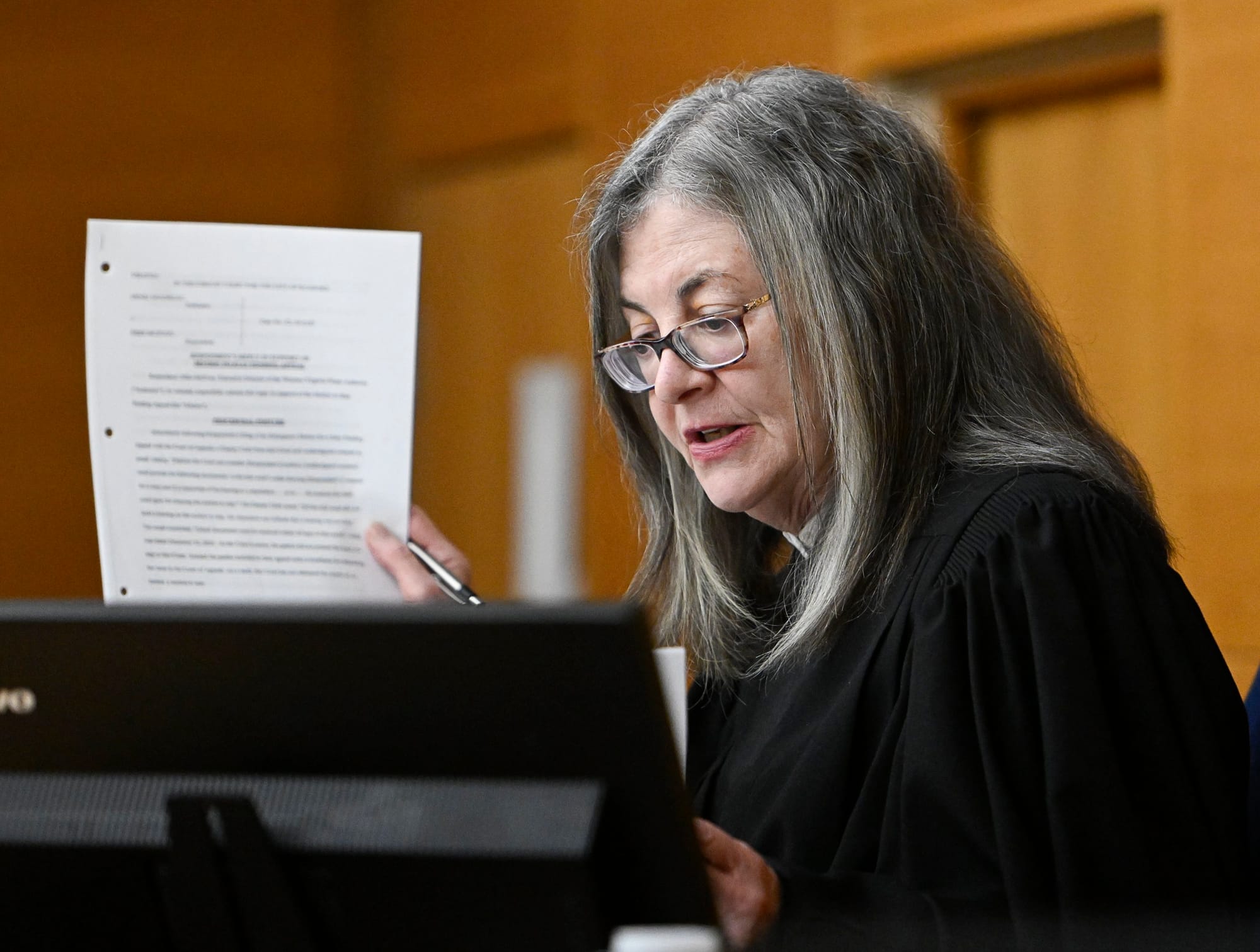
The Roanoke Rambler and water authority were in court Friday for the second time as Circuit Court Judge Leisa Ciaffone heard whether to pause her November decision while the water authority seeks an appeal.
Ciaffone opted to grant “a limited period of time” to the water authority so it can hear back from the appeals court on an emergency request to stop her ruling from taking effect.
“Google and the water authority would like that decision to be reviewed,” Jeremy Carroll, the authority’s attorney, said in court about Ciaffone’s November opinion letter.
Botetourt County announced last summer that Google had purchased 312 acres in an industrial park for a potential data center project. The tech giant has pledged to spend at least $1 billion and employ 50 people per center.
Data centers use large amounts of water to cool their equipment, which in the Botetourt County case likely would involve evaporation, records show. In a draft contract with Botetourt, the water authority agreed to provide 2 million gallons of water per day to the site, increasing to 8 million gallons per day based on possible expansions, Cardinal News reported in July. That would make it the water authority’s largest customer by far.
In court last week, David Lacy, The Rambler’s attorney, presented a copy of that draft agreement, which Botetourt released to The Rambler in a December public records request. Emails show Botetourt County administrator Garry Larrowe emailed the draft contract to a Cardinal reporter on July 16.
(Last year, in response to multiple requests by The Rambler for any records about “potential water and electricity usage” of a data center, Botetourt said it had no such records.)
Ciaffone said the release of the draft contract — as well as a seemingly inadvertent release from the water authority that contained the 8-million-gallon figure — means the cat is out of the bag.
“I believe that information is in the public domain,” Ciaffone said. “The water authority cannot be irreparably harmed by disclosing something that is already out there.”
Carroll said in court that “those were not the final, executed copies of those agreements” that the water authority’s board of directors adopted in September.
Lacy countered that the water authority would point out if the draft and final numbers differed.
“Their failure to deny it is, in fact, confirmation of its accuracy,” Lacy said.
Ciaffone also found that the mere estimate of water usage is not enough to reverse engineer how Google constructs its data centers.
“I find it very difficult to find that disclosure of that singular information would give insights to competitors,” Ciaffone said.
The water authority had initially redacted the numbers, citing a Virginia Freedom of Information Act section that allows public bodies to withhold certain “proprietary information.”
In November, Ciaffone found that the water authority had not proved the information is proprietary.
The water authority relied on an affidavit from Aaron McGarry, a senior director at Google, who asserted that water use numbers “could be used to infer the size and design of the Project and its planned expansions” and that such information could give competitors an edge in the data center arms race. Ciaffone determined that McGarry’s statement was talking about more than just water capacity numbers.
Lacy acknowledged that one could potentially infer the size of a data center based on how much water it would use. But he argued that it could hardly explain the design.
“It’s against logic, at the end of the day,” he said.
Carroll warned that Ciaffone’s decision could open up a can of proprietary worms — that businesses could be hesitant to invest if they thought information shared with government agencies could be made public.
The water authority said in court papers after Friday’s hearing that the circuit court “erred in its evaluation of the harms to the parties and in the balancing of those harms.”
Lacy in court said The Rambler’s founder, who brought the lawsuit, and the public at large remain in the dark about aspects of the potential data center project.
“We are suffering harm every day,” he said.

The potential data center project has prompted fierce public debate. Officials have said they will initially pull water from Carvins Cove, which may require a higher dam and “dock extensions” because of declining or increasing water levels. To create a new long-term water source, local governments have earmarked up to $300 million, which they say Google will reimburse.
Google expects to start construction this year and complete one data center in 2028, according to an economic development agreement, which does not require the company to build.
As the attorneys argued over whether Ciaffone should grant the water authority’s motion for a pause, they invoked a legal standard set in Jeffrey vs. Commonwealth. That case involved former Roanoke councilman Robert Jeffrey, who appealed his bail conditions after he was convicted in 2022 on financial crimes, in the same courtroom where Friday’s hearing was held.