
Too Many Mics and Not Enough MCs
Deskchair, Phone Quarterbacks and the Blueprint for Lasting Progressive Wins in Roanoke

Deskchair, Phone Quarterbacks and the Blueprint for Lasting Progressive Wins in Roanoke
Roanoke, VA
Author: Roanoke Rambler Staff, Hart Fowler Lead
Published: 2:30 PM EST August 19, 2026
Edited: 2:37 PM EST August 19, 2026
Trending Always: The Modern Theater of Outrage
When a localized look at progressive virality is favored by a vitriol algorithm, a single story can reach tens of thousands of regional feeds on a Wednesday, proving that the theater of outrage is alive and firing. Last week, Have Your Quesadilla and Eat It Too—which chronicled a tumultuous week for a local twenty-table restaurant in the Old Southwest district that lost an undocumented chef to deportation—generated a massive stir on Facebook. It exposed a faction of modern activism: a contingent of armchair quarterbacks furiously thumb-typing on four-by-three-inch screens for a quick dopamine fix, before immediately changing their channel to global crises and back again.
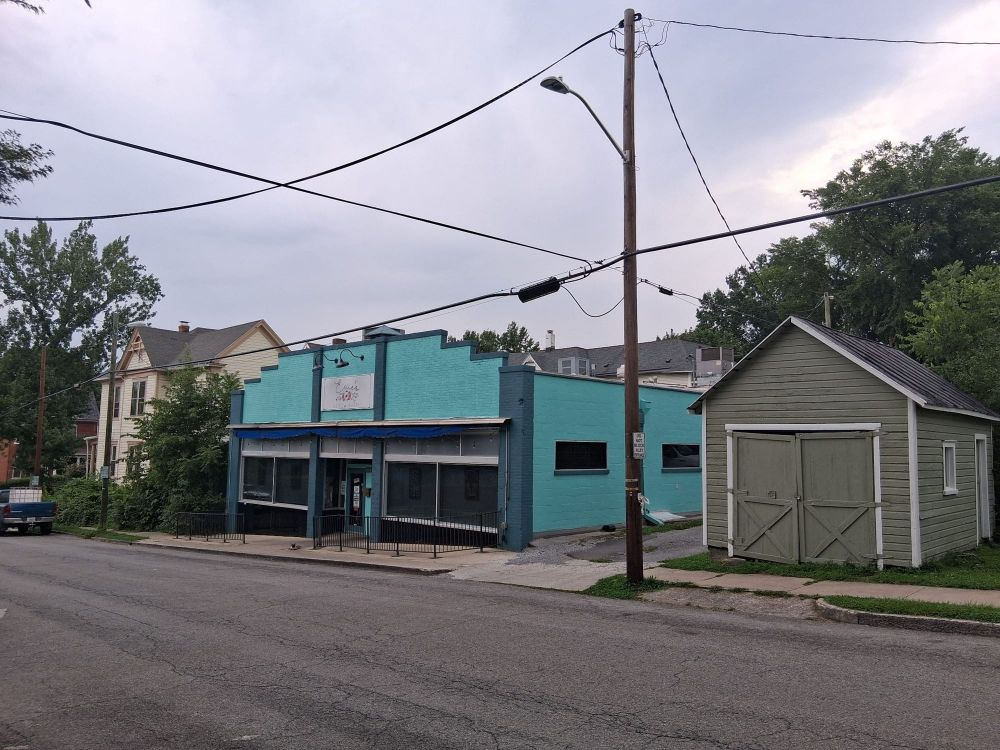
Sociologists call this phenomenon "issue attention cycles." This rapid fragmentation means digital protesting often fulfills the participant more than it secures legislative wins, leading to a profound loss of perceived agency. But the loudest voices on social media do not represent Roanoke activism as a whole.
Dating back to civil rights, the Star City has a fierce track record of successful, disciplined organizing. Modern local movements are proving that the most tangible victories are not secured through high-volume, issue-hopping social media campaigns, but through a clinical, preemptive focus that forces municipal systems to maintain explicit public accountability.
The Digital Commons
Preemptive Strike: "The supreme art of war is to subdue the enemy without fighting." — Sun Tzu
On Monday, July 6, 2026, the Roanoke City Council responded to anti-data center fervor by voting unanimously to pass a new zoning ordinance that completely strips data centers of their automatic, "by-right" building privileges. Any tech infrastructure firm eyeing Roanoke is now legally forced to apply for special exceptions, face mandatory public hearings, and fund rigorous, independent impact studies regarding regional water table consumption and electrical grid capacity. This modern local defense subdues the threat in the courtroom and the zoning board before the concrete is ever poured.
The immediate municipal action in Roanoke was born from the alarming actions taken by Google just across the county line. The massive data center campus currently underway at the Botetourt Center at Greenfield was negotiated under a shroud of non-disclosure agreements, with unredacted documents obtained via a Roanoke Rambler lawsuit revealing that the facility could quietly draw up to 8 million gallons of water per day from the shared regional aquifer. The subsequent pushback was immediate and physical. Residents packed Board of Supervisors meetings and lined Route 220 in protest, piercing the veil of "proprietary" secrecy surrounding the utility contracts.
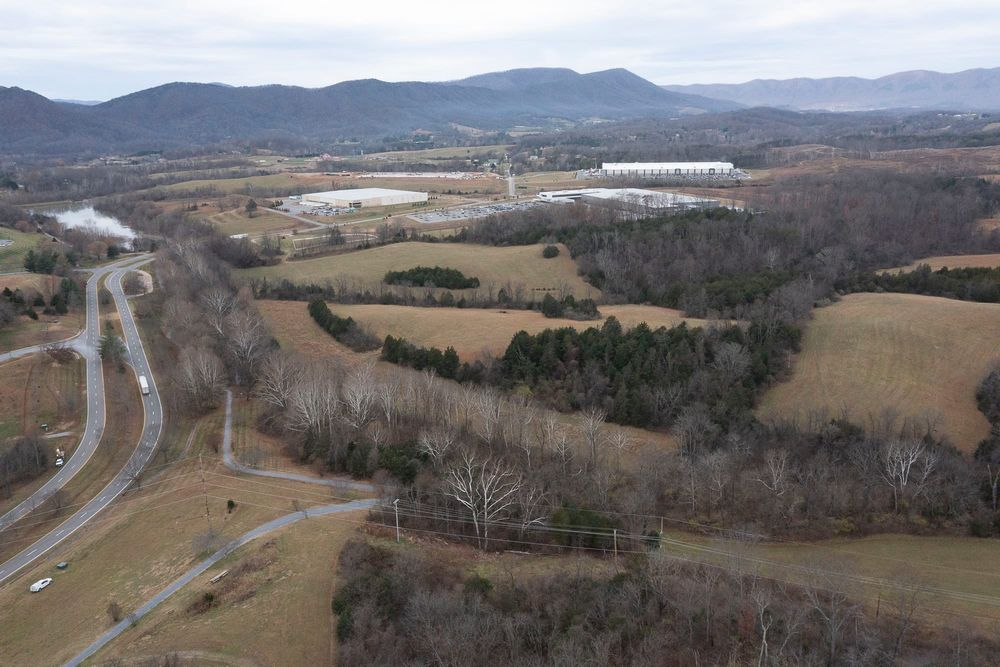
The pressure worked. In July 2026, Google publicly pivoted, announcing that at least one of its three planned buildings will employ "air-cooling technology" to drastically mitigate its strain on the regional water supply. This local resistance continues to demonstrate that corporate transparency can be extracted directly through disciplined legal and journalistic scrutiny, paired with an old-fashioned focus on packing public meetings alongside protesting streetside and on social media.
Now, that resistance has migrated from the picket line to the ballot box. Beth Macy, the journalist-turned-candidate for Virginia's 6th Congressional District, has made the issue a central pillar of her campaign. She has routinely attended local protests to call for a nationwide pause on data center approvals until transparency laws catch up to the technology.
At the state level, Senator Glen Sturtevant has aggressively demanded a statewide moratorium, putting direct pressure on Governor Abigail Spanberger. Sturtevant's push is rapidly finding cross-party reinforcement across Richmond. Recently, Republican Senator Richard Stuart and Democratic Senator Russet Perry united to issue a joint demand targeting the severe strain infrastructure expansion places on the state's groundwater supply. This localized friction mirrors a broader political reckoning heating up ahead of the November 2026 midterm elections. Anti-data center advocacy has emerged as a rare, bipartisan flashpoint shaping high-stakes races, from municipal mayoral campaigns in Florida to federal legislative platforms on Capitol Hill.
Fleeing the Flock
This preemptive legal strategy has proven equally potent when deployed against the expansion of municipal surveillance technology. The local friction culminated on Monday night, August 17, 2026, when organized residents rallied outside Roanoke City Hall to directly protest the city's active network of twenty-four Flock Safety license plate readers. Bypassing a standard playbook of performative digital outrage, activists from groups like Roanoke Indivisible weaponized public data-portal audits to argue that mass surveillance infrastructure creates an unconstitutional, warrantless tracking network operating without public input.
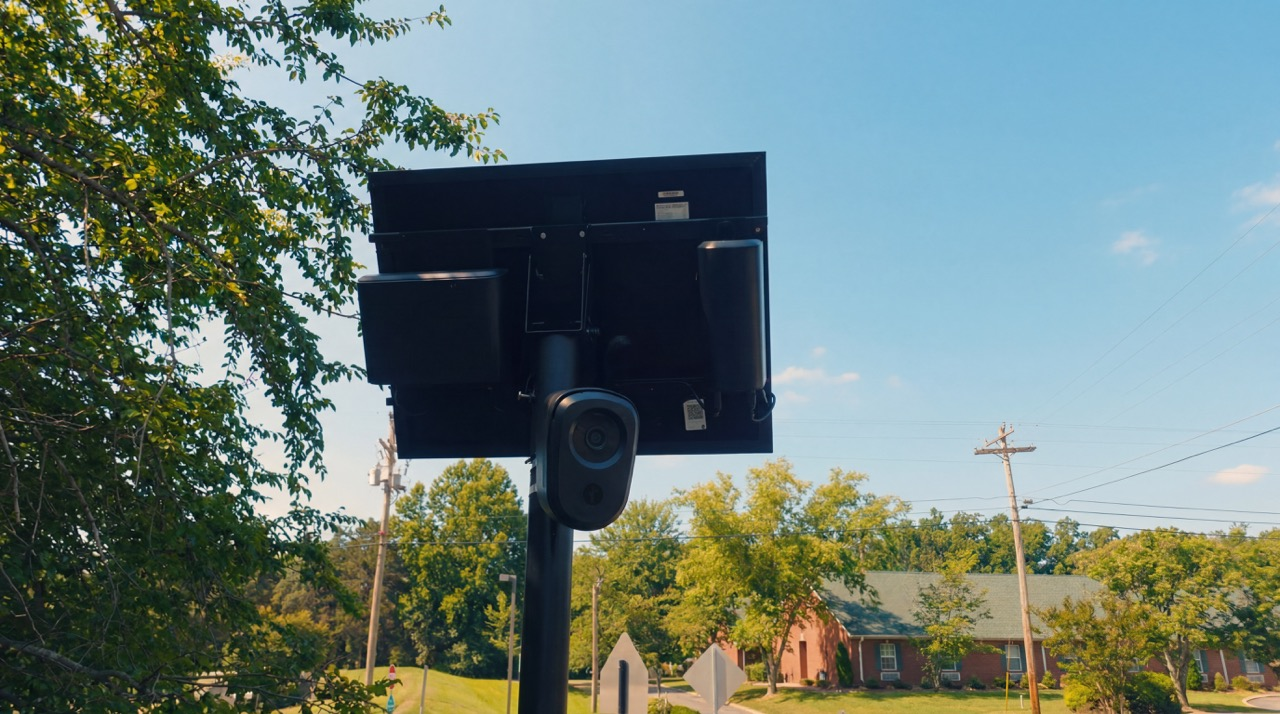
Conversely, the debate highlights the intense institutional pressures modern municipal systems face. Roanoke Police Chief Scott Booth has aggressively defended the technology, citing a distinct nineteen percent drop in overall city crime and framing the cameras as an indispensable, life-saving tool for tracking fleeing suspects and resolving missing persons cases.
Roanoke’s policy-literate community skepticism has only sharpened over the active deployment of these surveillance networks. Local advocates are now using the city's falling crime data to argue that the license plate readers are fundamentally redundant. This skepticism intensified following the city's total cancellation of its companion Flock gunshot audio detection program in July 2026, which was scrapped after the vendor committed massive data entry and installation errors.
This ongoing standoff has evolved into a national movement with leverage. It proves that the most tangible local victories are no longer secured through high-volume, issue-hopping social media campaigns, but through a disciplined, single-issue focus that forces municipal systems to maintain explicit public accountability.
The 11th-Hour Ultimatum and the 40-Yard Line Gameplan
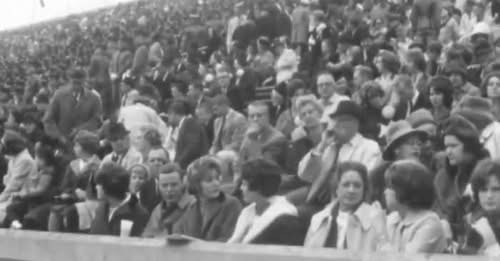
There is a living memory of when Victory Stadium integrated seating for a pre-season NFL game in 1961. Sixty-five years means the physical, environmental, and financial impacts of that ball game, and those who sat on the 40-yard line peacefully together, are the parents and grandparents of Roanoke's current working-class resident locals. The trauma of the times and recent victories are recent history.
Lawyer Reuben Lawson and Reverend R.R. Wilkinson, head of the local NAACP, are two of Roanoke’s most celebrated civil rights activists, whose Roanoke-based protests and legal actions forced direct social change across the city, the region, Richmond, and the nation with an indirect hand in the seminal Brown v. Board of Education decision and its consequential enforcement.
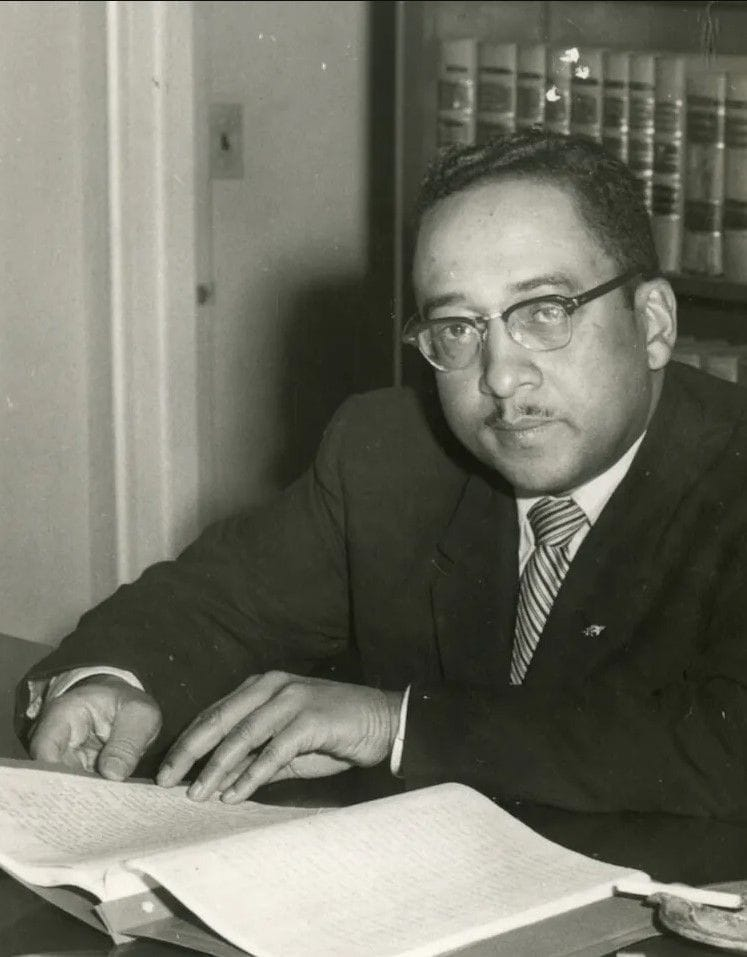
Fourteen years after Jackie Robinson broke the professional sports color barrier in 1947, the stands at most American sporting events, theaters, and seats on buses and lunch counters, and rooms at hotels, remained rigidly segregated. It was under these conditions that Roanoke's city-owned Victory Stadium, which held 25,000 spectators and stood as the largest outdoor venue in the region, was selected to host a high-profile 1961 NFL pre-season exhibition game between the Baltimore Colts and the Pittsburgh Steelers.
Rigid Jim Crow laws forced Black ticket buyers to the cheapest seats, but Wilkinson and Lawson recognized that this marquee game offered an ideal opportunity to challenge the unfair views from the bleachers created by generations of racist lawmakers. They saw that the rapid commercial rise of professional football, amplified by a new era of live television broadcasts, gave them unprecedented leverage over a high-profile national event.
Lawson initially petitioned the City Council for integrated seating, but leaders rejected the request, citing state segregation laws. When Lawson filed a federal lawsuit to force the issue, a judge dismissed the case on a technicality, ruling that because the game had not yet occurred, and the alleged injustice had not yet taken place. The lawsuit was rescheduled to be heard only after the game's conclusion.
Operating under the threat of immediate arrest for sitting in a white section, the organizers executed a silent counter-move. Because the game's sponsor, the Roanoke Chamber of Commerce, was selling prime mail-order tickets to buyers of all races by mail, Lawson and other Black residents quietly purchased mail-order tickets for marquee seats in the whites-only sections—completely unbeknownst to the sponsor.
With only four days remaining until kickoff, Reverend R.R. Wilkinson, chairman of the local NAACP and fresh off a successful integration of the downtown Woolworth lunch counter, executed a grandmaster chess stroke to force the issue. He bypassed local officials entirely and directly telegraphed the twenty Black players across the two rosters, urgently requesting that they boycott the game if Victory Stadium's seating remained segregated.
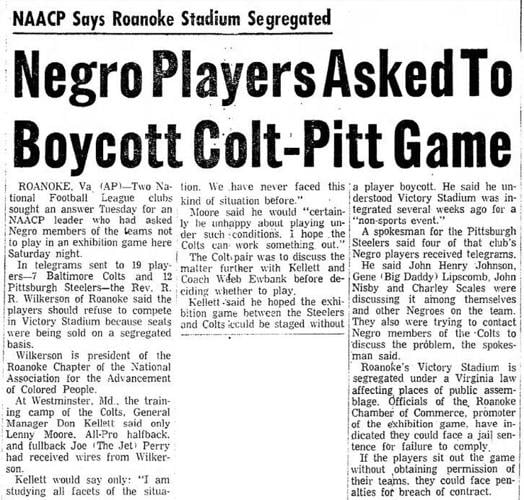
The swirling national news forced an impromptu, high-stakes meeting at the Patrick Henry Hotel, bringing together the players, city officials, the Chamber of Commerce, and Wilkinson himself, alongside a long-distance telephone call to NFL Commissioner Pete Rozelle. Looming over the negotiations was the quiet but real threat of Black residents forming a peaceful picket line around the stadium gates on game day—a direct challenge to the era's lunch counter and back-of-the-bus seating restrictions.
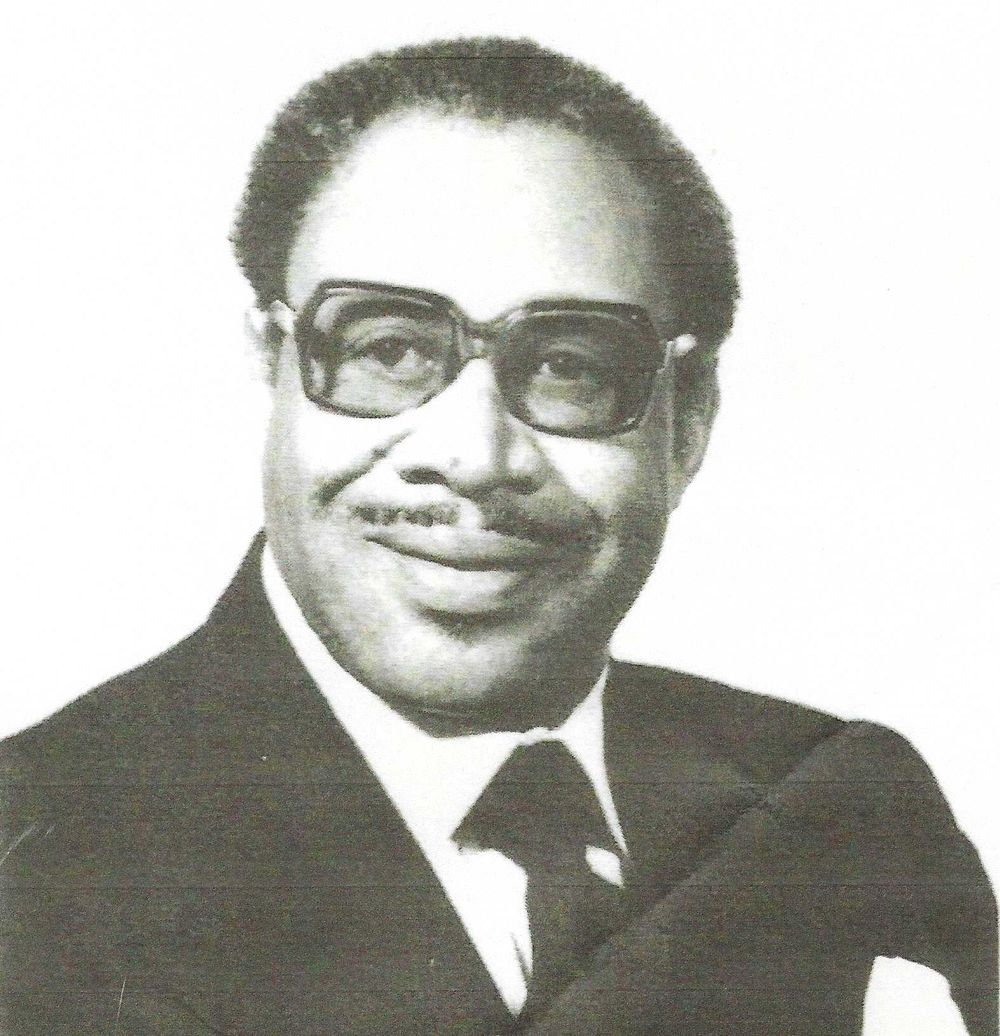
Wilkinson had secured massive leverage by hitting a strategic trifecta: he knew the NFL was highly sensitive to racial controversy as it expanded into live television, that a player boycott would cause a massive loss in gate revenues, and that a public relations disaster would jeopardize Roanoke’s ability to book future large-scale events at Victory Stadium. While the exact transcripts of those closed-door discussions remain unknown, the financial and reputational pressure points were clear.
After the tense four-hour meeting, it was reported that Wilkinson left the hotel announcing he had successfully secured his game tickets on the whites-only 40-yard line. Later that evening, NFL Commissioner Pete Rozelle issued a bold public statement confirming the league's stance. His official release read that the "segregation law is repugnant to the American way of life" and expressed explicit hope that "in future seasons clubs of the National Football League will not play games to segregated audiences."
As Dr. Alex B. Long documented in his March 2025 Virginia Law Review Online essay, “Victory: How a Lawyer, a Minister, and Twenty Professional Football Players Helped End Segregation in Virginia and Professional Sports,” an estimated 100 to 300 Black spectators took their seats in the traditionally whites-only sections completely without incident. They sat amid a massive regional crowd of 13,000 attendees, physically breaking the city's color line on its largest commercial stage through a masterfully engineered campaign of economic brinkmanship.
This was one peaceful battle on a field and in the courts that led to major integration shifts of all sorts, driven by heroic leaders whose actions are kept alive and whose names are celebrated today by those who remember them physically and through the stories of the triumphs over generational trauma. Roanoke recently etched that legacy permanently into the city's grid.
Two years ago, local leaders formally renamed the most prominent street in Gainsboro after Reverend R.R. Wilkinson. That same year, the United States Congress voted to rename the downtown federal courthouse after Attorney Reuben E. Lawson.
Journalism as Activism at the Dawn of the Local News Desert
Turning the pages of Beth Macy’s Dopesick in Roanoke was a surreal experience, with the story unfolding in buildings you drove past, schools your children attended, and counties where you know the terrain. It was prime-cut true crime, decades in the making. For locals, it was also a point of pride that they had read her reporting in The Roanoke Times first, when the paper served nearly 100,000 Sunday subscribers across 19 counties in Southwest Virginia.
Macy was one of their star reporters in the era before the news deserts, when a daily regional paper had the resources to support a writer with the skill and tenacity to hold a twenty-year gaze on a single developing crisis, turning it into a monument of consequential investigative journalism.
Few readers could have known then that Dopesick would eventually be regarded in the same class as Upton Sinclair’s The Jungle, Joan Didion’s clinical dissections of cultural unraveling, and Tom Wolfe’s broad subject interweavings. It stands in a long line of investigative muckraking that forced direct social change. By embedding within and writing about the real-life relationships of victims, survivors, and the families and friends of the opioid crisis, the work fundamentally illuminated the landmark achievements of the Roanoke attorneys fighting the battle inside the downtown federal building.
Though released two years after J.D. Vance’s 2016 memoir Hillbilly Elegy, Macy's work mapped a vastly different Appalachian trajectory. Ten years later, Vance is Vice President of the United States and Macy is running for Congress in Virginia's 6th District. While Meryl Streep starred in the film adaptation of Vance’s book, Michael Keaton anchored the Hulu miniseries adaptation of Macy’s. Today, the Sackler name goes down in infamy, but Big Pharma remains alive and strong, operating as a massive, permanent fixture within the regional healthcare economy of the city.
Macy showed us that the FDA did not sound the alarm for the crisis; instead, local country doctors like Art Van Zee, pioneering lawyers like Paul Pennock, and federal prosecutors like Rick Mountcastle working right out of the Roanoke office did, which stands as a point of local pride of the highest sort. Meticulous local documentation and multi-year legal battles resulted in a major victory for advocates at the highest level, forcing multi-billion-dollar pharmaceutical giants into massive federal settlements that directly funded addiction recovery programs and treatment networks across the Roanoke Valley. Their names are remembered today for what individuals can achieve when channeling all their capacity to face an immediate crisis on all fronts.
Parades of Sentiment
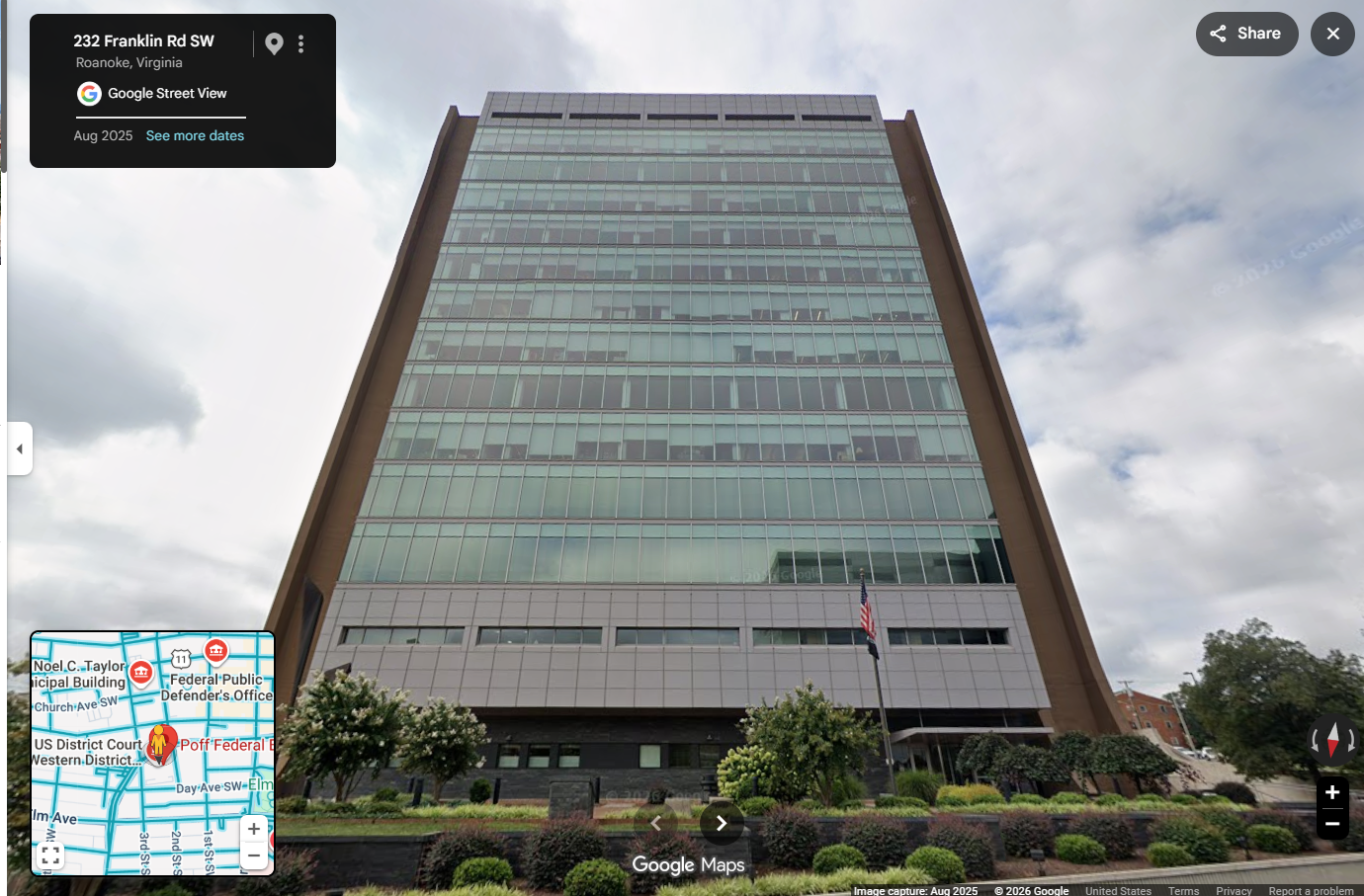
Yet today, that same physical building is once again under intense scrutiny. Behind the glass doors of the Reuben E. Lawson Federal Building, federal lawyers are now speaking quietly to reporters about quitting their posts, driven to exhaustion by rigid internal disputes over new Department of Justice mandates. This quiet administrative fallout, reportedly 10 prosecutors, brings the crisis directly back to the doorstep of the city. It proves that the institutional machinery that ignited local street protests and campus walkouts is not a distant, abstract policy—it is a live tension playing out in real-time right-on Franklin Road.
As these voices take center stage in the regional media landscape alongside the unfolding local casino debate, a deeper question emerges regarding who truly controls the real-time narrative of city progress. While out-of-town members of Congress attempt to dictate local policy from a distance, the digital arena remains vulnerable to a reactionary culture of censorship and performative cancellation. Weaponizing social media threads to label institutional targets often carries unintended local consequences. When online outrage over a single twenty-table restaurant indiscriminately conflates federal ICE enforcement with local police departments, real-world community relationships fracture. Good local officers get caught up in the reactionary headlines, creating severe recruitment deficits at a time when Roanoke is actually experiencing historic drops in violent crime.
This local story mirrors David Simon's Baltimore reporting that eventually became The Wire—tracking the proud, gritty line of reporter-to-writer-to-screen narratives that includes Beth Macy's own work. It also highlights the precise leverage recently claimed by anti-surveillance advocates in the Star City, who capitalized on community momentum to garner real legislative leverage.
The danger of modern digital activism is that it dissolves the physical ties required for lasting change. The historic civil rights victories in Roanoke were built on real-world neighborhood proximity and physical presence at public meetings. Conversely, modern online movements frequently devolve into mere parades of sentiment, where manic scrolling on four-by-three-inch glass provides a fleeting dopamine glow before the algorithm shifts public attention to more trending topics.
Unlike the iconic, physical resistance of the 1960s, our lack of physical community gathering risks reducing systemic fights into fleeting trends. Ultimately, we find ourselves pushing back against data centers that are quietly funding our own digital lethargy.